

Your AC stopped working this morning. By this afternoon, you’re wondering if you should start looking at hotels or if your home will ever feel comfortable again.
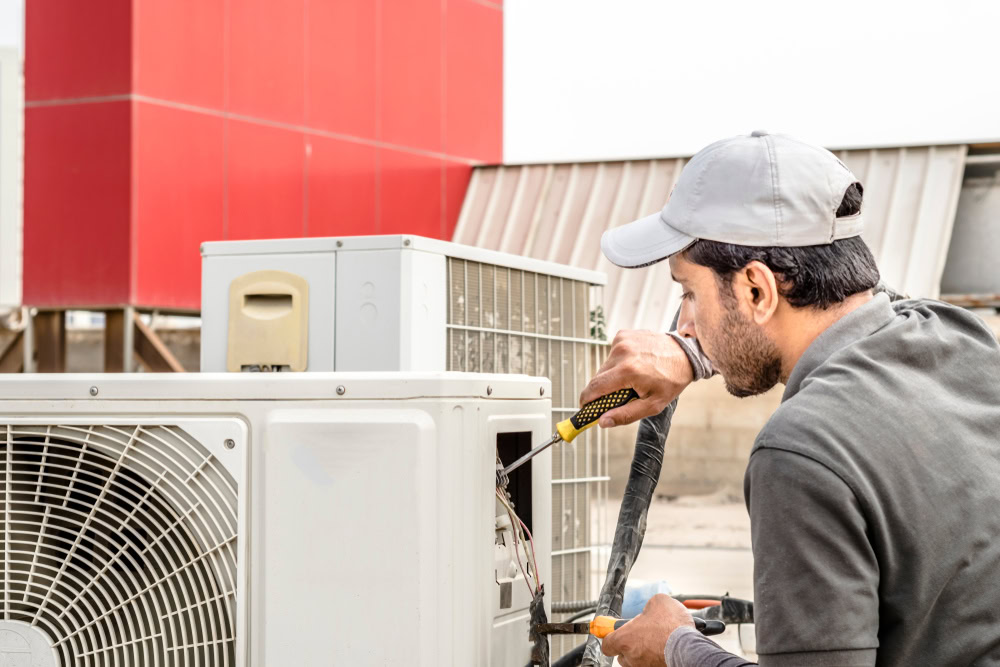
Here’s what actually happens when you call for air conditioner repair in Glen Cove, NY. A technician who knows Long Island’s humid summers shows up the same day when possible. We run a complete diagnostic—not just a quick look—and tell you exactly what’s wrong and what it’ll cost before touching anything.
The repair gets done right there in most cases. No waiting two weeks for a part that should’ve been on the truck. No vague estimates that double when the bill comes. You get your home back to a livable temperature, your energy bills stop climbing from an overworked system, and you’re not sweating through another night wondering if this summer will be the one that finally kills your AC.
That’s the difference between a band-aid fix and actually solving the problem. You’re not just getting cold air back—you’re getting a system that runs efficiently, costs less to operate, and doesn’t wake you up at 2 AM with strange grinding noises.
Excellent Air Conditioning and Heating Service has been handling residential AC repair in Glen Cove for decades. We’re not a franchise that showed up last year—we’re the local HVAC repair company your neighbors have called when their systems quit during the worst possible week of summer.
Our technicians live here. They know that Glen Cove homes face humid North Shore summers where cooling costs have jumped over 50% in the last ten years. They’ve seen every type of system, every common failure point, and every shortcut that other companies tried that didn’t hold up.
You’re working with licensed, insured techs who show up when they say they will, explain what’s broken in plain language, and fix it correctly the first time. No sales pitch for a new system when yours just needs a $200 part. No disappearing after we cash your check.
You call or submit a request online. We schedule a same-day visit whenever possible—because waiting three days when it’s 84 degrees and humid isn’t realistic for most Glen Cove families.
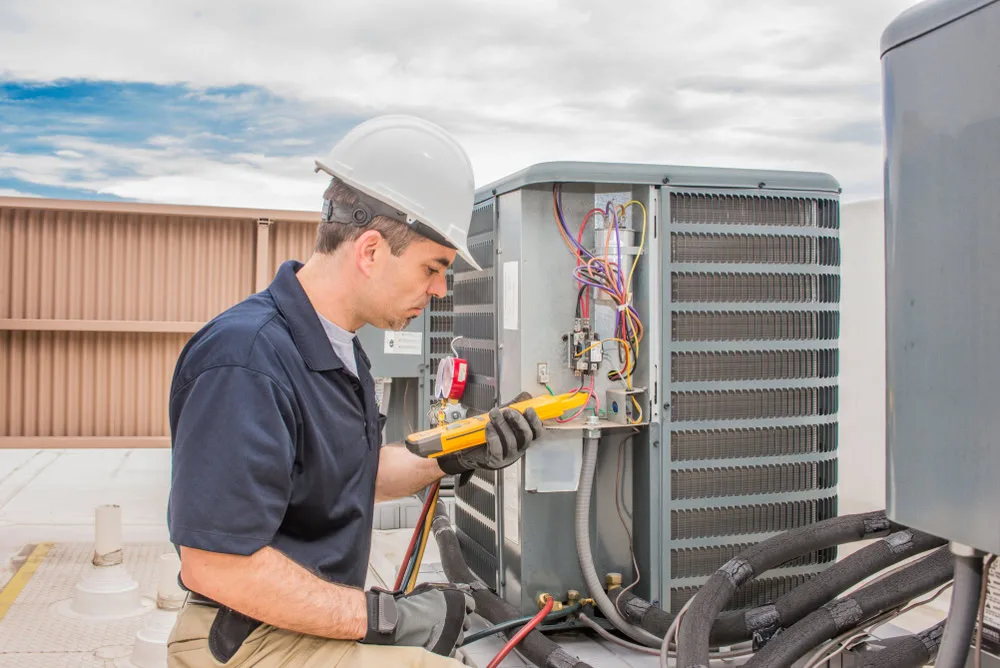
A technician arrives and runs a full diagnostic on your system. That means checking refrigerant levels, testing electrical components, inspecting the compressor and condenser, looking for leaks, and measuring actual system performance with digital analysis. Not just poking around and guessing.
You get a clear explanation of what’s wrong and an upfront price before any repair work starts. If it’s a simple fix like a clogged drain line or a tripped breaker, you’ll know that. If it’s a failing compressor that’ll cost $1,800 to replace, you’ll know that too—and whether it makes sense to repair or replace given your system’s age.
Once you approve the work, the repair happens right there in most cases. We have common parts on the truck, so you’re not waiting another week for a capacitor or contactor to arrive. After the repair, we test the system to confirm it’s running at proper efficiency, check that temperatures are dropping like they should, and make sure you’re not dealing with this again next month.
You get a service warranty on the work. Your home cools down. Your family stops complaining. And you’re not wondering if you just got ripped off.
Ready to get started?
When we handle home AC repair in Glen Cove, you’re getting more than just a quick fix. Every service call includes a complete digital combustion analysis with efficiency printouts, so you know exactly how your system is performing—not just whether it’s blowing cold air.
We check for refrigerant leaks, which are one of the most common issues in humid Long Island climates. A slow leak means your system runs constantly, your electric bill climbs, and you’re never quite comfortable. We find it, fix it, and recharge the system to manufacturer specs.
Electrical components get tested too. Capacitors, contactors, and wiring connections all fail over time, especially when your AC is working overtime during Glen Cove’s summer months. Catching a failing part before it takes out your compressor can save you thousands.
You also get honest advice about whether a repair makes sense. If your 18-year-old system needs a $1,500 compressor replacement, we’ll tell you that—and we’ll also tell you that a new, efficient system might cost $3,500 and save you $400 a year in energy costs. You decide what makes sense for your situation and budget.
The goal isn’t to sell you the most expensive option. It’s to give you the information you need to make a smart decision about your home’s comfort and your money.
If your system is under 10 years old and the repair costs less than half of a new system, repair almost always makes sense. You’re extending the life of equipment that still has years left, and you’re avoiding the $4,000 to $8,000 cost of replacement.
Once your AC hits 12 to 15 years old, the math changes. Older systems use more electricity, break down more often, and parts get harder to find. If you’re looking at a major repair like a compressor or evaporator coil replacement on a 15-year-old unit, replacement usually makes more financial sense—especially with how much cooling costs have increased in Nassau County over the last decade.
There’s also the frequency factor. If you’ve called for AC repair three times in the last two years, you’re throwing money at a system that’s telling you it’s done. At that point, you’re better off investing in a new, efficient system that’ll run reliably for the next 15 years instead of babysitting an old one through every summer.
Warm air coming from your vents is the obvious one. If your thermostat is set to 72 but your home is sitting at 78, something’s wrong—usually a refrigerant leak, a failed compressor, or a frozen evaporator coil.
Strange noises mean something’s failing or already broken. Hissing usually indicates a refrigerant leak. Grinding or squealing points to motor bearings wearing out. Banging or clanking means a component came loose or a part broke inside the unit. None of these fix themselves, and all of them get worse and more expensive if you ignore them.
Water pooling around your indoor unit means your condensate drain is clogged or your drain pan cracked. In Glen Cove’s humid climate, your AC pulls a lot of moisture from the air—if that water isn’t draining properly, you’re looking at water damage, mold growth, and a system that shuts down to protect itself.
High energy bills without explanation are another red flag. If your electric bill jumped $100 last month and you didn’t change your habits, your AC is working harder than it should—probably because of low refrigerant, dirty coils, or a failing component that’s forcing the system to run constantly.
Simple fixes like replacing a capacitor, cleaning a clogged drain line, or resetting a tripped breaker usually run $150 to $400. These are common failures that don’t require major parts or labor, and they’re often same-day repairs.
Mid-range repairs like fixing a refrigerant leak, replacing a contactor, or installing a new fan motor typically cost $400 to $1,200 depending on the part and how accessible it is. If your outdoor unit is easy to reach and the part is standard, you’re on the lower end. If we have to crawl into a tight attic space or order a specialty part, costs go up.
Major repairs like compressor replacement, evaporator coil replacement, or fixing extensive electrical damage run $1,200 to $2,500 or more. At this point, you’re replacing core components, and it’s worth having a conversation about whether repair or replacement makes more sense for your specific situation and system age.
The key is getting an honest assessment upfront. We’ll tell you what’s broken, what it costs to fix, and whether that repair makes financial sense—not just sell you whatever generates the biggest invoice.
If your AC isn’t cooling at all during summer, you shouldn’t wait. Glen Cove temperatures hit the low 80s regularly from June through August, and humidity makes it feel even hotter. A home without working AC isn’t just uncomfortable—it’s a health risk for young kids, elderly family members, and anyone with respiratory issues.
If you’re hearing strange noises or smelling burning odors, shut the system off and call for repair immediately. Grinding, squealing, or electrical smells mean something is failing in a way that could damage other components or create a fire hazard. Running the system “just a little longer” often turns a $300 repair into a $1,500 one.
If your AC is cooling but not as well as it used to, you have a bit more time—but not much. Reduced cooling usually means low refrigerant, dirty coils, or a struggling compressor. The longer you run a system that’s not performing correctly, the harder it works, the more it costs to operate, and the more likely you are to cause secondary damage to other parts.
The worst thing you can do is wait until the hottest week of summer to address a problem you’ve been noticing for a month. That’s when every HVAC company is slammed, and you’re looking at longer wait times and a miserable home in the meantime.
We offer same-day air conditioner repair in Glen Cove, NY whenever possible. If you call in the morning with a broken AC, there’s a good chance we can get someone to your home that afternoon—especially during peak summer months when we know these calls are coming.
Same-day service depends on our schedule and the complexity of your issue. If it’s a straightforward diagnostic and repair, we can usually handle it quickly. If we need to order a specialty part or your system requires extensive troubleshooting, it might take longer—but we’ll tell you that upfront, not after you’ve been waiting around all day.
Our trucks carry the most common replacement parts for residential AC systems, so repairs like capacitors, contactors, and fan motors typically happen on the first visit. We’re not showing up just to look at your system and then scheduling the actual repair for next week unless there’s a legitimate reason.
The goal is to get your home comfortable again as quickly as possible. We know that waiting days for AC repair during a Long Island summer isn’t realistic for most families, and we schedule our service calls accordingly.
Turn off your AC system immediately. Water leaking inside means your condensate drain line is clogged, your drain pan is full or cracked, or your evaporator coil is frozen and now melting. Running the system while it’s leaking just spreads more water and increases the chance of damage to your floors, walls, and ceilings.
Check your air filter first. A severely clogged filter restricts airflow, which can cause the evaporator coil to freeze. When it thaws, all that ice melts and overflows the drain pan. If your filter looks like it hasn’t been changed in six months, that might be your problem—but you should still have us inspect the system to make sure nothing else is damaged.
Look at the condensate drain line if you can access it. It’s usually a PVC pipe coming from your indoor unit. If it’s clogged with algae or debris, water backs up and overflows. Some homeowners can clear simple clogs themselves, but if you’re not comfortable doing that or the clog is deeper in the line, call us for AC repair.
Don’t ignore this issue. Water damage gets expensive fast, and a leak that seems minor today can cause mold growth, ceiling stains, and structural damage if left unchecked. AC leaking water repair in Glen Cove is common, especially in our humid climate—but it needs to be addressed quickly before a $200 fix becomes a $2,000 problem.