

You’re not looking for a lecture about HVAC systems. You want your house cool again, and you want to know it won’t break down next week.
That’s what happens when the repair is done correctly. Your family stays comfortable. Your energy bills don’t spike because the system is running efficiently. And you’re not dealing with another emergency call three days later because someone missed the real problem.
Most AC breakdowns in Long Beach happen during the worst possible time—mid-July, when it’s 90 degrees and humid. The faster you get it fixed properly, the faster life goes back to normal. That means a technician who shows up when they say they will, diagnoses the actual issue instead of guessing, and has the parts and experience to handle it on the spot.
Excellent Air Conditioning and Heating Service has spent over 30 years working on homes throughout Nassau County. We know what breaks down in Long Beach because we’ve seen it hundreds of times—salt air eating through outdoor units, refrigerant leaks from corroded coils, compressors that fail early because they’re working twice as hard in coastal humidity.
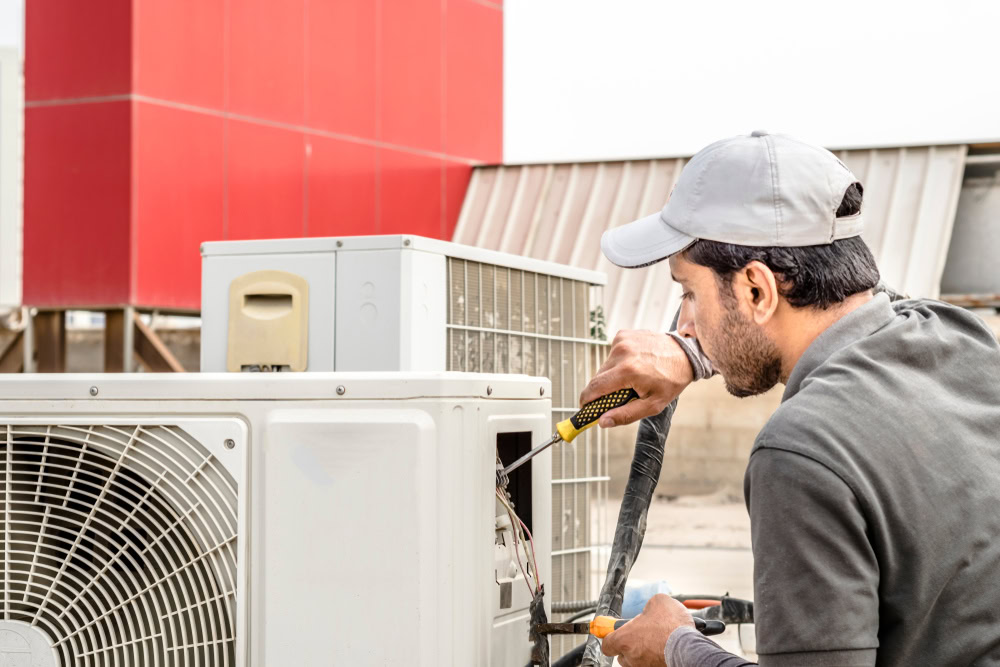
Living near the ocean means your AC system faces challenges that homes 20 miles inland don’t deal with. The salty air accelerates rust and corrosion on metal components, especially on outdoor condenser units. If you ignore those early warning signs—strange noises, weak airflow, water pooling around the unit—you’re looking at a much bigger repair bill down the road.
We’re local. We understand what you’re dealing with. And we fix it right so you’re not calling us back next month.
You call or contact us online. We ask a few questions about what’s happening with your system—no cooling, strange sounds, leaking water, whatever the issue is. Then we schedule a time that works for you, usually same-day or next-day depending on how urgent it is.
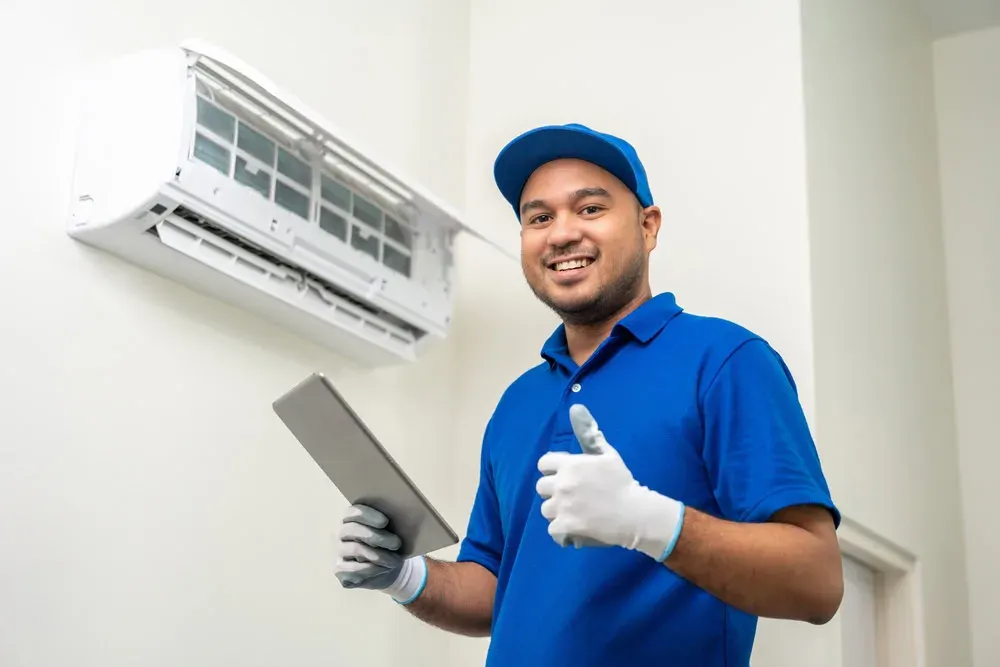
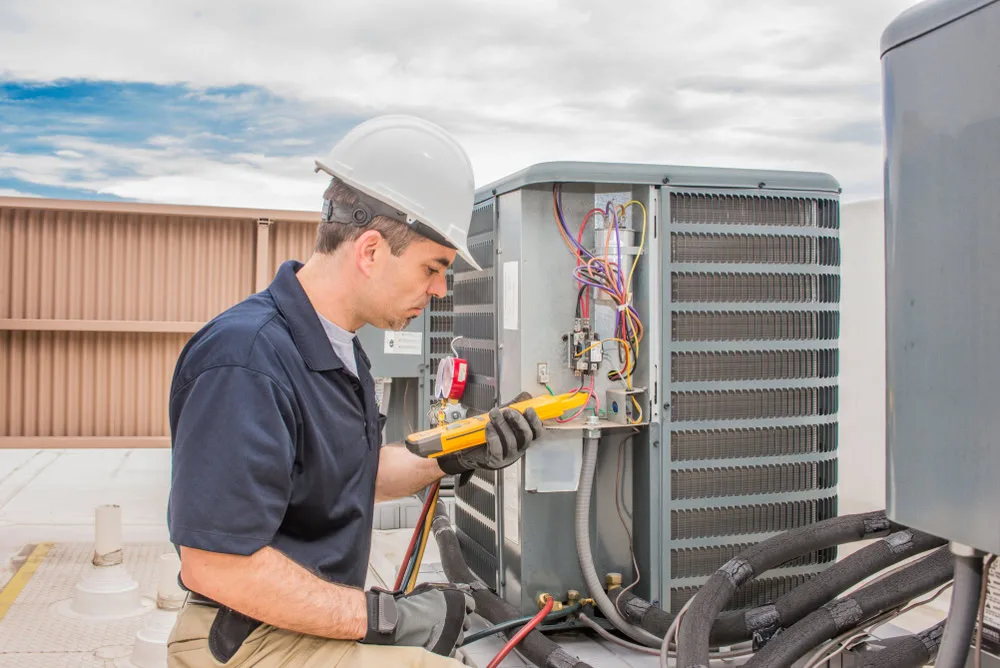
Our technician shows up and runs a full diagnostic on your system. That means checking refrigerant levels, testing electrical components, inspecting the condenser and evaporator coils, looking for leaks, and making sure your thermostat is communicating properly with the unit. We’re not guessing. We’re finding the actual problem.
Once we know what’s wrong, we explain it in plain terms and give you a clear price before any work starts. No surprises. If it’s a simple fix, we handle it right there. If you need a part we don’t have on the truck, we’ll get it and come back to finish the job. After the repair, we test the system to make sure it’s running efficiently and cooling your home the way it should.
Ready to get started?
Every air conditioning repair in Long Beach, NY starts with a complete system inspection. We check your entire unit—not just the part that’s obviously broken. That’s how we catch small problems before they turn into expensive emergencies.
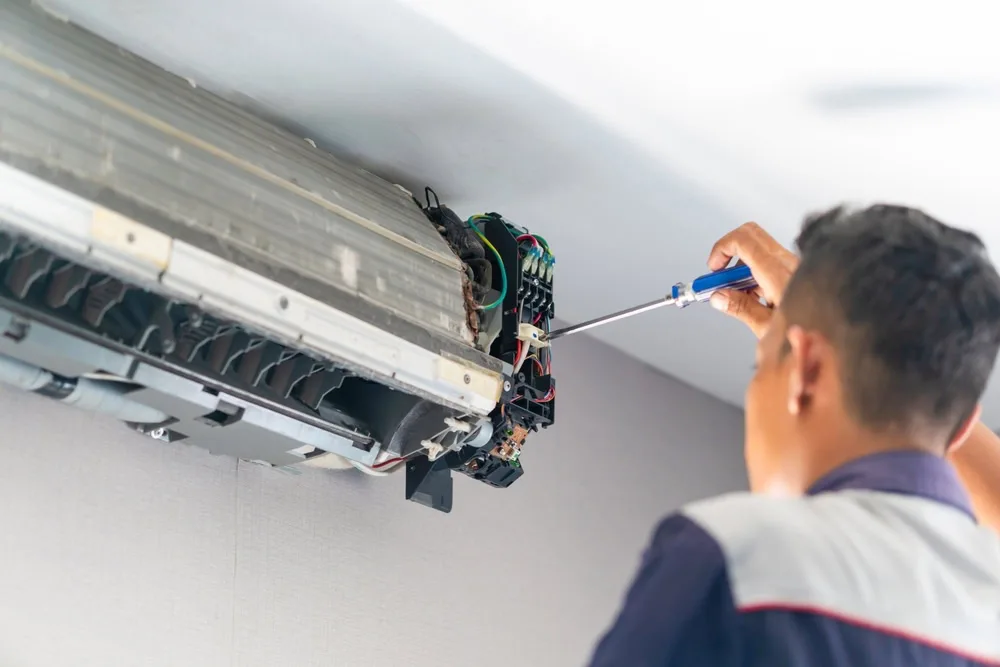
If your AC is leaking water, we’re looking at the drain line, the condensate pump, and whether the evaporator coil is frozen. If you’re getting weak airflow, we’re checking the blower motor, the ductwork, and whether your filter is clogged. If the system won’t turn on at all, we’re testing the thermostat, the circuit breaker, the capacitor, and the contactor.
For homes in Long Beach, we also inspect for salt air corrosion damage. Coastal humidity and salty air are tough on outdoor units. Rust and corrosion on the condenser coils, the cabinet, and the refrigerant lines can cause leaks and system failures. Catching that early saves you from a full system replacement later.
We also include carbon monoxide testing with heating system repairs to make sure your home is safe. And every repair comes with a service warranty, so if something goes wrong with the work we did, we come back and make it right.
If your system is under 10 years old and the repair costs less than half the price of a new unit, repair usually makes sense. If it’s over 15 years old, constantly breaking down, and your energy bills keep climbing, replacement is probably the smarter move.
Here’s a simple way to think about it: a $300 refrigerant leak repair on a 7-year-old system? That’s worth fixing. A $1,500 compressor replacement on a 17-year-old unit that’s already had two other major repairs? You’re throwing money at a system that’s going to keep failing.
We’ll give you an honest recommendation based on the age of your equipment, the cost of the repair, and how efficiently it’s running. If replacement makes more sense, we’ll tell you. If the repair will give you several more good years, we’ll tell you that too.
Weak airflow is one of the first signs something’s wrong. If some rooms are cooler than others, or if the air coming from your vents feels warm or barely there, you’ve got a problem. That could be a clogged filter, a failing blower motor, ductwork issues, or low refrigerant.
Strange noises are another red flag. Grinding, squealing, or banging sounds usually mean a mechanical issue—worn bearings, a loose belt, or something rattling around inside the unit. Don’t ignore it. Small mechanical problems turn into big expensive ones fast.
Water pooling around your indoor unit means the condensate drain line is clogged or the pump has failed. If you see ice forming on the outdoor unit or the refrigerant lines, that’s a sign of low refrigerant or restricted airflow. And if your system won’t turn on at all, you’re looking at an electrical issue, a bad thermostat, or a tripped breaker. All of these are fixable if you catch them early.
Simple repairs like replacing a capacitor or cleaning a clogged drain line usually run $150 to $400. Mid-level repairs—fixing a refrigerant leak, replacing a contactor, or swapping out a blower motor—typically cost $400 to $1,200 depending on the part and labor involved.
Major repairs like replacing a compressor or an evaporator coil can run $1,200 to $2,500 or more. At that point, if your system is older, replacement might make more financial sense than sinking money into a big repair.
The actual cost depends on what’s broken, what parts are needed, and how old your system is. We give you a clear price before we start any work, so there’s no confusion or surprise charges when the job’s done. If the repair doesn’t make sense financially, we’ll tell you upfront.
If your air conditioner breaks down every summer, it’s usually because of one of three things: lack of maintenance, an undersized system, or an aging unit that’s on its last legs.
Skipping annual maintenance is the most common reason. Dirty filters, clogged coils, and low refrigerant force your system to work harder, which leads to breakdowns. A system that’s not maintained will fail more often and cost more to run. Regular tune-ups catch small issues before they become expensive emergencies.
If your AC is undersized for your home, it’s running constantly just to keep up. That wears out components faster. And if your system is over 12 years old, parts are simply wearing out from age and use. At that point, you’re playing repair whack-a-mole—fixing one thing, then another thing breaks a month later.
The fix depends on what’s causing the problem. If it’s maintenance, getting on a regular schedule solves it. If it’s undersized or old, replacement is the real solution.
Salt air accelerates corrosion on your outdoor condenser unit. The salty, humid air near the ocean causes rust to form on metal components—coils, the cabinet, refrigerant lines, and electrical connections. Over time, that corrosion leads to refrigerant leaks, electrical failures, and reduced efficiency.
Condenser coils are especially vulnerable. When they corrode, they develop pinhole leaks that let refrigerant escape. Once that happens, your system can’t cool properly, and you’re looking at a repair bill for both the leak and the refrigerant recharge. In severe cases, the coils are too corroded to repair, and you need a full coil replacement or a new outdoor unit.
The best defense is regular maintenance and inspection. Cleaning the coils, checking for early signs of corrosion, and applying protective coatings can extend the life of your system. If you’re in Long Beach and your outdoor unit is more than 8 years old, it’s worth having someone inspect it for corrosion damage before it turns into a major failure.
Yes. We know AC breakdowns don’t happen on a convenient schedule. When your system fails during a heat wave or in the middle of the night, you need someone who can respond fast.
We offer emergency air conditioning repair services in Long Beach, NY and throughout Nassau County. That means you can reach us outside of normal business hours, and we’ll get a technician to your home as quickly as possible. Emergency calls are prioritized based on urgency—if you’ve got young kids, elderly family members, or a medical condition that makes the heat dangerous, we move you to the front of the line.
Emergency repairs work the same way as scheduled repairs. We diagnose the problem, give you a clear price, and fix it right. The only difference is timing and the emergency service fee, which we’ll explain upfront when you call. Our goal is to get your system running again so your home is livable, not to sell you something you don’t need in a moment of panic.