
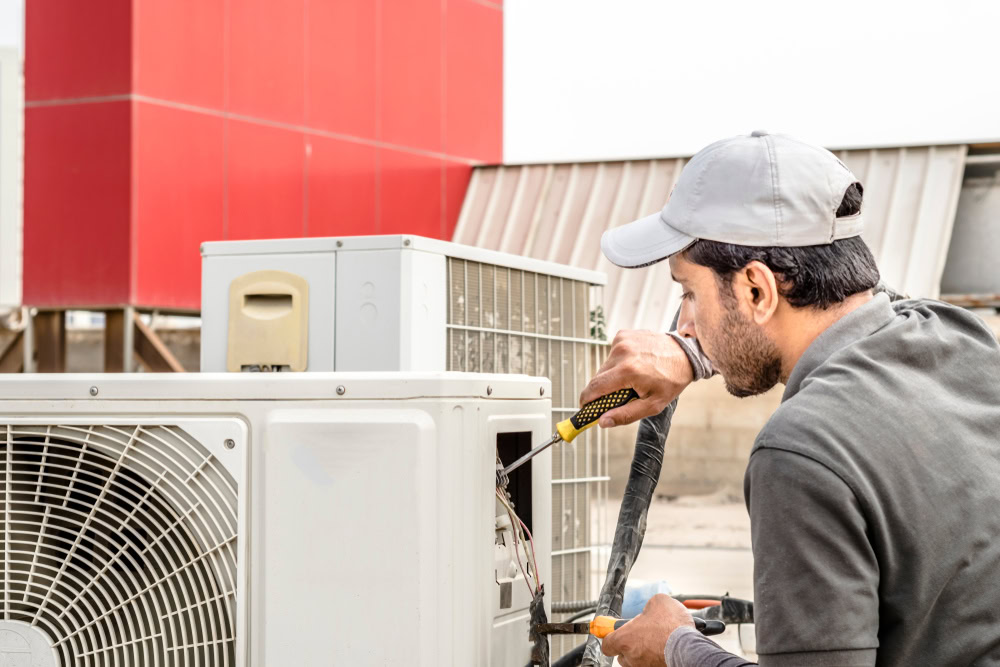

You’re dealing with warm air blowing through the vents. Maybe the system’s running nonstop but your house never cools down. Or you’re hearing noises you’ve never heard before and wondering if this is the beginning of the end.
Here’s what happens after we fix it: your home cools evenly again. Your energy bill stops climbing every month because the system isn’t working overtime. You’re not lying awake at 2 a.m. wondering if the AC will make it through another heat wave.
That’s the difference between a quick patch job and actual air conditioner repair in Massapequa Park, NY. We find what’s broken, fix it right, and make sure it doesn’t break the same way twice. No guessing. No return trips for the same issue a week later.
Long Island summers hit hard—high humidity, back-to-back 90-degree days, and systems that can’t keep up. Your AC should handle it without you babysitting the thermostat or budgeting for an emergency replacement.
Excellent Air Conditioning and Heating Service works across Nassau and Queens County, and we’ve seen just about every AC problem a Massapequa Park home can throw at us. Older systems that need coaxing. Newer units that failed too soon. Central air that’s never cooled the second floor properly.
We’re not the cheapest option, and we’re fine with that. You’re paying for technicians who actually test your system—digital combustion analysis, airflow readings, refrigerant levels—not someone who glances at your condenser and says “looks fine.”
We work on all makes and models. Trane, Carrier, Lennox, Goodman—doesn’t matter. If it cools your home, we know how to fix it. And if it’s time to replace instead of repair, we’ll tell you that too, with the numbers to back it up.
You call or message us with the problem. We ask a few questions—what’s happening, how long it’s been happening, what you’ve already tried. Then we schedule a time that actually works for you, not three weeks out.
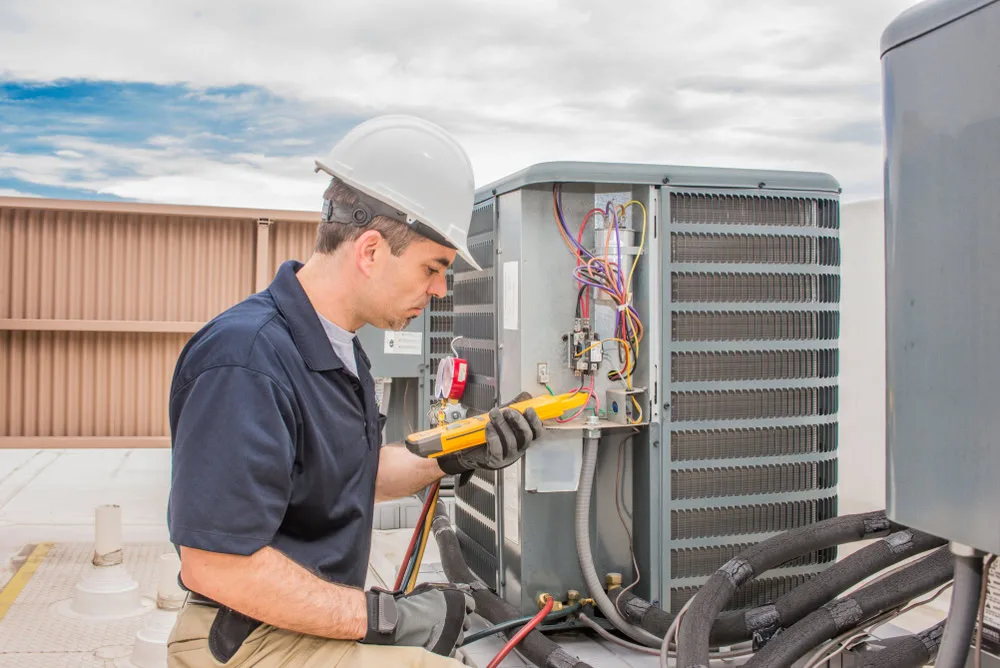
Our technician shows up and runs a full diagnostic. That means checking refrigerant levels, testing electrical components, measuring airflow, inspecting the condenser and evaporator coils, and looking for leaks. We’re not guessing what’s wrong—we’re finding it.
Once we know the issue, we explain it in plain terms. What failed, why it failed, what it’ll take to fix it, and what it costs. No jargon. No upselling. Just the information you need to make a decision.
If you approve the repair, we handle it right there whenever possible. If we need a part, we’ll let you know how long it’ll take and whether a temporary fix makes sense in the meantime. After the repair, we test the system to make sure it’s running the way it should—cooling properly, cycling correctly, and not pulling more energy than it needs to.
Ready to get started?
Every service call includes a full system diagnostic, not just a look at whatever’s making noise. We check the entire unit because one failing component usually stresses others.
You’ll get a clear explanation of what’s wrong and an upfront price before any work starts. If your AC is leaking water, we’ll find whether it’s a clogged drain line, a frozen evaporator coil, or a cracked drain pan. If your system won’t turn on, we’ll trace it to the thermostat, the breaker, the capacitor, or the compressor.
Massapequa Park homes deal with high humidity all summer, and that puts extra strain on your AC. A system that’s low on refrigerant or has dirty coils won’t dehumidify properly, which means your home feels sticky even when the thermostat says 72. We fix that.
We also include carbon monoxide testing with every heating service, because safety isn’t optional. And if your system is old enough that repairs don’t make financial sense anymore, we’ll walk you through replacement options with real numbers—what it costs now versus what you’ll spend in repairs over the next two years.
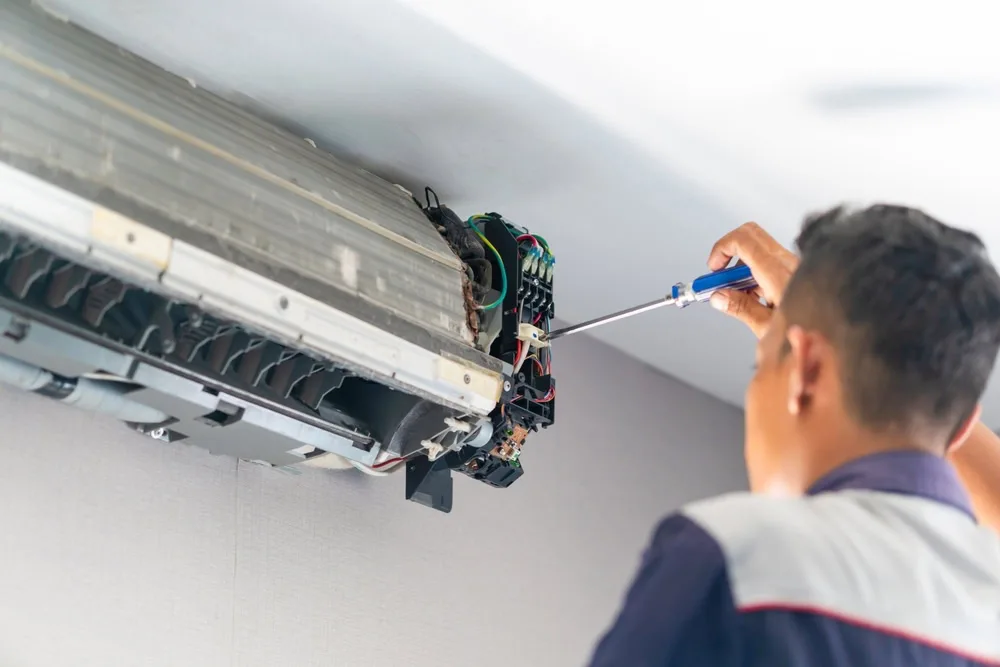
If your system is under 10 years old and the repair costs less than half the price of a new unit, fixing it usually makes sense. If it’s over 15 years old and you’re looking at a major repair—compressor, evaporator coil, or condenser replacement—the math often tips toward replacement.
Here’s why: older systems use more energy, even when they’re working fine. Add in a big repair bill, and you’re paying twice—once for the fix, and every month after in higher electric bills. A newer, efficient system pays for itself faster than most people expect, especially during a Long Island summer when your AC runs nonstop.
We’ll give you both options with real costs so you can decide what makes sense for your situation. Some repairs buy you another five solid years. Others buy you six months and another service call.
Warm air coming from your vents is the obvious one, but it’s not the only sign. If your system runs constantly but never cools the house down, that’s a problem. If you’re hearing grinding, squealing, or banging noises, something’s failing. If your energy bills jumped without explanation, your AC is working harder than it should.
Other signs: weak airflow from the vents, moisture or leaks around the indoor unit, or the system cycling on and off every few minutes. That last one—short cycling—usually means a refrigerant issue, a bad thermostat, or an oversized unit that was never right for your home.
Don’t ignore weird smells either. A musty smell means mold in the ductwork or drain pan. A burning smell means an electrical problem that’ll get worse if you wait.
Yes. AC emergencies don’t happen on a schedule, and we’re available 24/7 when your system fails at the worst possible time—middle of a heat wave, late at night, or right before a holiday weekend.
Emergency calls cost more than regular service, usually 50-100% more depending on the time and day. That’s standard across the industry because it means pulling a technician off-hours and prioritizing your call over scheduled work. But if your house is 85 degrees at midnight and you’ve got kids or elderly family at home, waiting until Monday isn’t an option.
We’ll get someone out as fast as we can, diagnose the problem, and either fix it or get you a temporary solution until we can complete the full repair. Most emergency calls are things we can handle same-visit—tripped breakers, blown capacitors, clogged drain lines, or thermostat issues.
Water leaking from your indoor unit usually means one of three things: a clogged condensate drain line, a frozen evaporator coil, or a cracked drain pan. All three are fixable, but you need to catch them before the water damages your ceiling or floor.
The drain line clogs when dust, mold, or algae build up inside. It’s a maintenance issue that happens over time, especially in humid climates like Long Island. We clear the line, flush it, and treat it so it doesn’t clog again right away.
A frozen coil happens when airflow is restricted—dirty filter, blocked return vent, or low refrigerant. The ice melts, the drain pan overflows, and you’ve got water everywhere. We fix the airflow issue or recharge the refrigerant, depending on what caused it. A cracked drain pan is less common but happens on older systems. That’s a replacement part, not a repair.
Simple fixes—replacing a capacitor, cleaning a drain line, or swapping a contactor—usually run $150 to $400. Mid-level repairs like fixing a refrigerant leak, replacing a fan motor, or installing a new thermostat cost $400 to $1,200. Major repairs—compressor replacement, evaporator coil, or condenser swap—start around $1,200 and can go up to $3,000 depending on the unit.
We give you the price before we start the work, and that price includes labor, parts, and testing afterward to make sure everything’s running right. No surprise charges. No “oh, we found something else” upsells unless there’s actually another problem and we can show you why it matters.
If the repair costs more than half of what a new system would cost and your unit is over 12 years old, we’ll tell you. Sometimes fixing it makes sense. Sometimes it doesn’t. You’ll have the numbers either way.
Once a year, ideally in the spring before you’re running it daily. Annual maintenance catches small problems before they become expensive ones, keeps your system running efficiently, and extends the lifespan of the unit by several years.
During a maintenance visit, we’re cleaning the coils, checking refrigerant levels, testing electrical connections, lubricating moving parts, inspecting the condensate drain, and making sure airflow is where it should be. It’s not glamorous, but it’s the difference between a system that lasts 10 years and one that lasts 18.
Massapequa Park’s summer humidity is brutal on AC systems. Units that don’t get maintained work harder, use more energy, and fail faster—usually right in the middle of a heat wave when every HVAC company is booked solid. A maintenance plan keeps you off that list.