

When your air conditioner stops working in Port Washington North, you’re dealing with more than discomfort. You’re watching energy bills climb while your system runs constantly but barely cools. You’re wondering if this is a quick fix or if you need to replace the whole unit.
Here’s what changes after proper residential AC repair. Your home cools evenly again, room to room. Your system cycles normally instead of running nonstop, which drops your energy costs back to reasonable levels. You stop worrying about whether it’ll make it through the next heat wave.
The difference comes down to accurate diagnostics. Most AC problems in Port Washington North stem from refrigerant leaks, frozen evaporator coils, failed capacitors, or clogged condensate drains. When you know what’s actually broken, you can fix it once instead of paying for the same repair three times. That’s how you get years of reliable cooling instead of constant service calls.
We handle HVAC repair in Port Washington North with the kind of local knowledge that only comes from working in the same community long-term. We understand how coastal humidity affects your equipment differently than systems inland. Salt air accelerates corrosion on outdoor units. Moisture levels stress compressors and coils in ways you don’t see in drier climates.
That context matters when diagnosing why your central AC repair needs keep coming back. We’re not guessing based on generic troubleshooting charts. We’re applying what we’ve learned from hundreds of service calls in Nassau County homes that deal with the same environmental factors yours does. When you call 516-248-2795, you’re reaching technicians who’ve seen your exact problem before and know how to fix it permanently.

You call when your AC isn’t cooling, and we schedule a diagnostic visit that works with your day. Most repairs in Port Washington North start with the same question: is this a simple fix or something bigger? That’s what the diagnostic process answers.
Our technician checks refrigerant pressures first because low refrigerant is the most common culprit. Then we test electrical components—capacitors, contactors, and compressor function. We inspect airflow through the evaporator coil and look for blockages in the condensate drain. This systematic approach finds the actual problem instead of replacing parts until something works.
Once we identify what failed, you get a clear explanation and a price before any repair work starts. No surprises, no upselling. If your compressor is shot and the system is 15 years old, we’ll tell you that replacement makes more sense than a $2,000 repair. If it’s a $300 capacitor, we fix it and you’re done. The whole process typically takes one visit for straightforward repairs, though refrigerant leaks or complex electrical issues might need a follow-up.
Ready to get started?
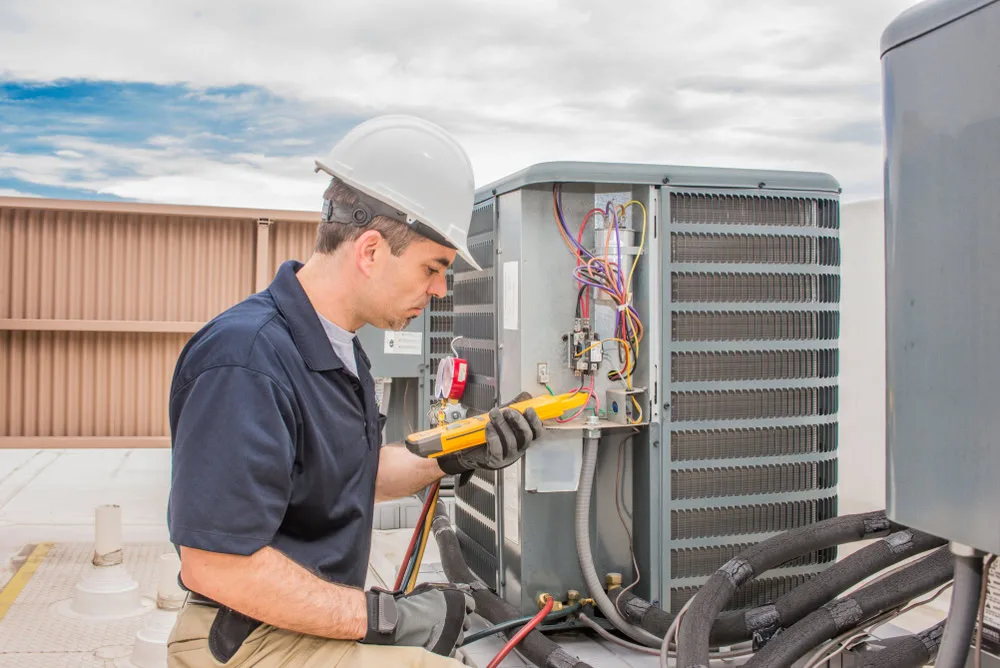
Air conditioner repair in Port Washington North covers everything from minor component failures to major system malfunctions. You get full diagnostic testing with digital gauges that measure refrigerant charge, superheat, and subcooling. We check amperage draw on the compressor and fan motors. We test capacitor microfarads and verify thermostat calibration.
Common repairs include fixing AC leaking water issues caused by clogged condensate lines, replacing failed capacitors that prevent your compressor from starting, recharging refrigerant after locating and sealing leaks, and thawing frozen evaporator coils caused by airflow restrictions. Each repair uses OEM parts that match your system’s specifications, not universal components that sort of fit.
Port Washington North’s humid climate creates specific challenges. Condensate drains clog faster here because of algae growth in the drain pan. Outdoor units corrode quicker from salt air exposure. Humidity makes your AC work harder, which stresses components more than in dry climates. Knowing these patterns helps us prevent the next breakdown, not just fix the current one. Every repair includes recommendations for avoiding repeat failures, whether that’s more frequent filter changes or adding a condensate drain treatment.
Age and repair cost determine this more than anything else. If your system is under 10 years old and the repair costs less than half of a new system, repair makes sense. If it’s over 15 years old and needs a major component like a compressor, replacement usually wins financially.
Here’s the math that matters. A new AC system in Port Washington North runs $4,000 to $8,000 depending on size and efficiency. If your 12-year-old system needs a $2,500 compressor replacement, you’re putting significant money into equipment that’s already past its median lifespan. You’ll likely face another major repair within two years. But if that same system needs a $400 capacitor, you could get another three to five years of service.
Signs you need AC repair include weak airflow, warm air from vents, unusual noises, frequent cycling, or moisture around the indoor unit. Signs you need replacement include age over 15 years, refrigerant type that’s being phased out, multiple repairs in the past two years, or energy bills that keep climbing despite repairs. We’ll give you honest numbers either way.
Refrigerant leaks cause most sudden cooling failures in Port Washington North. Your system needs a specific refrigerant charge to absorb heat properly. When that charge drops due to a leak, the AC runs constantly but produces weak, barely cool air. You’ll often see ice forming on the refrigerant lines or indoor coil.
Electrical failures are the second most common cause. A blown capacitor prevents your compressor from starting, so the outdoor unit sits silent while the indoor fan runs. A failed contactor does the same thing. These components wear out from the electrical load and heat cycling, especially in coastal areas where humidity accelerates corrosion.
Frozen evaporator coils stop cooling because ice blocks airflow through the coil. This happens when airflow drops due to a clogged filter, closed vents, or a failing blower motor. It also happens when refrigerant charge is low. The coil temperature drops below freezing, moisture in the air freezes on contact, and the ice builds until no air can pass through. Thermostat failures and clogged condensate drains that trigger safety switches round out the common culprits.
Simple repairs take one to two hours from arrival to completion. Replacing a capacitor, cleaning a condensate drain, or swapping a contactor falls into this category. These are the repairs where we diagnose the problem, grab the part from the truck, install it, and test the system before we leave.
Refrigerant leak repairs take longer because we have to locate the leak first. Small leaks require electronic leak detectors and sometimes UV dye that needs to circulate through the system. Once we find and seal the leak, we evacuate the system, pull a vacuum to remove moisture and air, then recharge it to the correct specifications. This process typically takes three to four hours.
Complex repairs involving electrical troubleshooting, replacing evaporator coils, or addressing multiple component failures can take four to six hours or require a second visit. If we need to order a specific part that’s not standard stock, you’re looking at a day or two for delivery. Emergency repairs in Port Washington North get priority scheduling, so we’re usually there the same day you call, but completion time depends on what’s actually broken.
A clogged condensate drain causes almost every indoor water leak. Your AC removes humidity from the air as it cools, and that moisture collects in a drain pan under the indoor coil. From there it flows through a drain line to the outside. When that line clogs with algae, mold, or debris, water backs up and overflows the pan onto your floor or ceiling.
Port Washington North’s humidity makes this worse. Your AC pulls more moisture from the air here than it would in a dry climate, which means more water flowing through that drain line. More water means faster algae growth and more frequent clogs. The fix involves clearing the blockage with a wet vac or compressed air, then treating the line to prevent regrowth.
Less common causes include a cracked drain pan, a disconnected drain line, or a frozen evaporator coil that’s melting faster than the drain can handle. If your drain line is clear but you’re still seeing water, the problem is usually airflow related. Low airflow causes the coil to freeze, then when it thaws, the sudden volume of water overwhelms the drain system. Fixing the airflow issue—whether it’s a dirty filter, closed vents, or a weak blower—stops the freezing and solves the leak.
Weak airflow from your vents is the earliest warning sign most people notice. If you have to stand directly under a vent to feel cool air, your system is struggling. This usually means a failing blower motor, a clogged filter that hasn’t been changed in months, or ductwork problems that are restricting flow.
Unusual noises tell you specific components are wearing out. Grinding or squealing from the outdoor unit points to a failing compressor or fan motor bearings. Clicking that won’t stop suggests a failing relay or contactor. Hissing indicates a refrigerant leak. Banging or clanking means something came loose inside the cabinet. Normal operation is relatively quiet—just the sound of air moving and the compressor humming.
Your energy bills climbing without explanation means your system is working harder to produce the same cooling. This happens when refrigerant charge drops, when coils get dirty and can’t transfer heat efficiently, or when the compressor starts failing and draws more amperage. Frequent cycling—where the system turns on and off every few minutes—indicates a failing compressor, a refrigerant issue, or an oversized system. If you’re seeing any of these signs in Port Washington North, addressing them now prevents a complete failure during the next heat wave.
Simple repairs like capacitor replacement or drain cleaning run $150 to $400 including the diagnostic fee. These are the common failures that don’t require expensive parts or extensive labor. A capacitor costs $20 but you’re paying for the diagnostic expertise, the service call, and the warranty on the work.
Mid-range repairs including contactor replacement, fan motor replacement, or thermostat upgrades cost $300 to $800. Refrigerant recharge after locating and sealing a leak runs $400 to $1,200 depending on the type of refrigerant and how much your system needs. R-22 refrigerant costs significantly more than newer R-410A because it’s being phased out.
Major repairs like compressor replacement or evaporator coil replacement range from $1,500 to $3,500. At this price point, you need to consider the system’s age and overall condition. Putting $2,500 into a 14-year-old system rarely makes financial sense. Diagnostic fees in Port Washington North typically run $75 to $150, and most companies apply that toward the repair if you proceed. We give you the exact price before starting any work, so you can make an informed decision about repair versus replacement.