
You wake up to a warm house. Your morning shower has hot water. Your energy bill stops climbing because your boiler isn’t working overtime to compensate for a failing part.
That’s what happens when your system gets repaired correctly the first time. No more banging pipes at 2 a.m. No more cold spots in the bedrooms. No more wondering if you’re one cold snap away from a total breakdown.
A working boiler means your family stays comfortable through nor’easters and those brutal January weeks when the wind off the water makes everything feel ten degrees colder. It means you’re not paying for heat that’s escaping through inefficient combustion or a cracked heat exchanger. And it means you can stop thinking about your heating system and get back to everything else.
We work with homeowners and businesses across Long Island who need their heating systems running right. We’re local, licensed, and we understand what coastal air does to your equipment over time.
Bellmore homes deal with salt air that accelerates corrosion on venting and exterior components. Freeze-thaw cycles stress older parts. We’ve seen it all, and we know what breaks first and why.
When you call, you’re talking to people who live and work in the same area you do. We’re not a call center routing you to the lowest bidder. We’re the crew that shows up, does the work, and stands behind it.
First, we listen. You tell us what’s going on—no heat, strange noises, leaking water, whatever the issue is. We ask a few questions to get a clearer picture before we even roll out.
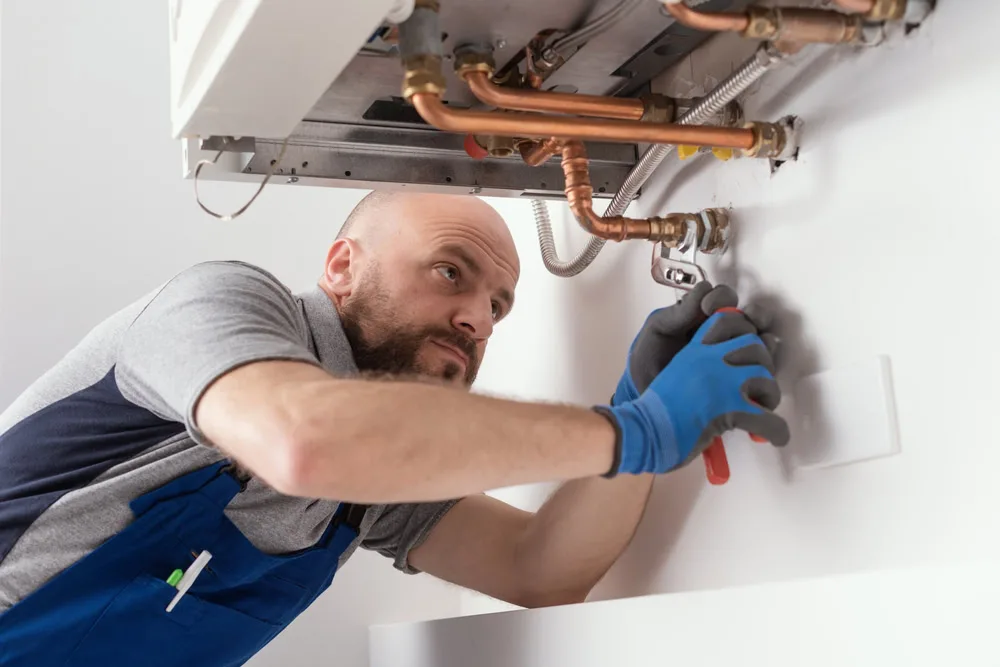
When we arrive, we run a full diagnostic. That includes checking your thermostat, inspecting the boiler itself, testing pressure levels, and running a digital combustion analysis to see how efficiently your system is burning fuel. We’re looking for the root cause, not just the obvious symptom.
Once we know what’s wrong, we explain it in plain terms. You get an upfront estimate before any repair work starts. No surprises, no hidden fees. If it’s a simple fix, we handle it on the spot. If it’s a bigger job, we walk you through what’s involved and how long it’ll take.
After the repair, we test everything to make sure your heat and hot water are back to normal. You get a detailed report showing your system’s efficiency, so you know exactly where things stand.
Ready to get started?
Every boiler repair in Bellmore, NY starts with a complete system evaluation. We check gas connections, water lines, pressure relief valves, circulator pumps, and all electrical components. If your boiler uses oil, we inspect the burner assembly and fuel supply.
We handle the most common issues Long Island homeowners face: airlocks that cause banging noises, failed motorized valves that prevent heat distribution, low water levels that trigger safety shutoffs, and frozen condensate pipes during extreme cold. We also address water leaks, pressure drops, and combustion problems that spike your energy bills.
For gas boiler repair in Bellmore, NY, we test for proper venting and carbon monoxide levels. That’s non-negotiable. Your safety matters more than a quick fix. If we find a cracked heat exchanger or a dangerous gas leak, we’ll tell you straight and explain your options.
You also get a service warranty on the work we complete. If something goes wrong with what we fixed, we come back and make it right. That’s how it should work.
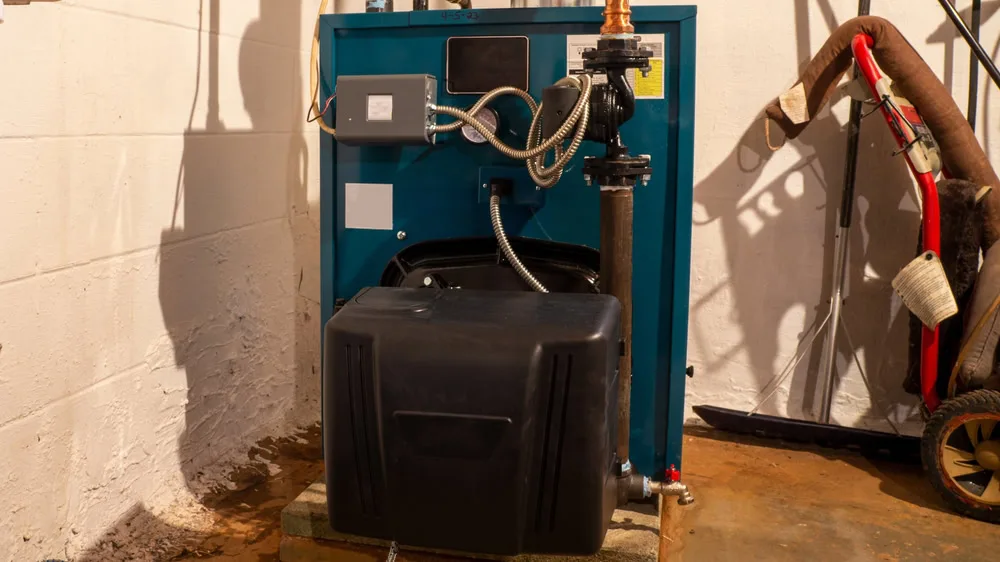
Most boiler repairs in Bellmore, NY run between $200 and $600, depending on what’s broken and what parts you need. A simple fix like replacing a circulator pump or resetting an airlock costs less than rebuilding a gas valve or replacing a heat exchanger.
Emergency repairs cost more—usually three to four times the price of scheduled service. That’s why catching problems early matters. A $300 repair during regular hours can turn into a $1,200 emergency call at midnight in January.
We give you an estimate before we start any work. You’ll know what it costs and why. If your boiler is old and the repair is expensive, we’ll also tell you if replacement makes more sense financially. Sometimes fixing a 25-year-old boiler that’s losing efficiency every year isn’t the smartest move.
The most common issue we see is airlocks in the system, which cause banging or gurgling noises and prevent proper heat distribution. That happens when air gets trapped in the pipes, usually after the system’s been drained or if there’s a small leak somewhere.
Water leaks are another frequent problem. Boilers lose pressure when seals wear out, valves fail, or pipes corrode. In Bellmore, the salt air speeds up corrosion on exterior components and venting, especially if your home is close to the water.
Frozen condensate pipes shut down modern high-efficiency boilers during extreme cold. The pipe that drains condensation from the boiler freezes, creates a blockage, and triggers a safety shutoff. We also see failed motorized valves, broken thermostats, and low water levels that prevent the boiler from firing up. Most of these problems are fixable if you catch them before they cause bigger damage.
Simple repairs take one to two hours. If we’re replacing a circulator pump, fixing a thermostat, or bleeding air out of the system, we’re usually done the same visit.
More involved repairs—like replacing a gas valve, rebuilding a burner assembly, or fixing a significant water leak—can take three to five hours. If we need to order a part that’s not on the truck, you’re looking at a return visit once the part arrives.
Emergency repairs depend on the situation. If your boiler’s completely down and it’s the middle of winter, we prioritize getting your heat back on as quickly as possible, even if that means a temporary fix until we can complete a full repair. The goal is to keep you warm while we handle the problem correctly.
If your boiler is under 15 years old and the repair costs less than a third of a new boiler, repair usually makes sense. If it’s over 20 years old, breaking down frequently, or the repair costs $2,000 or more, replacement is often the better investment.
Older boilers lose efficiency over time—typically five to ten percent per year. That means higher energy bills even when everything’s working. A new high-efficiency boiler can cut your heating costs significantly, and Long Island residents can get rebates through programs like Upgrade and Save.
We’ll walk you through the math. If you’re spending $500 a year on repairs for a boiler that’s costing you an extra $400 annually in wasted energy, a new system pays for itself faster than you think. But if your boiler is relatively young and this is the first major issue, fixing it is the smarter move.
Yes. When your heat goes out in the middle of a winter storm, that’s an emergency. We respond to calls involving complete loss of heat, gas leaks, carbon monoxide detection, and significant water leaks that threaten property damage.
Emergency service costs more than scheduled repairs because we’re pulling a crew off other jobs or coming in after hours. But when it’s 20 degrees outside and your boiler’s down, you need someone who answers the phone and shows up.
We carry common parts on the truck, so there’s a good chance we can get your system running again the same visit. If it’s a more complex issue, we’ll at least get you temporary heat while we line up the right parts and schedule a complete repair. You’re not waiting days in a cold house.
Once a year, ideally in early fall before heating season starts. Annual maintenance catches small problems before they turn into expensive breakdowns, keeps your system running efficiently, and extends the life of your equipment.
During a maintenance visit, we clean the heat exchanger, test all safety controls, check gas or oil combustion, inspect the venting system, and verify that water pressure and circulation are correct. We also run a digital combustion analysis to measure efficiency and catch any performance issues.
Skipping maintenance costs you money. A boiler that’s not burning fuel efficiently wastes energy and drives up your heating bills. Parts that aren’t inspected regularly fail at the worst possible time—usually during the coldest week of the year. Regular service costs $200 to $400 annually. Emergency repairs cost three to four times that, and a full boiler replacement runs $8,000 to $15,000. The math isn’t complicated.