
You’re not looking for a lecture on how boilers work. You need heat, and you need it now.
When your boiler stops working in the middle of a Long Island winter, every hour without heat matters. Frozen pipes become a real risk. Your family’s uncomfortable. And you’re stuck wondering if you’re about to get hit with a massive replacement bill.
That’s where fast, honest diagnosis makes all the difference. Our residential boiler repair in Freeport, NY starts with figuring out what’s actually wrong—not what’s most profitable to sell you. Most boiler problems are fixable. A failed circulator pump, a faulty pressure valve, or a clogged heat exchanger can usually be repaired the same day for a fraction of replacement cost.
You get a technician who shows up on time, explains what’s broken in plain language, and fixes it right. No three-day waits. No vague estimates. Just your heat back on so you can move on with your life.
We’ve been repairing boilers across Nassau County for over 30 years. We’ve seen every type of failure—from corroded heat exchangers in older cape-style homes near the water to zone valve issues in larger colonials with multiple heating zones.
Freeport’s coastal location means salt air accelerates corrosion on boiler components. We account for that. Our licensed boiler repair technicians in Freeport, NY carry the parts that fail most often in this climate, which means fewer trips back to the truck and faster repairs.
We’re not the cheapest option, and that’s intentional. You’re paying for technicians who’ve been doing this long enough to diagnose problems accurately the first time—and who won’t disappear when something goes wrong after the repair.
First, we answer. If your boiler’s out and it’s 10 PM on a Saturday, you’re not getting voicemail. Our emergency boiler repair in Freeport, NY runs 24/7 because heating failures don’t wait for business hours.
Second, we diagnose the actual problem. Our technician tests your system—checking pressure, inspecting the ignition sequence, testing safety controls, and running combustion analysis. You’ll know what failed, why it failed, and what it costs to fix before any work starts.
Third, we fix it or give you real options. Most boiler repairs happen the same day. If a part needs to be ordered, we’ll tell you how long it takes and whether a temporary fix makes sense. If your boiler’s too far gone, we’ll explain why replacement makes more sense than sinking money into an old system—but we’re not pushing new equipment if a repair gets you another few years.
Fourth, we test everything before we leave. Heat’s flowing to every zone, pressure’s where it should be, and there’s no carbon monoxide in your air. You’re not our test case.
Ready to get started?
Every gas boiler repair in Freeport, NY includes a full system inspection—not just the broken part. We’re checking your heat exchanger for cracks, testing your pressure relief valve, inspecting your circulator pump, and making sure your thermostat’s communicating properly with the boiler.
Carbon monoxide testing is standard, not optional. Boilers produce CO when combustion isn’t complete, and Long Island’s salt air can corrode venting systems faster than you’d expect. We test your air and inspect your flue before we call the job done.
You also get a written estimate before any repair work starts. No surprise charges. If we find a second issue while we’re fixing the first, we’ll explain what it is and what happens if you wait. Some problems need immediate attention. Others can wait until next season.
Freeport homeowners deal with unique challenges—older homes with steam boilers, coastal corrosion, and heating systems that run hard from November through March. We account for all of it. If your boiler’s struggling to keep up or your energy bills have spiked, that’s usually a sign something’s wearing out before it fails completely. Catching it early saves you from a middle-of-the-night emergency and a much bigger bill.
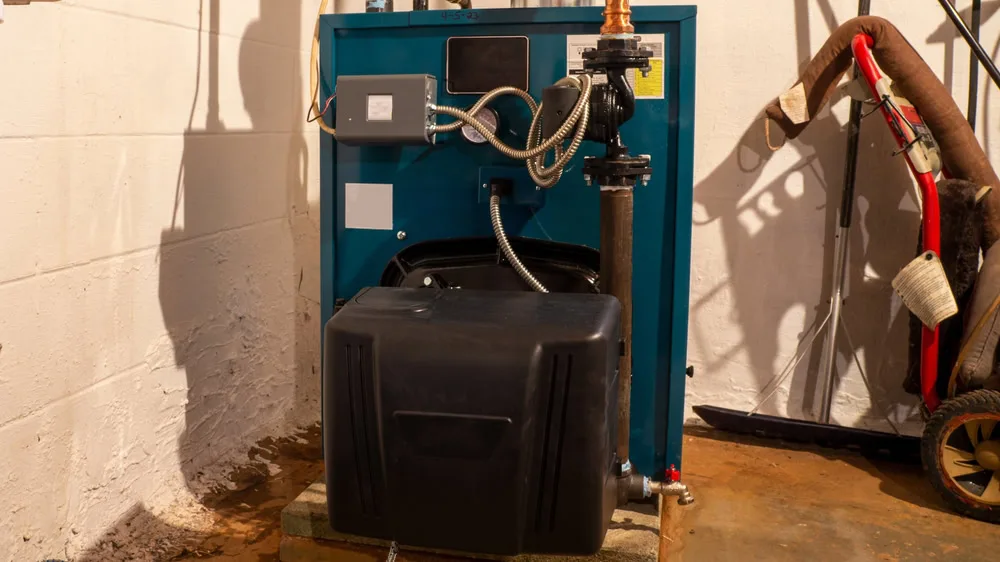
Most boiler repairs in Freeport, NY run between $300 and $800, depending on what’s broken. A simple fix like a faulty thermostat or a tripped safety switch costs less. Replacing a circulator pump or a pressure relief valve costs more because of the part and labor involved.
You’ll pay a service call fee just to get a technician out—usually between $100 and $200. That covers the trip and the diagnostic work. If you move forward with the repair, that fee typically gets applied to the total cost.
Emergency calls cost more. If your boiler quits at 2 AM and you need heat immediately, expect to pay a premium for after-hours service. But you’re also getting a licensed technician to your door within hours, not days. For most people, that’s worth it when the alternative is no heat and potential pipe damage.
If your boiler’s under 15 years old and the repair costs less than a third of a new boiler, fix it. If it’s over 20 years old and you’re looking at a major repair—like a cracked heat exchanger or a failed gas valve—replacement usually makes more sense.
Age matters, but so does how well the system’s been maintained. A 25-year-old boiler that’s been serviced annually might outlast a 12-year-old system that’s been ignored. Frequent repairs are a red flag. If you’re calling for service twice a year, you’re throwing money at a dying system.
Efficiency is another factor. Older boilers waste energy. If your heating bills have climbed and your boiler’s struggling to keep up, a new high-efficiency model could pay for itself in energy savings over time. We’ll run the numbers with you so you can make an informed decision—not a panicked one in the middle of a breakdown.
Circulator pump failures top the list. The pump moves hot water through your heating system, and when it quits, you lose heat even though the boiler’s firing. Salt air near the coast accelerates corrosion on pump components, so Freeport homes see these fail more often than inland areas.
Pressure issues come next. Low water pressure keeps your boiler from firing, and high pressure can trip safety valves or cause leaks. Pressure problems usually trace back to a faulty expansion tank, a stuck pressure relief valve, or a leak somewhere in the system.
Ignition failures are common in older boilers. If your pilot light won’t stay lit or your electronic ignition keeps failing, you’re dealing with a thermocouple issue, a dirty flame sensor, or a gas valve problem. These are usually straightforward fixes if caught early, but they’ll leave you without heat if ignored.
Yes. We’re available 24/7 for emergency boiler repair in Freeport, NY. If your heat goes out in the middle of the night or on a weekend, you’re not waiting until Monday morning for help.
Emergency calls get prioritized. We’ll have a licensed technician at your door as quickly as possible—usually within a few hours. We carry common replacement parts on our trucks, so most emergency repairs get finished the same visit.
You’ll pay more for emergency service than you would for a scheduled appointment, but you’re also getting immediate help when you need it most. Frozen pipes and extended cold exposure create bigger problems than a higher service fee. If your boiler’s out and temperatures are dropping, call us. We’ll get your heat back on.
Most boiler repairs take one to three hours from start to finish. Simple fixes—like resetting a tripped safety switch or replacing a thermostat—take less time. More involved repairs—like swapping a circulator pump or rebuilding a gas valve—take longer.
Diagnosis usually takes 30 to 45 minutes. We’re testing your system, checking pressure, inspecting components, and running combustion analysis to pinpoint the problem. Once we know what’s wrong, we’ll tell you how long the repair takes and what it costs before we start.
If we need to order a part, that changes the timeline. Some components aren’t stocked on our trucks, especially for older or less common boiler models. We’ll let you know upfront if there’s a wait and whether we can rig a temporary fix to keep you warm until the part arrives.
Yes. Annual maintenance catches small problems before they become expensive failures. A $200 tune-up is a lot cheaper than an $800 emergency repair in January.
During a maintenance visit, we’re cleaning your heat exchanger, testing your safety controls, checking for leaks, inspecting your venting system, and running combustion analysis to make sure your boiler’s burning fuel efficiently. We’re also testing for carbon monoxide and making sure your pressure’s where it should be.
Freeport’s coastal environment is hard on boilers. Salt air corrodes components faster, and heating systems here run longer and harder than they do inland. Regular maintenance extends your boiler’s lifespan and keeps your energy bills from creeping up. Most boiler failures happen in the middle of winter because that’s when the system’s under the most stress. Catching wear and tear in the fall means you’re not scrambling for heat when it’s 20 degrees outside.