

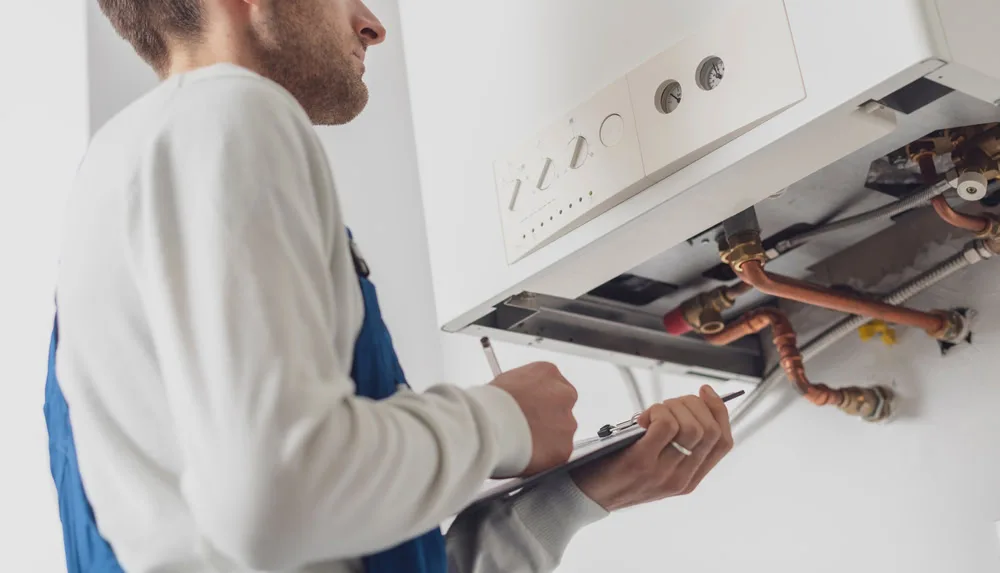
You shouldn’t have to wait two days for someone to look at your boiler while your family bundles up in winter coats indoors. That’s not how heating emergencies should work.
Our trucks carry parts for most major brands. We answer calls 24/7 during winter months. Most repairs get completed on the first visit because we stock what breaks most often in homes like yours.
Garden City South has a median home age of 1948. Older boilers in older homes need technicians who’ve seen it all and know how coastal Long Island conditions affect equipment. Salt air corrodes components differently. Local water creates specific mineral buildup patterns. These aren’t things you learn from a manual.
You get your heat back, your energy bills stop climbing from an inefficient system limping along, and you stop wondering if tonight’s the night it quits completely.
We operate right here on Long Island. We’re not a national franchise routing your call to whoever’s available three towns over.
Our technicians are licensed, insured, and trained on the heating systems common in Nassau County homes. We’ve worked on enough 1940s-era houses in Garden City South to know what you’re dealing with before we arrive.
When you call, you’re talking to someone who understands that 91% of homes here are owner-occupied. You’re not renting. This is your investment. We treat it that way.
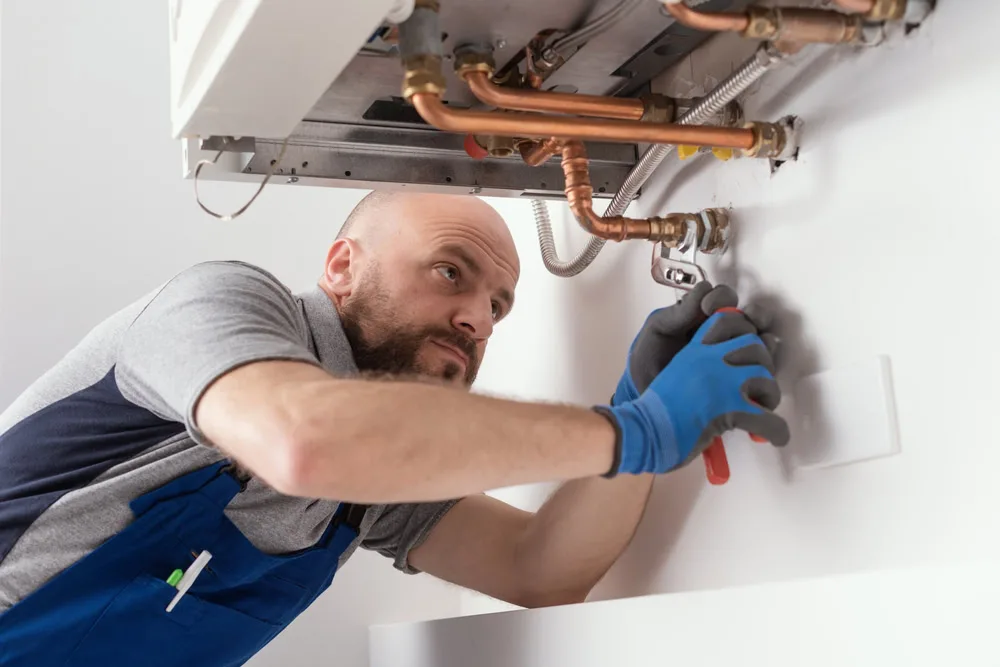
You call. We answer. You describe what’s happening with your boiler. We give you an honest assessment of whether this is an emergency or something that can wait until morning.
If you need someone now, we typically arrive within 90 minutes. Our technician diagnoses the problem, explains what’s wrong in plain language, and provides upfront pricing before starting any work. No surprise charges after the fact.
Most repairs get finished that same visit. About 80% of the time, we have the part on the truck. For the other 20%, we order it and schedule a follow-up as soon as it arrives.
If your boiler is beyond reasonable repair, we’ll tell you. We’ll explain why replacement makes more financial sense than pouring money into an old system. Then we’ll walk you through your options, including available rebates and tax credits that can offset up to $1,700 of a new high-efficiency installation.
You’re not left guessing what to do next. You get clear information and then you decide.
Ready to get started?
Every service call starts with a complete diagnostic. We don’t guess. We test pressure, check for leaks, inspect the heat exchanger, examine the circulator pump, and verify that safety controls are functioning properly.
You get a clear explanation of what’s wrong and what it’ll cost to fix. We provide a written estimate before we start work. That’s standard, not a courtesy.
Our repairs come with a warranty on both parts and labor. If something we fixed fails within the warranty period, we come back and make it right at no additional charge.
Garden City South homes face specific challenges. Coastal humidity affects boiler components. Older homes often have unique configurations. Local water quality creates scale buildup that impacts efficiency. We account for these factors in every repair because ignoring them means you’ll be calling someone back in six months.
If your system qualifies for efficiency upgrades or rebates, we’ll let you know. Long Island homeowners can receive up to $1,100 for installing higher-efficiency oil-fired boilers, plus up to $600 in federal tax credits. That’s real money back in your pocket.
We typically arrive within 90 minutes for genuine heating emergencies during winter months. That’s not a guarantee, but it’s what usually happens because we keep emergency technicians on rotation specifically for after-hours calls.
If you call at 2 AM because your boiler quit and it’s 15 degrees outside, that’s an emergency. We treat it like one. If your boiler is making a weird noise but still producing heat, we can often schedule you for first thing in the morning and save you the emergency rate.
We’re honest about what constitutes an emergency because we know you’re weighing the cost of an emergency call against the discomfort of a cold house. We’ll help you make that decision with accurate information about how long your home will stay warm and what risks you’re taking by waiting.
If the repair costs 50% or more of what a new boiler would cost, replacement usually makes better financial sense. That’s the general rule, but your specific situation matters.
A 15-year-old boiler that needs a $2,000 repair probably isn’t worth fixing when a new high-efficiency unit costs $5,000 to $7,000 and will cut your heating bills by 30%. You’ll recoup that difference in energy savings over a few years, plus you’ll have a reliable system with a full warranty.
A 5-year-old boiler that needs a $400 repair? Fix it. That’s straightforward. The gray area is older systems needing moderate repairs. We’ll walk you through the math based on your system’s age, efficiency rating, and repair history. If you’ve called for repairs more than once in the past year, those costs add up fast.
Modern boilers have AFUE ratings of 87% or higher. If your current system is rated 60-75%, you’re burning money every month. Factor in available rebates and tax credits, and replacement often becomes the smarter move even when repair is technically possible.
Age and lack of maintenance cause most failures. Garden City South’s median home was built in 1948, and many original boilers have been replaced only once or not at all. A boiler that’s 20+ years old is living on borrowed time.
Coastal conditions accelerate wear. Salt air corrodes metal components faster than it would inland. Local water quality creates mineral deposits that reduce efficiency and eventually cause failures. These aren’t problems you’d see in other parts of the country, but they’re common here.
Neglected annual maintenance is the other major factor. Boilers need yearly inspections, cleaning, and adjustments. Skip that for a few years and small problems become big ones. A dirty heat exchanger forces your system to work harder, burning more fuel and wearing out components faster.
Sudden failures during cold snaps happen because that’s when your boiler is working hardest. A system that’s been declining gradually all year finally gives up when you need it most. That’s why we recommend maintenance in fall, before heating season starts, not in January when everyone’s calling.
Service calls start at $189, which covers the diagnostic and trip charge. Actual repair costs depend entirely on what’s wrong and what parts are needed. Simple fixes like replacing a faulty thermostat or circulator pump might run $300-$600 total. Major repairs like replacing a heat exchanger can cost $1,500-$2,500.
Emergency calls outside business hours cost more. That’s standard across the industry because you’re paying for someone to leave their family at 10 PM on a Saturday. We’re upfront about emergency rates when you call so you can decide if you want to wait until morning.
We provide written estimates before starting work. You’ll know exactly what you’re paying before we touch your system. No hidden fees, no surprise charges for “additional labor” that wasn’t mentioned upfront.
If you’re comparing quotes, make sure you’re comparing the same scope of work. A $200 repair quote that only addresses the immediate symptom isn’t the same as a $400 quote that fixes the root cause and prevents it from happening again next month. Ask what’s included and what warranty comes with the work.
Yes. We work on all major residential boiler brands including Weil-McLain, Peerless, Burnham, New Yorker, and others commonly installed in Long Island homes. Our trucks stock parts for the most common brands and models.
Older homes in Garden City South often have boiler brands that aren’t made anymore. We can still service them in most cases, though finding parts sometimes takes longer. If your boiler is so old that parts are no longer available, we’ll tell you that upfront rather than stringing you along.
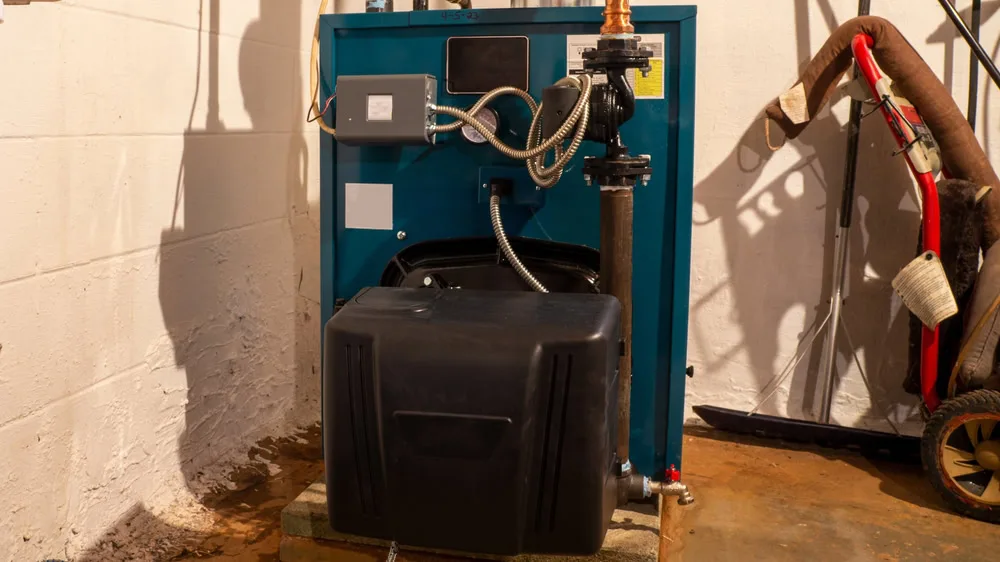
We also service both gas and oil-fired boilers. Oil systems are still common in this area, especially in older homes. Some companies only work on gas systems, which leaves oil boiler owners scrambling to find qualified help. We handle both.
If you have a hot water boiler, steam boiler, or combination system, we’ve worked on it before. Different systems require different expertise. We train our technicians on all types because limiting ourselves to one kind of boiler would mean turning away half the calls we get from this area.
Annual professional maintenance catches small problems before they become expensive emergencies. That service should include cleaning the heat exchanger, inspecting the burner, testing safety controls, checking for leaks, verifying proper venting, and adjusting the system for optimal efficiency.
You should also check your boiler’s pressure gauge monthly. Most systems run between 12-15 PSI when cold. If pressure drops below 12 PSI, you might have a leak. If it climbs above 30 PSI, your expansion tank or pressure relief valve might be failing. These are things you can spot yourself between professional visits.
Bleed your radiators at the start of each heating season if you have a hot water system. Trapped air reduces efficiency and creates cold spots. It takes five minutes and prevents uneven heating that makes you crank up the thermostat and waste energy.
Long Island’s water quality means you should flush your system every few years to remove sediment buildup. That’s not a DIY job. It requires draining the system, flushing it with cleaning solution, and refilling it properly. But it extends your boiler’s life significantly and maintains efficiency.
The average Long Island household spends $400-$500 annually on boiler maintenance and repairs. Skipping the $200 annual maintenance to save money usually means you’ll spend $600 on an emergency repair that could have been prevented. It’s not actually saving money. It’s just delaying when you spend it and guaranteeing you’ll spend more.