
You wake up to a warm house. Your kids aren’t bundled in jackets at the breakfast table. The shower runs hot, and you’re not rationing water between family members.
Your energy bill stops climbing every month because your boiler isn’t working twice as hard to produce half the heat. No more strange banging sounds at 2 a.m. No more puddles forming under the unit.
When your boiler works right, you forget it’s even there. That’s what a proper repair does—it removes the problem from your life entirely. You’re not wondering if it’ll make it through winter or planning for the next breakdown. You’re just living in a comfortable home like you should be.
We’ve been repairing boilers in Nassau County for over 30 years. That means we’ve seen what salt air does to your heat exchanger, how local water quality affects your system, and which boiler models hold up in Herricks homes versus which ones don’t.
We’re a family-operated business, which means when you call, you’re talking to people who actually care if your heat works tonight. We know the difference between a quick patch and a repair that lasts.
Herricks has older homes with established heating systems. We work on gas boilers, hot water boilers, and steam systems daily. If it heats your house, we’ve fixed it before.
You call us and describe what’s happening—no heat, strange noises, leaking, whatever it is. We ask a few questions to understand the situation and schedule a time that works for you. If it’s an emergency, we move faster.
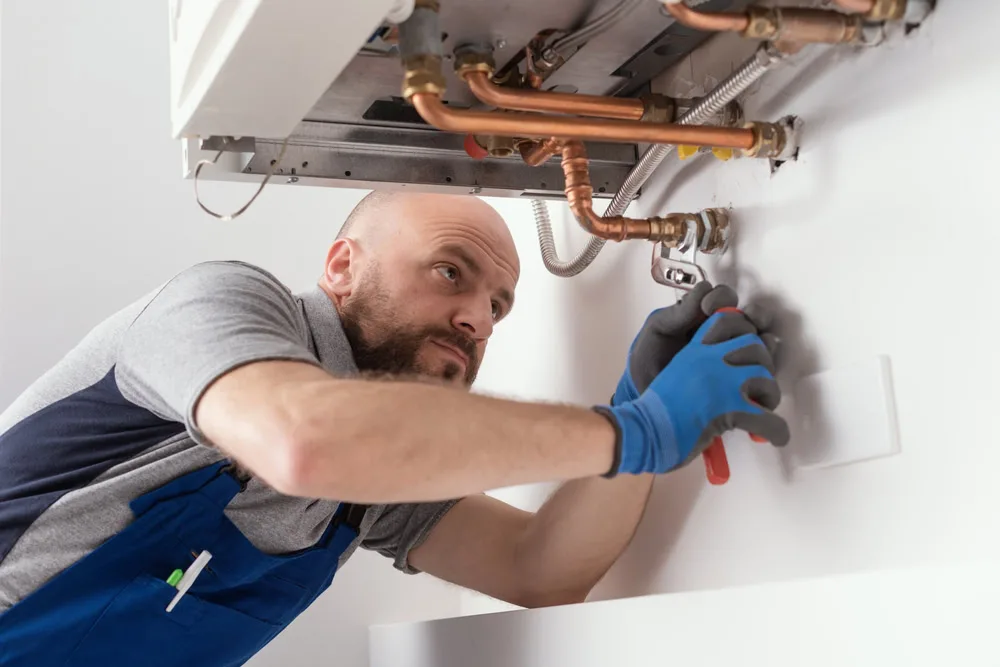
Our licensed boiler repair technician shows up and diagnoses the actual problem. Not what might be wrong—what is wrong. We check pressure levels, inspect the heat exchanger, test safety controls, and look at how the coastal climate might be affecting your specific unit.
Then we give you a boiler repair estimate before doing any work. You’ll know what it costs and why. Most residential boiler repair jobs in Herricks run between $150 and $600 depending on what failed and what parts we need.
We complete the repair using quality parts that match your system. Before we leave, we test everything to make sure your boiler operates correctly and safely. You’ll have heat, hot water, and one less thing to worry about.
Ready to get started?
We repair gas boilers and hot water boilers across all major brands found in Nassau County homes. That includes fixing leaking pipes, replacing faulty pressure valves, repairing circulation pumps, and addressing ignition problems that leave you without heat.
Herricks sits close enough to the coast that salt air accelerates corrosion on metal components. We check for that specifically because a small leak in this climate becomes a bigger problem faster than it would inland. Local water quality also causes mineral buildup that affects efficiency and can lead to complete failure if ignored.
We also handle those banging and clanging noises that wake you up at night. Usually, that’s trapped air in the lines or a failing circulator pump. Both are fixable, and both get worse if you wait.
If your boiler isn’t heating evenly—some rooms warm, others freezing—that’s often a circulation issue or a zone valve problem. We’ll find it and fix it so your whole house heats like it should. Rising energy bills with no change in usage usually mean your boiler is working harder than it needs to. We identify why and correct it.
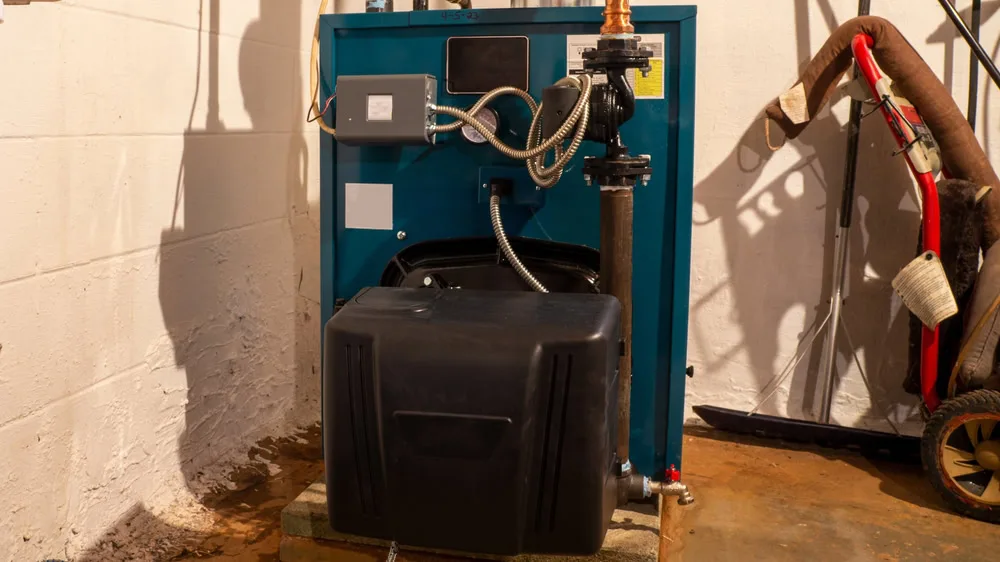
Most boiler repairs in Herricks cost between $150 and $600, depending on what’s broken and what parts your system needs. A simple fix like replacing a pressure relief valve or bleeding air from the lines sits on the lower end. More involved repairs like replacing a circulator pump or fixing a cracked heat exchanger cost more.
We give you an estimate before starting any work. You’ll know the price and what we’re fixing before we touch your boiler. No surprises, no inflated emergency rates just because it’s cold outside.
If your boiler needs full replacement instead of repair, that’s a different conversation. Replacement runs between $4,000 and $10,000 depending on the system size and type. But most boilers don’t need replacing—they need proper repair from someone who knows what they’re doing.
Boilers usually fail right when cold weather hits because that’s when you’re asking them to work hardest after sitting idle for months. The most common culprits are ignition problems, low water pressure, a tripped safety control, or a failed circulator pump.
In Herricks specifically, we see a lot of corrosion-related failures because of the coastal air. A small leak that started last spring becomes a major problem once you fire up the system in November. Mineral buildup from local water also clogs lines and reduces efficiency until the system can’t keep up.
Sometimes it’s as simple as a thermostat issue or a tripped breaker. Other times it’s a failed component that needs replacement. Either way, the fix starts with proper diagnosis. We don’t guess—we test, inspect, and identify the actual problem before recommending a solution.
If your boiler is under 15 years old and the repair costs less than a third of replacement cost, repair makes sense. If it’s over 20 years old, breaks down frequently, or needs a major component like a new heat exchanger, replacement might be smarter.
Here’s the real consideration: a $400 repair on a 12-year-old boiler buys you several more years of reliable heat. That same $400 on a 25-year-old boiler that’s already had multiple repairs might just delay the inevitable.
We’ll tell you honestly which situation you’re in. If your boiler is worth fixing, we’ll fix it right. If you’re throwing money at a system that’s done, we’ll tell you that too. Many Herricks homes still run boilers from the 1990s that work fine with proper maintenance. Others have newer units that failed early because of poor installation or neglect. Age matters, but it’s not the only factor.
For true emergencies—no heat, freezing temperatures, risk of pipe damage—we prioritize getting someone to you the same day whenever possible. We understand that “tomorrow” isn’t an option when your family is cold and your pipes might freeze.
Response time depends on current demand and how many emergency calls we’re handling. The first cold snap of the season creates a surge because everyone’s boiler decides to quit at once. But we do everything we can to get you heat quickly.
Once we’re there, many repairs take just a few hours. Replacing a circulator pump, fixing a valve, or addressing an ignition issue doesn’t require days of work. More complex problems take longer, but we’ll know within the first hour what you’re dealing with and how long it’ll take to fix.
Yes. We repair gas boilers, which are most common in Herricks, as well as electric boilers and oil-fired systems. Each fuel type has different components and failure points, but the core principles of how boilers work remain the same.
Gas boilers typically have issues with ignition systems, gas valves, and venting. Electric boilers deal more with heating element failures and electrical control problems. Both types suffer from the same circulation, pressure, and corrosion issues that affect any boiler in this climate.
We carry common parts for major brands and can source specialized components when needed. If your boiler is an unusual model or an older system, we’ll track down what’s required to fix it properly. Three decades in business means we’ve built relationships with suppliers who can get us what we need.
That banging or clanging sound—sometimes called “kettling”—usually means trapped air in your pipes, sediment buildup in the heat exchanger, or a failing circulator pump. It’s annoying, and yes, it can indicate a problem that’ll get worse if ignored.
Trapped air creates pockets that cause water to slam around when the pump runs. That’s fixable by bleeding the system properly. Sediment buildup happens when minerals from your water supply collect at the bottom of the heat exchanger and overheat, creating steam bubbles that collapse loudly. Flushing the system and treating the water solves that.
A failing circulator pump makes noise because the bearings are wearing out. That needs replacement before it quits entirely and leaves you without heat. None of these are immediately dangerous, but they all signal that your boiler isn’t operating correctly. The longer you wait, the more damage occurs and the more expensive the eventual repair becomes.