
You wake up to a cold house. The thermostat says 72, but it’s 58 downstairs. Your boiler isn’t firing, or maybe it’s making a noise you’ve never heard before. Either way, you need someone who picks up the phone and actually shows up.
We answer calls 24/7 because boiler problems don’t wait for Monday morning. Most of the time, we’re at your door within 90 minutes. Our trucks carry parts for the major brands—Weil-McLain, Burnham, Peerless, Buderus—so we’re not making excuses about ordering something next week.
Around 80% of our boiler repair service calls in Locust Valley get fixed on the first visit. That means heat back on, pressure stabilized, and your family comfortable again before dinner. The other 20% might need a specialized part or a deeper rebuild, but we’ll tell you that upfront with a clear estimate and timeline.
We’ve been handling residential boiler repair in Nassau County for over 30 years. That’s thousands of service calls, hundreds of emergency repairs during nor’easters, and enough frozen pipe situations to know exactly what Long Island winters do to heating systems.
Our technicians are licensed and insured. They’ve worked on everything from 1950s cast iron monsters in older cape homes to modern condensing boilers in newer construction. Locust Valley’s housing stock is varied—some homes still run oil, others converted to gas decades ago—and we’ve seen it all.
We hold an A+ rating with the Better Business Bureau because we show up on time, explain what’s broken in plain language, and don’t push unnecessary replacements when a repair will buy you another five years.
First, we pick up the phone. You describe what’s happening—no heat, strange sounds, water pooling underneath, whatever it is. We ask a few quick questions to understand urgency and what parts we might need.
Then we schedule a visit. For emergencies, that’s usually within 90 minutes. For maintenance or non-urgent repairs, we’ll find a time that works for you, often same-day or next-day.
When our technician arrives, they’ll inspect your boiler, test the ignition system, check the pressure, examine the heat exchanger, and look at the flue and venting. Most problems come down to a handful of common failures: faulty igniters, bad circulators, clogged nozzles on oil units, or pressure issues in the expansion tank.
Once we know what’s wrong, we explain it in normal language and give you a price before we touch anything. If you approve, we make the repair, test the system to make sure it’s running safely and efficiently, and clean up. You get heat back, and we’re available if anything else comes up.
Ready to get started?
Every boiler repair estimate in Locust Valley starts with a full system inspection. We’re looking at the burner assembly, the ignition system, the circulator pump, the pressure relief valve, the expansion tank, and all the controls. On gas boiler repair jobs, we check for proper combustion and make sure there’s no carbon monoxide risk. On oil systems, we inspect the nozzle, fuel pump, and filter.
If your hot water boiler repair involves a leak, we trace it back to the source—sometimes it’s a valve, sometimes it’s a section of the heat exchanger that’s corroded through. Long Island’s water can be hard on boilers, especially older ones. Salt air near the coast speeds up exterior corrosion, and freeze-thaw cycles stress joints and seals.
We also test your thermostat and zone valves if you have multiple heating zones, which is common in larger colonials around here. A boiler might be fine, but if a zone valve is stuck, one part of your house stays cold. We catch that during the diagnostic so you’re not paying for a repair that doesn’t solve the problem.
After the repair, we fire up the system and monitor it through a full cycle. We check the pressure, listen for unusual sounds, and make sure the heat is distributing properly. If we spot something else that’s wearing out—like a circulator that’s on its last legs—we’ll mention it so you’re not surprised next month.
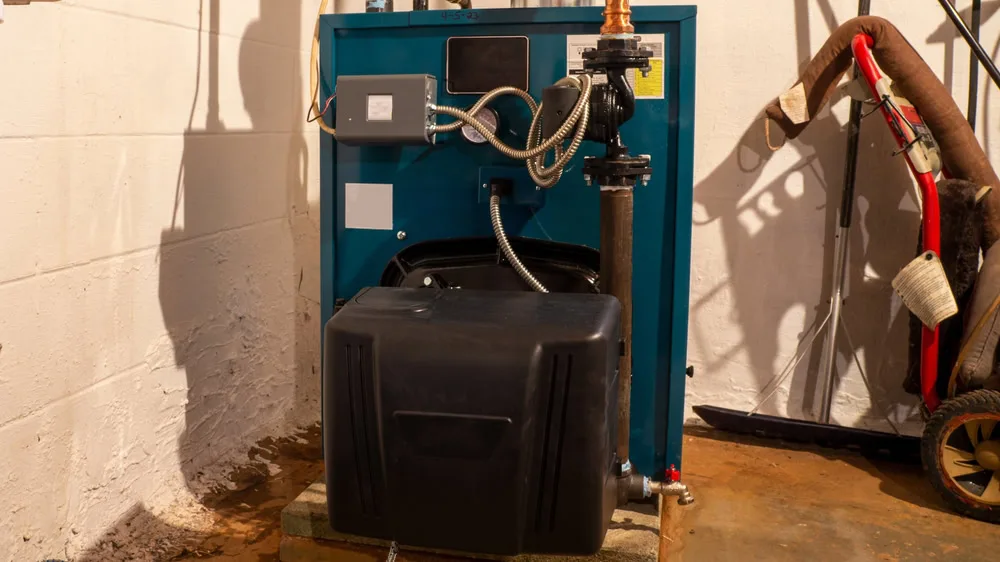
Most boiler repairs in Locust Valley run between $300 and $800, depending on what’s broken and what parts are needed. Simple fixes—like replacing an igniter or a pressure relief valve—are on the lower end. More involved repairs, like a circulator pump replacement or a control board swap, cost more.
Gas boiler repair tends to be a bit less expensive than oil because the parts are simpler and there’s no fuel pump or nozzle to deal with. Oil systems also need more frequent cleaning, which can add to the service cost if it’s been a while.
We give you a clear estimate before starting any work. No surprises, no “we found something else” upsells unless it’s a genuine safety issue. If your boiler is old and the repair costs more than half the price of a new unit, we’ll tell you that too so you can make an informed decision.
Most residential boiler repair jobs take between one and three hours, start to finish. If we’re swapping out a circulator pump or replacing an igniter, that’s usually an hour or less. If we’re diagnosing an intermittent issue or doing a more complex repair—like resealing a leaking section or replacing a gas valve—it might take closer to three hours.
Emergency boiler repair calls in Locust Valley often get prioritized, especially during cold snaps. We keep our trucks stocked with common parts so we’re not making multiple trips. About 80% of the time, we finish the job on the first visit.
If we need to order a part, we’ll let you know upfront. Some older boiler models or specialty components might take a day or two to arrive. In those cases, we’ll do what we can to get you temporary heat or at least make sure your pipes won’t freeze while you wait.
The most common issue we see is ignition failure. The boiler tries to fire up, but nothing happens. That’s usually a bad igniter, a faulty flame sensor, or a gas valve that’s not opening. On oil boilers, it’s often a clogged nozzle or a fuel pump that’s lost prime.
Low pressure is another frequent problem, especially in older hot water boiler systems. If the pressure drops too low, the boiler won’t fire. That can happen because of a small leak somewhere in the system, a bad pressure relief valve, or an expansion tank that’s waterlogged and not doing its job anymore.
Circulator pump failures are also common after 10 or 15 years. The pump moves hot water through your baseboards or radiators, and when it dies, the boiler runs but you don’t get heat. You might hear the burner firing, but the house stays cold.
We also see a lot of thermostat and zone valve issues, especially in homes with multiple heating zones. A stuck zone valve or a miscalibrated thermostat can make it seem like the boiler’s broken when it’s actually a control problem. That’s why we always check the whole system, not just the boiler itself.
If your boiler is under 15 years old and the repair costs less than a third of a new unit, fixing it usually makes sense. Boilers are built to last 15 to 20 years with proper maintenance, so a mid-life repair can buy you several more years of reliable heat.
If your boiler is over 20 years old, breaking down frequently, or needs a major repair—like a cracked heat exchanger or a full burner assembly replacement—it’s worth considering a new unit. Older boilers are also less efficient. A modern condensing gas boiler can cut your fuel costs by 10% to 25% compared to a standard-efficiency model from the 1990s.
We’ll walk you through the math. If you’re spending $600 on a repair for a 25-year-old boiler that might last another two winters, and a new high-efficiency unit costs $4,500 installed, the payback period might be shorter than you think—especially with rising fuel prices on Long Island.
We’re not in the business of selling you something you don’t need. If a repair makes sense, we’ll tell you. If replacement is the smarter move, we’ll explain why and give you options.
Yes. Most of our service calls in Locust Valley and the surrounding Nassau County area are same-day, especially for emergencies. If you call in the morning with no heat, we’re usually there by early afternoon. If you call in the evening, we’ll get someone out that night or first thing the next morning, depending on the situation.
Our trucks are stocked with parts for the most common repairs—igniters, circulators, pressure relief valves, thermocouples, and more. That’s how we’re able to fix about 80% of boiler problems on the first visit without delays.
For non-emergency work—like a tune-up or a repair that’s not urgent—we can usually schedule you within a day or two. We’re not the kind of company that books out two weeks. Heating is too important, especially during a Long Island winter.
If we can’t fix it same-day because we need to order a specialized part, we’ll tell you exactly when it’ll arrive and get back out as soon as it does. We don’t leave you hanging.
Call us. We answer 24/7, and we have emergency trucks ready to roll. If it’s below freezing and your heat is out, that’s a genuine emergency—your pipes can freeze and burst in a matter of hours, especially if you have plumbing on exterior walls or in an unheated basement.
While you’re waiting for us to arrive, turn off the water supply to any exposed pipes if you can, and open cabinet doors under sinks to let warm air circulate. If you have space heaters, use them to keep the temperature above 50 degrees in areas with plumbing. Don’t try to fix the boiler yourself, especially if it’s a gas system—that’s a safety risk.
When our technician gets there, they’ll diagnose the problem and let you know what’s needed. Most middle-of-the-night calls are things we can fix on the spot: a tripped safety switch, a failed igniter, or a pressure issue. We’ll get your heat back on and make sure everything’s running safely before we leave.
If it’s something that requires a part we don’t have on the truck, we’ll at least stabilize the situation and get you through the night, then come back as soon as we have what’s needed.