
You wake up to a cold house. The thermostat’s cranked but nothing’s happening. Maybe you hear strange noises from the basement, or you’ve noticed your energy bills climbing without explanation.
Whatever brought you here, you’re dealing with a boiler that’s not doing its job. And in Roslyn Heights, where winter isn’t a suggestion, that’s not something you can put off.
We fix gas and oil boiler systems throughout Nassau County. Our technicians have worked on the older homes common in this area—the ones with baseboard heat, multiple zones, and systems that have been running for decades. We know what breaks, why it breaks, and how to fix it so you’re not dealing with the same problem next month.
When you call early enough in the day, we can usually get to you the same day. If your heat’s completely out and temperatures are dropping, we prioritize that. Our goal is to get your system running again within hours, not days.
Excellent Air Conditioning and Heating Service has been handling boiler repairs in Roslyn Heights and across Long Island for years. We’re licensed, insured, and we understand the heating challenges that come with older Nassau County homes.
A lot of homes here still run on oil. Others have converted to gas. Some have systems that are 20+ years old and still going. We work on all of them.
We’re not here to sell you a new boiler if your current one has life left. We’ll tell you honestly whether a repair makes sense or if you’re better off replacing it. That decision is yours—we just give you the information to make it.
You call us and describe what’s happening. No heat? Strange sounds? Leaking water? We ask a few questions to understand the situation and schedule a time to come out.
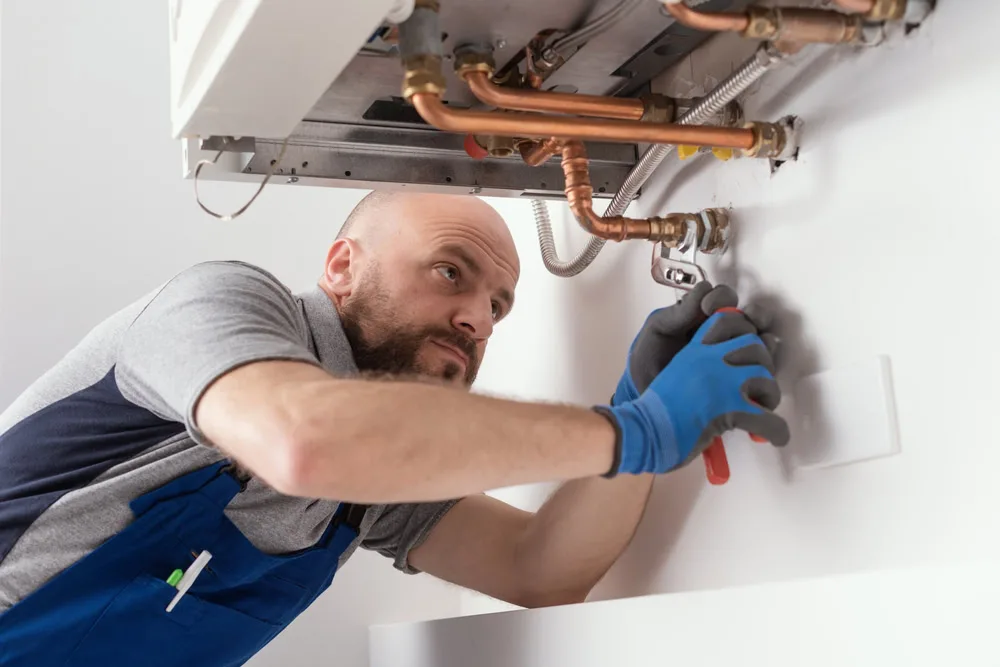
Our technician shows up with the tools and common parts needed for most boiler repairs in Roslyn Heights. They’ll inspect your system, figure out what’s wrong, and explain it to you in plain terms. Then they’ll give you a clear estimate before doing any work.
If it’s a straightforward fix—a faulty valve, a worn pump, a pressure issue—we handle it on the spot. If it’s something more involved, we’ll walk you through what needs to happen and how long it’ll take. Once the repair is done, we test the system to make sure it’s heating properly and safely.
You’ll know what we did, why we did it, and what to watch for going forward. If you have questions later, you can call us.
Ready to get started?
We handle both gas boiler repair and oil boiler repair in Roslyn Heights. That matters because Long Island has a mix of both, and they’re not the same. Oil systems have different components, different maintenance needs, and different failure points than gas systems.
Common repairs include fixing leaks, replacing circulators, addressing pressure problems, repairing or replacing zone valves, fixing ignition issues, and restoring proper heat distribution throughout your home. We also handle burner problems, thermostat issues, and venting concerns.
Roughly half of Long Island homes are still heated by older boilers that waste energy. If your system is running but your bills keep climbing, that’s often a sign something’s not working efficiently. Sometimes a repair can fix that. Other times, the system’s just old and working harder than it should.
We work on residential systems in single-family homes and multi-family properties. We also handle commercial boiler repair for businesses and apartment buildings in Roslyn Heights. Commercial systems usually need faster turnaround, and we understand that.
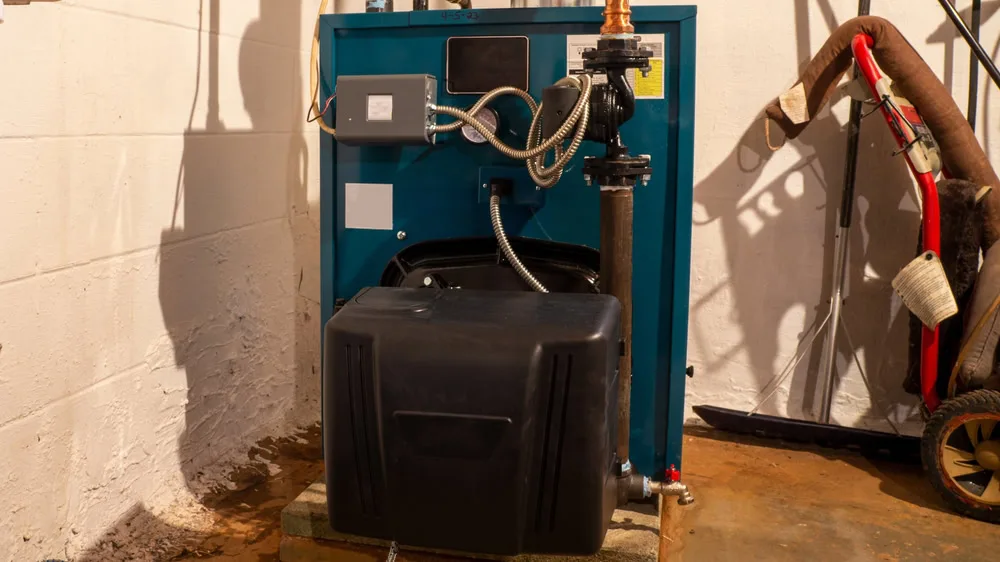
If your boiler is under 15 years old and the repair costs less than half of what a replacement would cost, repair usually makes sense. That’s the general rule.
But there are other factors. If you’ve had multiple repairs in the last year or two, that’s a sign the system is declining. If your energy bills have gone up significantly even though your usage hasn’t changed, your boiler might be losing efficiency in ways a repair won’t fix.
We’ll give you an honest assessment when we’re at your home. We’re not trying to sell you a new boiler if your current one has years left. But we’re also not going to recommend pouring money into a system that’s going to fail again in six months. You’ll get the information you need to make the right call for your situation and budget.
Yes. If you call us early enough in the day and your heat is completely out, we’ll do everything we can to get to you the same day.
During peak heating season—especially during those cold snaps in January and February—we prioritize complete heating failures. If you have young kids, elderly family members, or it’s going to drop below freezing overnight, we move faster.
We can’t always guarantee same-day service during extreme weather when everyone’s calling at once, but we respond as quickly as possible. Our goal is to restore your heat within hours, not days. If we can’t get to you immediately, we’ll tell you that upfront and give you a realistic timeframe.
Circulator pump failures are common, especially in systems over 15 years old. The pump moves hot water through your heating system, and when it fails, you get no heat even though the boiler’s running.
Zone valve issues are another frequent problem in homes with multiple heating zones. One zone stops working while others are fine. Pressure problems—either too high or too low—can cause the system to shut down or operate inefficiently.
Leaks around fittings, valves, or the boiler itself are common in older systems, especially if they haven’t been maintained regularly. Ignition problems in gas boilers and burner issues in oil boilers can prevent the system from firing up. And in Long Island’s coastal areas, salt air can speed up corrosion on exterior components, which creates problems faster than you’d see inland.
It depends entirely on what’s broken. A simple fix like replacing a thermostat or resetting a pressure valve might cost a few hundred dollars. Replacing a circulator pump or zone valve typically runs more. A control board replacement or significant leak repair costs more than that.
We give you a clear estimate before we do any work. You’ll know what it costs and why.
One thing to keep in mind: emergency service during off-hours or weekends usually costs more than a regular service call. That’s standard across the industry. But if your heat’s out at 2 AM in January, you’re probably less concerned about the premium than you are about getting warm again.
The best way to avoid expensive emergency repairs is regular maintenance. Systems that get serviced before heating season have fewer breakdowns and last longer.
Yes. We repair both gas boiler systems and oil boiler systems in Roslyn Heights and throughout Nassau County.
That’s important because a lot of Long Island homes still use oil for heat. It’s a holdover from when natural gas lines weren’t built out in many areas. Oil systems require different expertise than gas systems—different components, different maintenance, different troubleshooting.
Our technicians carry the tools and parts for both fuel types. We understand how these systems work, what commonly fails, and how to fix them properly. Whether you’re still running oil or you’ve converted to gas, we can handle the repair.
If you’re thinking about converting from oil to gas, we can talk through what that involves. But that’s a separate conversation from a repair. If your oil boiler is working fine and just needs a fix, there’s no reason to complicate things.
Strange noises usually mean something’s wrong, but they don’t always mean it’s an emergency. Banging or knocking sounds often indicate sediment buildup in the system or water hammer in the pipes. That’s annoying, but it’s not going to leave you without heat immediately.
High-pitched squealing or screeching usually points to bearing problems or motor issues in the circulator pump. That can lead to a complete shutdown if the pump fails, so it’s worth addressing before it gets worse.
Rumbling or kettling sounds—like a kettle boiling—often mean the heat exchanger is scaling up or there’s a pressure problem. That can reduce efficiency and, in some cases, create safety concerns.
If you’re hearing something unusual, call us. We’ll ask you to describe the sound and help you figure out whether it’s something that needs immediate attention or if it can wait a few days. Either way, don’t ignore it. Noises are your boiler telling you something’s not right.