
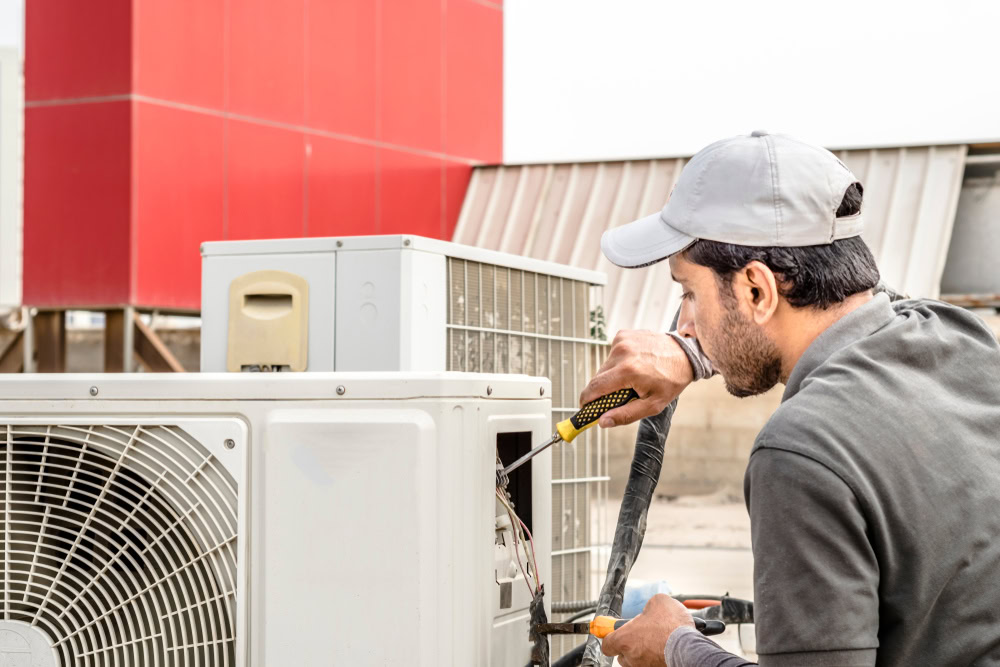

When your air conditioner quits during a Queens heat wave, you’re not thinking about energy efficiency or long-term planning. You need cool air, and you need it today.
That’s what happens when the repair actually fixes the problem. Your system runs the way it should. Your energy bill stops climbing for no reason. And you’re not dealing with the same issue two weeks later because someone rushed through a diagnosis or pushed parts you didn’t need.
Most AC repairs in Howard Beach get handled the same day you call. The compressor kicks back on, the refrigerant leak gets sealed, the frozen coil thaws and stays that way. You get back to normal without the runaround, the vague timelines, or the surprise fees that show up after the work is done.
We handle residential AC repair in Howard Beach and across Queens. Glenn and the crew show up when we say we will, stock the parts that matter for homes in this area, and explain what’s wrong before touching anything.
No sales pitch for a new system when a $300 repair solves it. No dragging out a simple fix to pad the bill. You’ll get a straight answer about whether it makes sense to repair or replace, and either way, you’ll know the cost before work starts.
We’ve been doing this long enough to know which AC problems pop up in different Queens neighborhoods, which brands hold up, and what actually causes your unit to run but not cool. That’s the kind of knowledge that saves you time and money when your air conditioner stops working in July.

You call because your AC isn’t cooling, makes a weird noise, or won’t turn on at all. We schedule you in, usually same day if you’re calling in the morning.
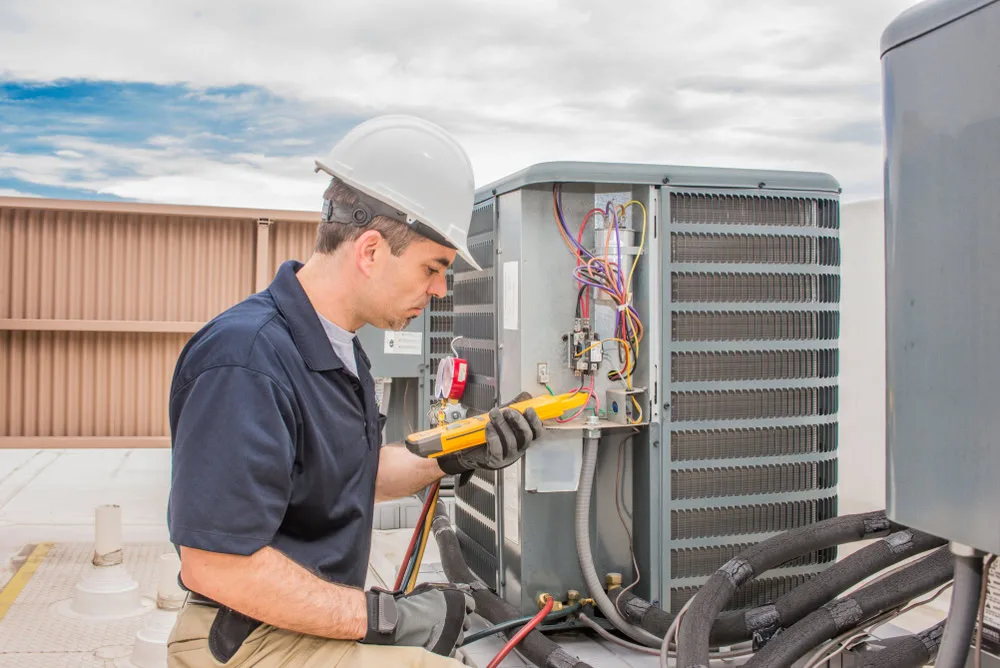
We show up with the diagnostic tools and common parts for residential systems in Howard Beach. We check the obvious stuff first—thermostat settings, breaker, air filter. Then we move into refrigerant levels, compressor function, electrical connections, and airflow through the coils.
Once we know what’s wrong, we tell you exactly what it’ll cost to fix. Not a range. Not “we’ll see once we get in there.” An actual number. If you’re good with it, we fix it. If it’s a bigger job that needs a special part or more time, we’ll let you know when we can come back and finish it.
After the repair, we test the system to make sure it’s cooling properly and running efficiently. You’re not waiting to see if it holds—you know before we leave.
Ready to get started?
Air conditioner repair in Howard Beach covers the full range of cooling problems. Compressor failures, refrigerant leaks, frozen evaporator coils, faulty capacitors, electrical issues, drainage clogs, and the frustrating situations where your unit runs all day but never cools the house.
Howard Beach sits right near the water with humidity that makes your AC work harder than it would inland. That means more strain on the compressor, more condensation that can cause leaks, and more chances for mold or buildup in the drain line. Those aren’t problems you can ignore—they get worse and cost more the longer you wait.
Most repairs fall between $150 and $650 depending on the part and the labor involved. A capacitor swap is quick and cheap. A compressor replacement costs more but still beats financing a new system if the rest of your unit is solid. We’ll tell you which one makes sense for your situation, not ours.
If your AC is leaking water inside, that’s usually a clogged drain line or a frozen coil that’s now thawing. Both are fixable. If your system won’t turn on, it could be the thermostat, the breaker, or a safety switch that tripped. We check all of it.
Most air conditioner repairs in Howard Beach run between $150 and $650. Simple fixes like replacing a capacitor or clearing a drain line sit on the lower end. Bigger jobs like fixing a refrigerant leak or replacing a compressor cost more.
The final price depends on what’s broken, which part it needs, and how long it takes to fix. A diagnostic fee might apply if you don’t move forward with the repair, but we waive it if you do. Either way, you’ll know the cost before any work starts.
If someone quotes you over $1,000 for a repair, ask what’s included and whether replacing the whole system makes more sense. Sometimes it does. Sometimes it’s just an expensive part on an otherwise solid unit, and the repair buys you several more years.
Refrigerant leaks, frozen coils, and compressor issues top the list. Howard Beach’s humidity puts extra strain on air conditioners, which means more condensation, more drainage problems, and more wear on the parts that work hardest.
You’ll also see a lot of clogged drain lines that cause water to back up and leak inside your house. That’s not a major repair, but it needs attention before it damages your floors or walls. Dirty coils are another common issue—when airflow gets restricted, your system can’t cool efficiently and your energy bill climbs.
Electrical problems show up too, especially in older homes where the wiring wasn’t designed for modern AC loads. A tripped breaker, a blown fuse, or a faulty contactor can all stop your system from running. Most of these are straightforward fixes if you catch them early.
If your system is under ten years old and the repair costs less than half of a new unit, fix it. If it’s over fifteen years old, breaks down frequently, or needs a major repair like a compressor replacement, replacement might make more sense.
Your energy bills tell part of the story too. If your AC runs constantly but barely cools your home, or if your bills have jumped without a change in usage, that’s a sign the system is struggling. Sometimes a repair solves it. Sometimes the unit is just worn out.
We’ll give you both options with real numbers. We’ll tell you what the repair costs, how much longer you can expect the system to last, and what a new install runs. Then you decide based on your budget and how long you plan to stay in the house.
Yes, most air conditioner repairs in Howard Beach get done the same day you call, especially if you reach out in the morning. We stock common parts for residential systems, so unless it’s an unusual failure or a hard-to-find component, the repair happens during the first visit.
Emergency situations—like elderly residents, medical needs, or extreme heat—get priority scheduling. If same-day repair isn’t possible for some reason, we’ll at least offer a temporary cooling solution or a firm appointment for the next available slot.
The key is calling early. If you wait until late afternoon on a 95-degree day, you’re competing with everyone else whose AC just quit. The earlier you call, the better your chances of getting cool air back before bedtime.
Low refrigerant is the most common cause. If your system has a leak, it can’t absorb enough heat to cool your home, even though the unit runs normally. We can find the leak, seal it, and recharge the refrigerant.
Dirty or frozen coils also prevent cooling. When dust and debris build up on the evaporator or condenser coils, airflow drops and efficiency tanks. If the coils freeze, your system moves air but it’s not cold. Cleaning or thawing the coils usually fixes it.
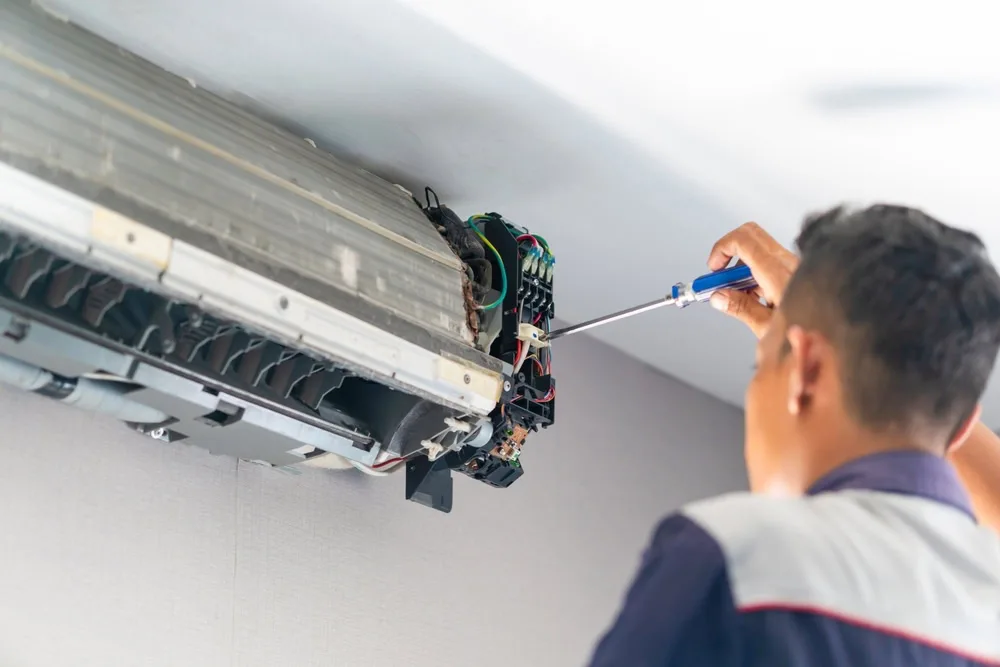
Sometimes it’s a bad compressor or a failing blower motor. The system sounds like it’s working, but the part responsible for actually cooling or moving air isn’t doing its job. Both are repairable, though a compressor replacement is one of the more expensive fixes. A proper diagnosis tells you exactly what’s wrong and what it’ll cost to fix.
Turn off your AC and check the drain line. Most indoor leaks happen because the condensate drain is clogged, causing water to back up and overflow into your house. You can try clearing it yourself with a wet/dry vac, but if that doesn’t work, call us for AC repair services in Howard Beach.
A frozen evaporator coil can also cause leaking once it thaws. If your system was running but not cooling, then suddenly started leaking, that’s probably what happened. The coil froze due to low refrigerant or restricted airflow, and now the ice is melting.
Don’t ignore it. Water damage adds up fast, and the underlying problem won’t fix itself. A clogged drain line is a quick repair. A refrigerant leak or airflow issue takes more work, but both are fixable. The sooner you address it, the less damage you’re dealing with.