
You’re not just paying for a repair. You’re paying for your house to be warm again without wondering if it’ll break down next week.
When your boiler’s fixed properly, your morning routine goes back to normal. Hot showers work. Radiators heat evenly. Your energy bill stops climbing because the system isn’t working twice as hard to keep up.
Most boiler problems in Queens Village homes come down to a few common issues: pressure loss, ignition failure, or circulation pump wear. These aren’t mysteries. A licensed boiler repair technician in Queens Village knows what to look for, tests the right components, and replaces what’s actually broken—not what might be broken someday.
You also get transparency. Before any work starts, you’ll know what’s wrong and what it costs. No surprise charges after the fact. That’s how residential boiler repair in Queens Village should work every time.
We work in Queens Village because we live and work in the neighborhoods we serve. We know the housing stock here—colonials from the ’20s and ’30s, brick homes with older heating systems, and everything in between.
Most of the boilers we service are 10 to 20 years old. Some older. That means parts wear out, efficiency drops, and small problems turn into no-heat emergencies if they’re ignored. We’ve seen it hundreds of times.
Our trucks are stocked with the parts that actually fail in Queens Village homes. That’s why we can usually finish the job the same day. You’re not waiting on an order or a second visit unless the repair is something unusual.
First, we listen. You tell us what’s happening—no heat, strange noises, pilot light issues, whatever it is. We ask a few questions to get a clearer picture before we head out.
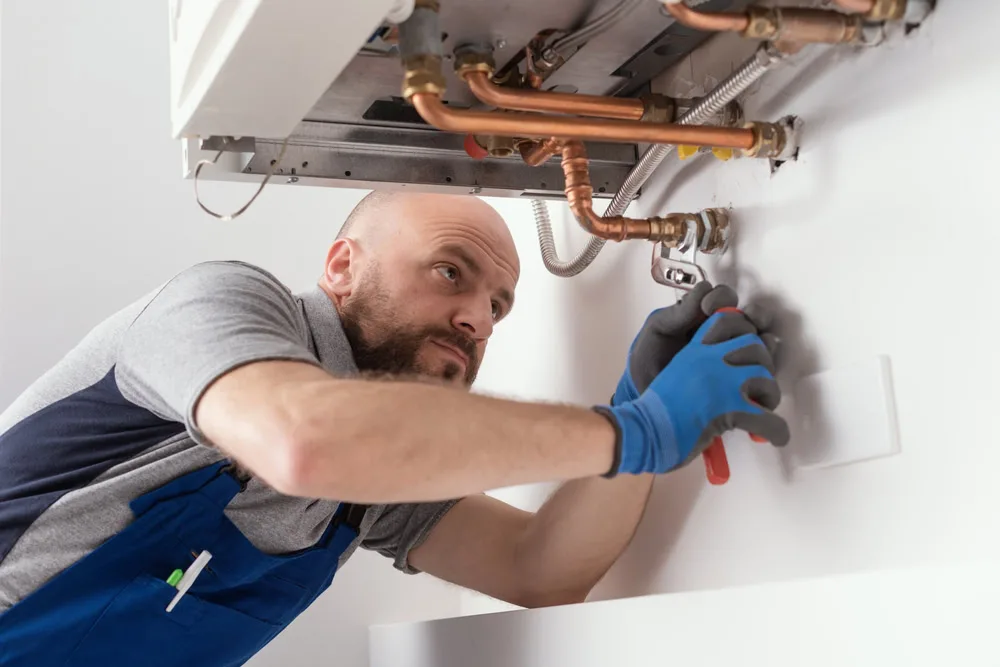
When we arrive, the technician runs a full diagnostic. That includes checking the thermostat, inspecting the pressure gauge, testing the ignition system, and looking at the circulator pump. We also run a combustion analysis to see how efficiently your system is burning fuel. You get a printout of the results.
Once we know what’s wrong, we explain it in plain terms. Then we give you an upfront price for the repair. If you approve, we do the work right there. Most jobs finish the same day because our trucks carry the common parts that fail in gas boiler repair Queens Village calls—igniters, pressure relief valves, pumps, thermocouples.
After the repair, we test the system to make sure it’s heating properly and operating safely. We also check for carbon monoxide and make sure your home is safe before we leave. Every repair comes with a one-year labor warranty.
Ready to get started?
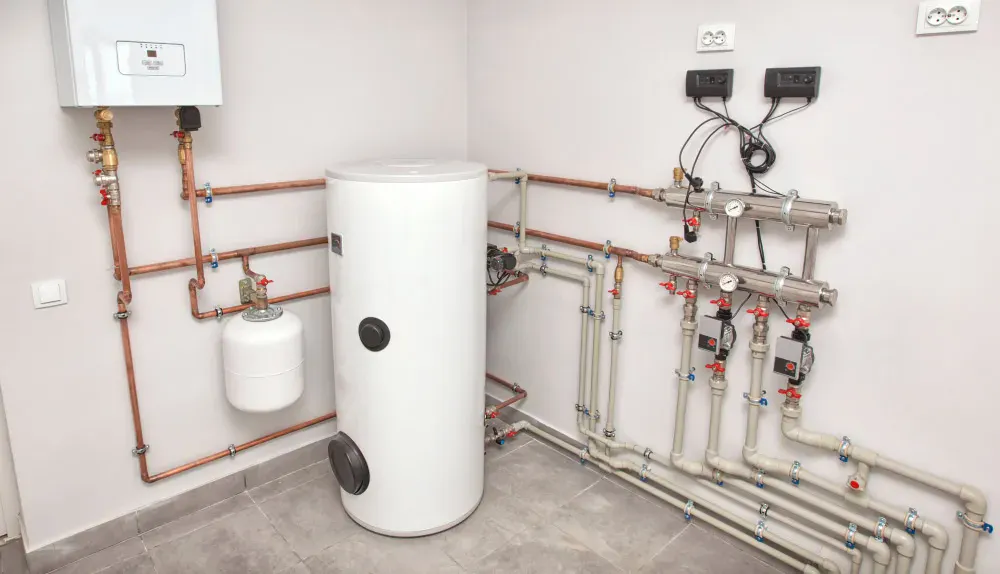
Every boiler repair service Queens Village call includes a full system diagnostic, not just a quick glance at the obvious problem. We check the entire heating loop—burner assembly, heat exchanger, expansion tank, zone valves, and safety controls.
You also get carbon monoxide testing. This isn’t optional. Boilers burn fuel, and if something’s not venting correctly, that’s a safety risk. We test it every time.
If your system is older or showing signs of inefficiency, we’ll tell you. Boilers that are 15+ years old often run at 60-70% efficiency, which means you’re burning more fuel than you should. Modern systems hit 90-95%. That difference adds up over a winter, especially in Queens Village where heating season runs from October through April.
For hot water boiler repair in Queens Village homes, we also inspect the domestic hot water coil if your system provides both heat and hot water. A cracked coil can cause pressure issues and inconsistent hot water—common in older units.
Emergency boiler repair Queens Village calls get priority scheduling. If it’s the middle of winter and you have no heat, we’re available 24/7. Our trucks are ready to go, and we don’t charge extra just because it’s after hours.
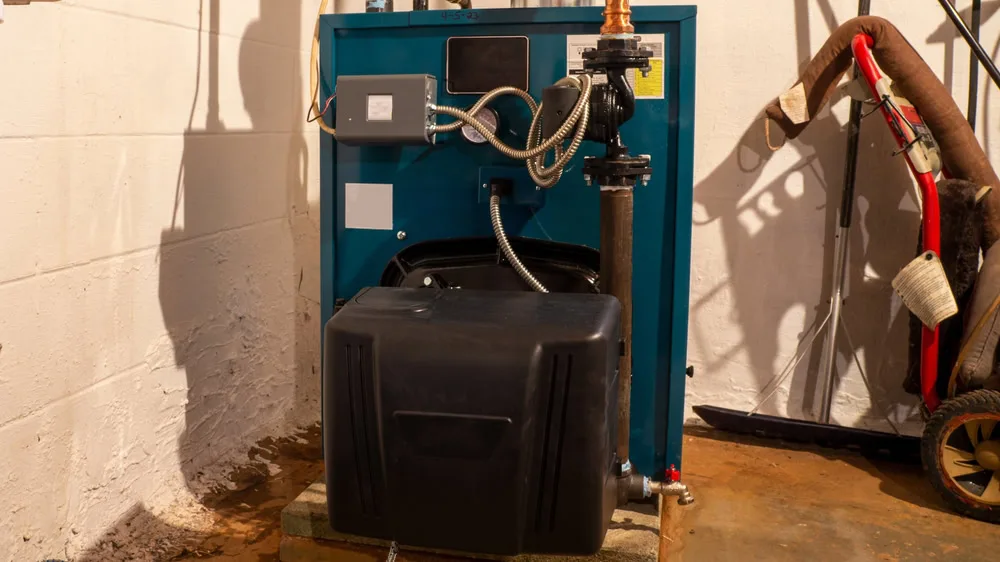
Most boiler repairs in Queens Village run between $350 and $950, depending on what’s broken. A simple fix like replacing an igniter or thermocouple costs less. A circulator pump or gas valve replacement costs more.
You’ll get an exact price before any work starts. We don’t give ranges or estimates that change after the job. The price we quote is the price you pay.
If your boiler is older and needs frequent repairs, we’ll also tell you when replacement makes more sense than another fix. A system that’s 20+ years old and needs a $700 repair might only have a few more years left. That’s worth knowing before you spend the money.
Most repairs finish in one to three hours. Straightforward jobs like replacing a faulty thermocouple or resetting a tripped safety switch take less time. More involved repairs like swapping a circulator pump or gas valve take longer.
If we need to order a part, that’s the exception. It doesn’t happen often because our trucks stock the components that fail most in Queens Village homes—igniters, pressure relief valves, thermostats, and pumps for common boiler brands.
Same-day service is standard unless the repair involves something unusual. You’ll know the timeline before we start, so you’re not left guessing when your heat will be back on.
Pressure loss is the most common issue we see. Boilers lose pressure over time, and if it drops too low, the system shuts down. Usually, it’s a slow leak somewhere in the heating loop or a faulty pressure relief valve.
Ignition problems are next. If the pilot light won’t stay lit or the burner won’t fire, it’s often the thermocouple, igniter, or gas valve. These components wear out, especially in systems that are 10+ years old.
Circulator pump failure is also common in Queens Village’s older homes. The pump moves hot water through your radiators or baseboard heaters. When it fails, the boiler runs but the heat doesn’t circulate. You’ll hear the boiler firing, but the house stays cold.
Yes. We’re available 24/7 for no-heat emergencies. If your boiler quits in the middle of the night or on a weekend, you can call and we’ll get someone out as fast as possible.
Our trucks stay stocked year-round, so we’re ready to handle most repairs on the first visit. Emergency calls don’t get pushed to the next business day—they get handled when you need them.
There’s no extra fee just because it’s after hours. You pay for the repair, not the time of day. That’s how emergency boiler repair in Queens Village service should work.
Once a year, ideally before heating season starts. Annual maintenance catches small problems before they turn into expensive repairs or no-heat emergencies in January.
During a maintenance visit, we clean the burner assembly, check the heat exchanger for cracks, test safety controls, inspect the venting system, and run a combustion analysis. We also check the expansion tank and pressure relief valve.
Regular maintenance improves efficiency too. A dirty burner or scaled-up heat exchanger makes your boiler work harder and burn more fuel. Cleaning it brings efficiency back up, which lowers your heating bill over the season.
If your boiler is 15 to 20 years old and needs a major repair, replacement usually makes more sense. At that age, other components will start failing soon, and you’ll be paying for repairs every year.
Efficiency is another factor. Older boilers often run at 60-70% efficiency. A new high-efficiency system hits 90-95%, which can cut your heating costs by 20-30% over a winter. In Queens Village, where heating season lasts six months, that adds up.
We’ll walk you through the math if you’re on the fence. Sometimes a repair buys you a few more years. Sometimes it’s throwing money at a system that’s already on its way out. You’ll know which situation you’re in before you decide.