
You wake up to consistent heat in every room. No more cold spots in the bedrooms while the living room overheats. No more listening to your boiler cycle on and off every ten minutes wondering if it’ll make it through another night.
Your heating bills stop climbing. When your boiler runs efficiently, you’re not burning extra fuel to compensate for a system that’s struggling. Repairs catch small problems before they turn into full breakdowns in January.
You stop worrying about safety. Gas smells disappear. Strange noises quit. Your carbon monoxide detector stays silent. You know your family’s heating system works the way it should because someone who knows boilers inside and out made sure of it.
We’ve kept Springfield Gardens homes warm for over 30 years. We’re a family-run business, and our technicians are licensed, insured, and trained on the boiler brands Queens homeowners actually have in their basements.
We know Springfield Gardens winters. Six months of the year, your boiler isn’t optional. When temperatures drop below freezing and stay there for weeks, you need a heating system that works and someone who can fix it fast when it doesn’t.
We’ve seen every boiler problem this area throws at us. Frozen pipes. Failed circulators. Cracked heat exchangers. Pressure issues. We handle Weil-McLain, Burnham, Viessmann, Slant/Fin, and other trusted brands installed throughout Queens homes.
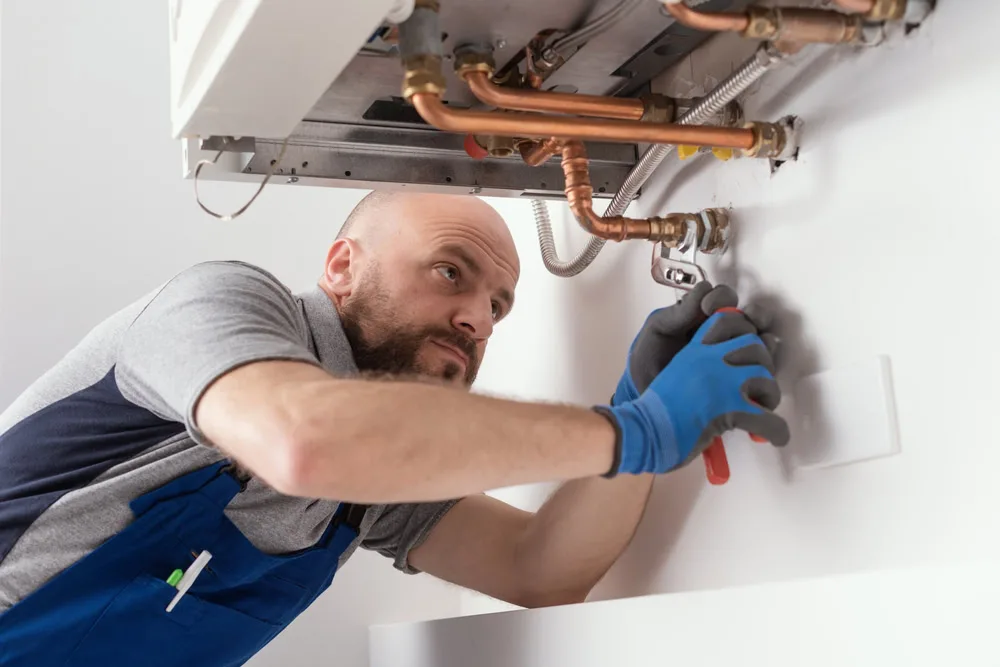
You call, and we respond. If your heat’s out and it’s 20 degrees outside, we treat it like the emergency it is. Our technicians head to your Springfield Gardens home with the tools and parts most repairs need.
We diagnose the actual problem. No guessing. We examine your boiler system, test components, check pressure and temperature readings, and pinpoint what’s causing the issue. You get a clear explanation of what’s wrong and what it’ll take to fix it, including an estimate before any work starts.
We make the repair and verify it works. Once you approve the estimate, we handle the fix using quality parts that match your system. Before we leave, we test your boiler to make sure it’s heating properly, cycling correctly, and operating safely. You get heat back, and you know it’s done right.
Ready to get started?
We repair both gas and hot water boiler systems. That includes steam boilers and hydronic systems, whether you’re heating radiators or baseboard units throughout your home. Our licensed boiler repair technicians handle ignition problems, thermostat issues, circulator pump failures, zone valve replacements, pressure relief valve repairs, and heat exchanger diagnostics.
Springfield Gardens has a mix of older homes and newer construction, which means a mix of boiler ages and types. Older systems need parts that aren’t always easy to find. Newer high-efficiency models need technicians who understand their electronics and controls. We handle both.
Queens homes lose heat fast once a boiler quits. The average boiler in New York City housing is about 27 years old, which means many Springfield Gardens systems are operating past their expected lifespan. Regular repairs keep them running, but at some point, replacement becomes the smarter financial move. We’ll tell you honestly where your system stands and what makes sense for your situation and budget.
Most boiler repairs in Queens run between $350 and $950, depending on what’s broken and how complicated the fix is. A simple thermostat replacement or circulator pump repair sits on the lower end. A pressure relief valve, zone valve, or ignition system repair costs more. Heat exchanger problems or major component failures push toward the higher end.
You’ll get an estimate before we start work. We diagnose the problem first, explain what needs fixing, and give you a clear price. No hidden fees show up later.
Some repairs don’t make financial sense if your boiler’s old. If you’re looking at a $900 repair on a 30-year-old system that’s likely to need another expensive fix next year, replacement might be the better call. We’ll walk you through the math so you can make the decision that works for your home and budget.
Age matters. If your boiler’s over 20 years old and needs a major repair, replacement often makes more sense. Boilers typically last 15 to 30 years, but efficiency drops as they age. A new high-efficiency boiler can cut your heating costs by 20 to 30 percent compared to an older struggling system.
Frequent repairs add up. If you’ve called for service three times in the last two years, you’re throwing money at a system that’s telling you it’s done. One big repair might be worth it. Multiple smaller ones signal it’s time to move on.
Your heating bills tell a story. A sudden spike in fuel costs with no change in usage means your boiler’s working much harder than it should. That’s inefficiency you’re paying for every month. Sometimes the cost of a new system pays for itself in energy savings within a few years, especially with older, inefficient models.
No heat production tops the list, especially during cold snaps. That’s usually an ignition problem, a failed circulator pump, low water pressure, or a tripped safety control. These need immediate attention when outdoor temperatures are below freezing.
Uneven heating throughout the house points to zone valve issues, air in the lines, or a circulator that’s not moving hot water properly. Some rooms feel like saunas while others stay cold. That’s a distribution problem, not a lack of heat production.
Strange noises mean something’s wrong. Banging, clanging, or whistling sounds from radiators or pipes indicate trapped air, sediment buildup, or pressure problems. Kettling, which sounds like a tea kettle boiling, means sediment has built up on the heat exchanger and your boiler’s overheating. Ignoring these noises leads to bigger problems and more expensive repairs down the road.
Yes. If your heat’s out and it’s winter, we treat that as an emergency and respond the same day. Springfield Gardens homes get cold fast when outdoor temperatures drop below freezing, which happens regularly from November through March.
We stock common parts for the boiler brands most Queens homes have. That means we can complete many repairs in one visit without waiting for parts to arrive. Weil-McLain, Burnham, Viessmann, and Slant/Fin components are on our trucks.
Call early if possible. Same-day service works best when you reach us in the morning or early afternoon. That gives our technicians time to get to your home, diagnose the problem, and complete the repair before evening. But we’re available 24/7 for true emergencies, so don’t hesitate to call at night or on weekends if your heat goes out.
Simple repairs take one to two hours. Thermostat replacements, circulator pump swaps, and pressure adjustments fall into this category. Your technician arrives, diagnoses the issue, makes the fix, tests the system, and you’re back to having heat.
More involved repairs take three to five hours. Zone valve replacements, ignition system repairs, or addressing multiple issues take longer. If we need to drain the system, replace components, refill, bleed air from the lines, and retest everything, that adds time.
Parts availability affects timing. If your boiler needs a component we don’t have on the truck, we’ll let you know immediately. Most standard parts for common brands arrive within a day or two. Older or less common systems might take longer. We’ll give you a realistic timeline and keep you updated if anything changes.
Leave your house immediately. Don’t turn any lights on or off, don’t use your phone inside, and don’t try to locate the source. Get everyone out, then call your gas company and 911 from outside or a neighbor’s house. Gas leaks are serious emergencies.
Once the gas company clears your home as safe, call us for boiler repair. A gas smell near your boiler means something’s leaking or not burning properly. That could be a cracked heat exchanger, a failed gasket, a loose connection, or a ventilation problem. These aren’t DIY fixes.
Don’t ignore even a faint gas smell. Natural gas has an additive that makes it smell like rotten eggs specifically so you’ll notice leaks. If you smell it, even briefly, something’s wrong. Carbon monoxide is odorless, but gas leaks and combustion problems often go hand in hand. Your safety and your family’s safety come first, always.