

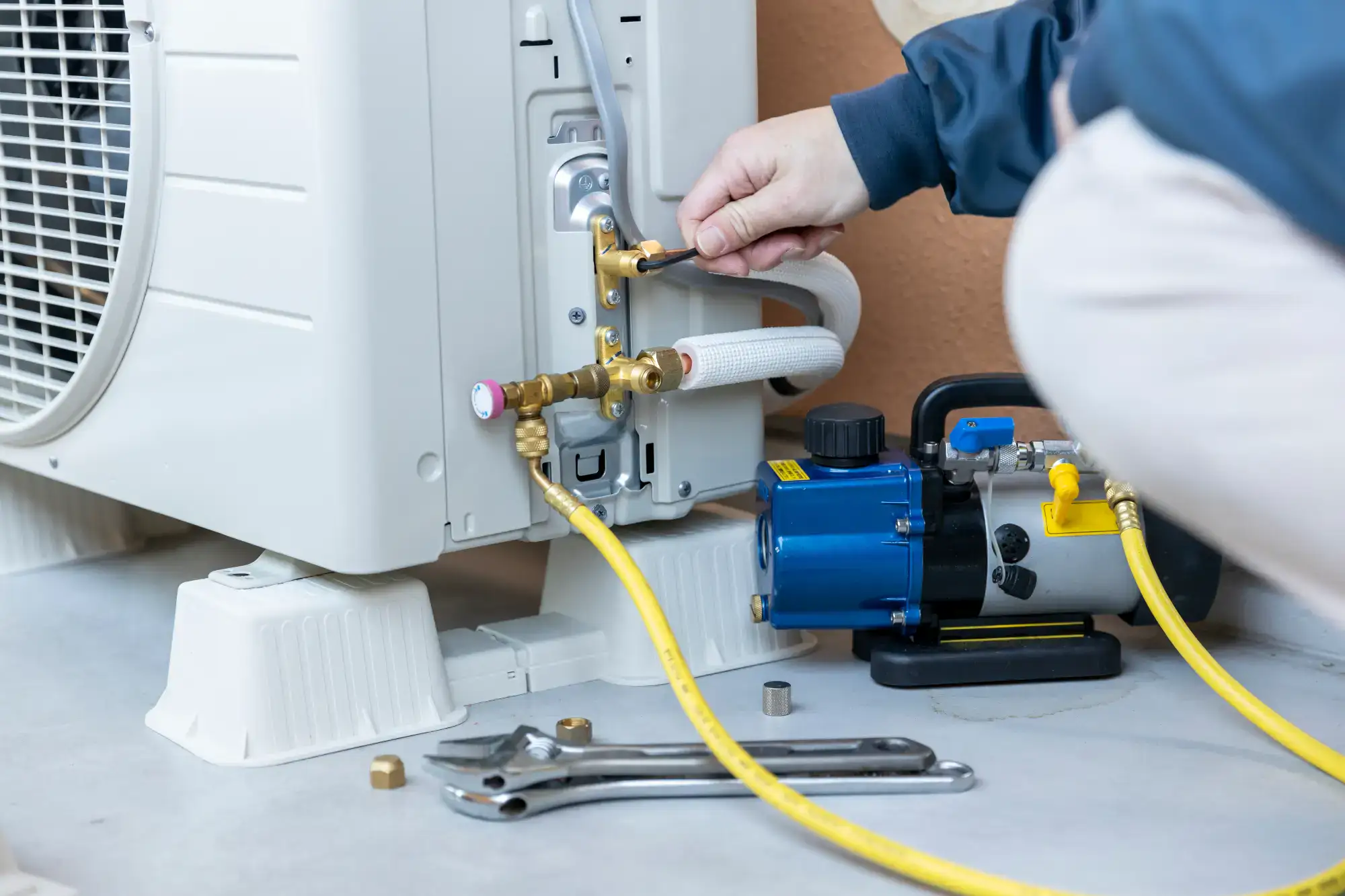
You’re not just buying a box that blows cold air. You’re investing in consistent comfort through July and August heat, lower monthly utility bills, and a system that’s sized correctly for your home the first time.
Most Woodbury homes were built in the 1980s. If your AC is original or close to it, you’re likely paying 30-40% more on energy costs than you should. A properly installed, high-efficiency system cuts that waste and keeps your home comfortable without cranking the thermostat.
When installation is done right, your system runs quieter, lasts longer, and doesn’t leave you scrambling for emergency repairs in the middle of summer. That’s what happens when the load calculation is accurate, the ductwork is sealed, and the refrigerant charge is exact—not estimated.
We’ve been installing and servicing HVAC systems across Nassau County for years, and we know Woodbury homes inside and out. Most of the houses here were built during the same era, which means similar layouts, similar ductwork, and similar challenges when it comes to cooling efficiency.
We’re not a national chain that parachutes in with a one-size-fits-all approach. We’re local technicians who understand how your home was built, what systems work best in this climate, and what it takes to keep them running through humid Long Island summers.
You’ll work with licensed, insured professionals who show up on time, explain what they’re doing, and don’t disappear after the install. No sales pitch. No pressure. Just straightforward service and equipment that works.
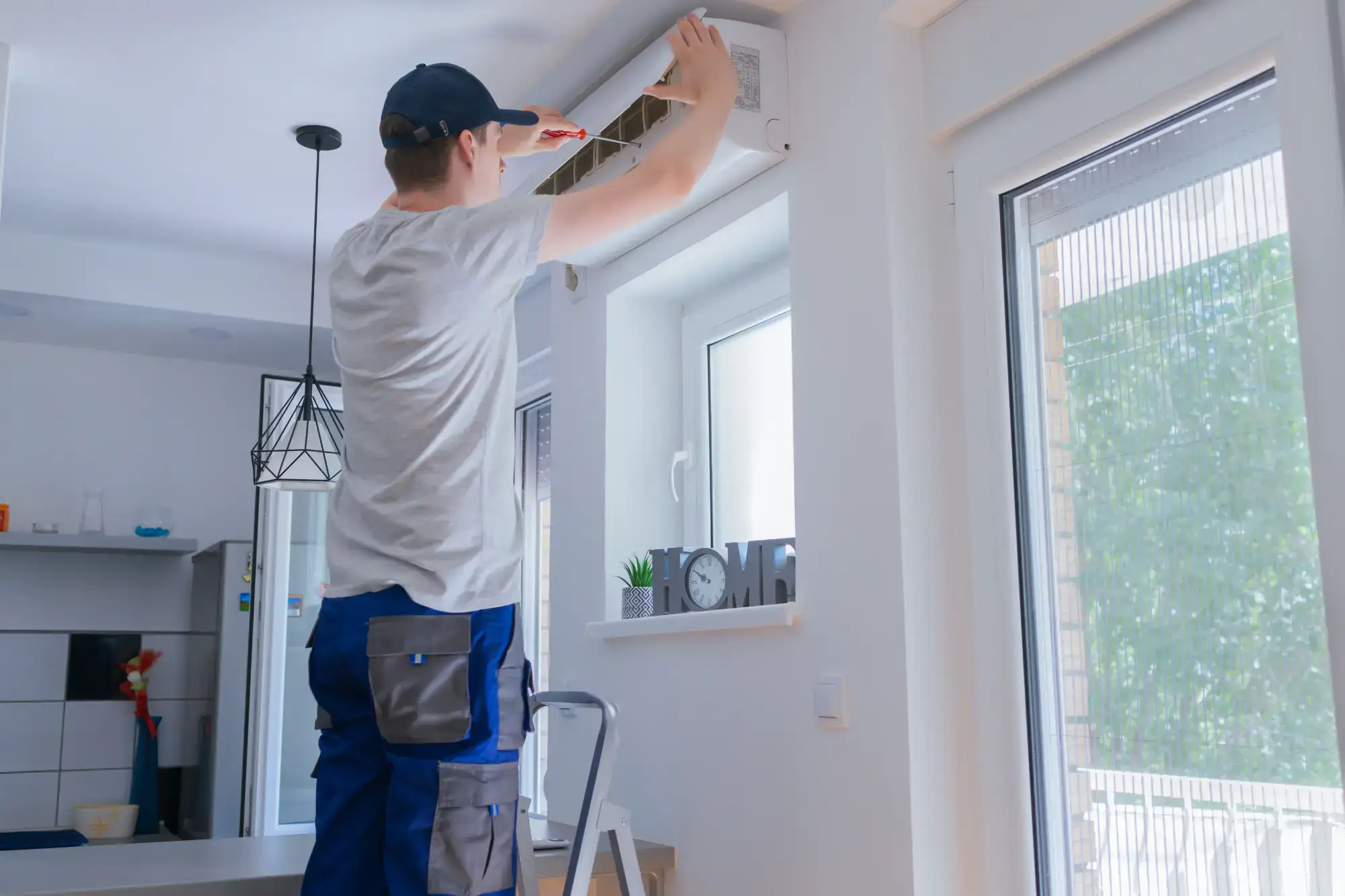
First, we come to your home and run a load calculation. That’s not an estimate or a guess—it’s a room-by-room assessment that factors in square footage, insulation, window placement, and sun exposure. This tells us the exact BTU rating your home needs, so you’re not stuck with an undersized system that runs nonstop or an oversized one that short-cycles and wastes energy.
Once we know what size system fits your home, we walk you through equipment options. We work with brands like Trane and Carrier because they last, and we’ll explain the difference between efficiency ratings so you can decide what makes sense for your budget and your goals.
Installation day is straightforward. We remove your old system, install the new one, check refrigerant levels, test airflow, and make sure everything is running exactly as it should. Before we leave, we walk you through the new system, answer your questions, and make sure you’re comfortable operating it. You’ll also get warranty information and our contact details in case anything comes up down the road.

Ready to get started?
Every air conditioning installation in Woodbury, NY includes a full load calculation, not a quick eyeball estimate. That’s how we determine the right system size for your home’s layout, insulation, and cooling needs. Skipping this step is one of the biggest reasons systems fail early or cost more to run than they should.
You’ll also get proper ductwork inspection and sealing. Leaky ducts waste up to 30% of your cooled air before it even reaches your rooms. We check for gaps, seal what needs sealing, and make sure airflow is balanced throughout your home.
We handle all permits and inspections required by local code. Woodbury falls under Nassau County regulations, and we make sure your installation meets every requirement so there’s no issue down the line if you sell your home or file an insurance claim.
And if you’re installing in 2025, you may still qualify for federal tax credits worth up to $2,000 on qualifying high-efficiency systems. Those rebates were originally set to run through 2032 but are now scheduled to expire at the end of this year. We’ll let you know if your system qualifies and provide the documentation you need to claim it.
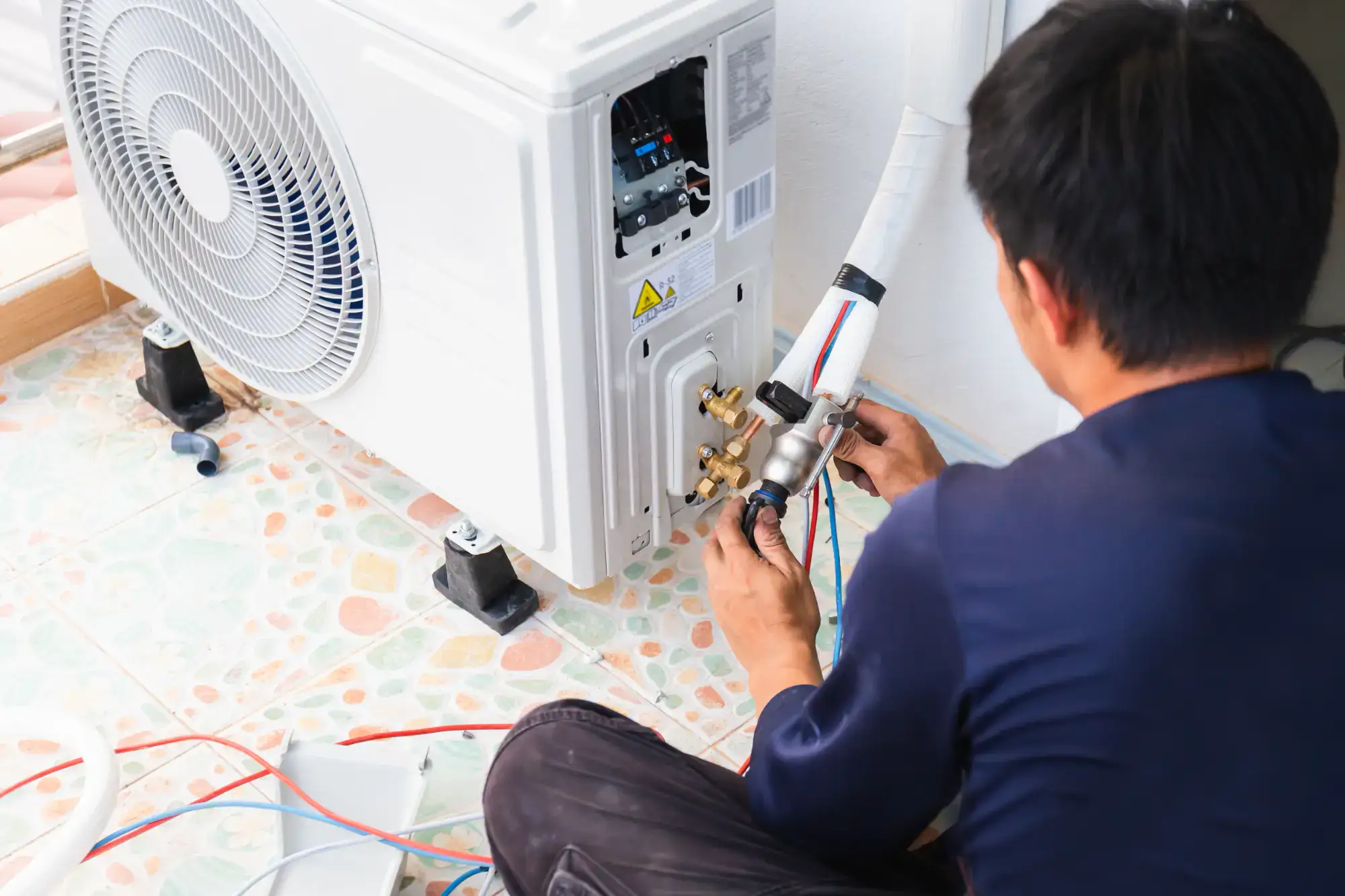
Most central air installations in Woodbury range between $6,400 and $8,800, depending on system size, efficiency rating, and whether any ductwork modifications are needed. Smaller homes or simpler installs can come in around $2,800, while larger homes with complex layouts or high-efficiency equipment can reach $14,000 or more.
The biggest cost factors are system size and SEER rating. A 2-ton unit for a smaller home costs less than a 4-ton unit for a larger one. Higher SEER ratings mean better efficiency and lower monthly bills, but they do cost more upfront. We’ll walk you through the options and show you how the numbers break down so you can decide what fits your budget and your goals.
We don’t do surprise fees or vague estimates. You’ll get a clear, upfront quote before any work starts, and that’s the number you’ll pay.
Most residential AC installations take one full day, sometimes two if there’s ductwork to modify or if we’re replacing both indoor and outdoor units. Straightforward replacements where the new system matches the old one usually wrap up in 6-8 hours.
If your home needs duct sealing, new line sets, or electrical upgrades to handle a larger system, that adds time. We’ll let you know upfront what to expect based on your specific setup so there are no surprises.
You won’t be without cooling for long. If we’re replacing an existing system, we’ll have your new one up and running the same day in most cases. And if something unexpected comes up during the install, we’ll walk you through it before moving forward.
It depends on your home’s square footage, insulation, window placement, and how much sun exposure you get. That’s why we run a load calculation before recommending a system—it’s the only way to get the sizing right.
Most Woodbury homes fall somewhere between 2.5 and 4 tons, but that’s just a rough range. A 2,000-square-foot home with great insulation and newer windows might need a 3-ton unit, while the same size home with older windows and poor attic insulation might need a 4-ton. Guessing costs you money, either in wasted energy or in a system that can’t keep up.
Oversized systems are just as bad as undersized ones. They cool the house too quickly, shut off before removing humidity, and leave you with that cold-but-clammy feeling. Undersized systems run constantly, wear out faster, and never quite get the temperature where you want it. We size it right the first time so you’re not dealing with either problem.
If your system is over 12-15 years old, uses R-22 refrigerant, or needs a major repair like a compressor or evaporator coil replacement, you’re usually better off replacing it. Repair costs on older systems add up fast, and you’re still left with an inefficient unit that’s likely to fail again soon.
R-22 refrigerant was phased out in 2020, so if your system uses it and springs a leak, you’re looking at expensive refrigerant costs on top of the repair. Newer systems use R-410A, which is cheaper and better for efficiency. If you’re already paying for a big repair, it makes more sense to put that money toward a new system that’ll last another 15 years.
We’ll give you an honest assessment. If a repair makes sense, we’ll tell you. If replacement is the smarter move, we’ll explain why and show you the numbers so you can make the call.
Yes, but they’re expiring soon. Federal tax credits currently cover up to $2,000 on qualifying high-efficiency central air systems and ductless mini-splits. These rebates were originally set to run through 2032, but recent budget changes moved the deadline up to the end of 2025.
To qualify, your system needs to meet minimum SEER2 ratings—usually 16 SEER2 or higher for central air. We’ll let you know which systems qualify when we go over equipment options, and we’ll provide all the documentation you need to claim the credit when you file your taxes.
On top of federal credits, some utility companies offer rebates for energy-efficient upgrades. PSEG Long Island occasionally runs programs that cover part of the installation cost if you’re upgrading from an older, inefficient system. We’ll check what’s available when you’re ready to move forward so you’re not leaving money on the table.
Because installation quality determines how well your system works and how long it lasts. You can buy the best equipment on the market, but if it’s installed wrong, you’ll deal with high energy bills, uneven cooling, and early breakdowns.
Refrigerant charge has to be exact. Too much or too little and your system loses efficiency, works harder than it should, and wears out faster. Ductwork has to be sealed properly or you’re losing 20-30% of your cooled air into your attic or crawl space. Electrical connections have to be tight and correct, or you risk short circuits or even fire hazards.
A proper install also means correct system sizing based on a real load calculation, not a guess. When the system matches your home’s actual cooling needs, it runs efficiently, removes humidity properly, and keeps you comfortable without constantly cycling on and off. That’s the difference between an AC that lasts 15+ years and one that needs replacing in 8.