

You’re dealing with more than just heat in Bayswater. The humidity coming off Jamaica Bay makes your home feel like a sauna, and an AC system that’s not properly sized or installed won’t fix that. It’ll cycle on and off constantly, never actually pulling moisture out of the air, and your electric bill will show it.
A correctly installed central air system changes that. You get consistent temperatures in every room, humidity levels that actually feel comfortable, and a system that runs efficiently instead of fighting itself. No more hot spots in the back bedrooms. No more waking up sticky at 2 AM because the unit shut off again.
The difference is in the installation itself. Proper load calculations based on your actual square footage, insulation levels, and window exposure. Correct refrigerant charges. Ductwork that’s sealed and sized right. These aren’t extras—they’re what separate an AC installation in Bayswater, NY that works from one that becomes an expensive problem.
We handle HVAC system installation in Bayswater, NY with the understanding that this area has specific demands. The proximity to water, the older housing stock, the way heat settles in these neighborhoods—it all matters when you’re sizing and installing equipment.
We’re licensed, insured, and we pull permits for every job because that’s how you protect your investment and your warranty. We’ve been doing this work throughout Queens long enough to know what breaks down and why. Most failures trace back to installation shortcuts—wrong size equipment, improper charges, skipped load calculations.
You won’t get that here. We handle the permit process, we do Manual J calculations for proper sizing, and we’re available after installation when you have questions or need service. That’s the difference between a contractor who’s here today and gone tomorrow versus one who’s accountable to this community.
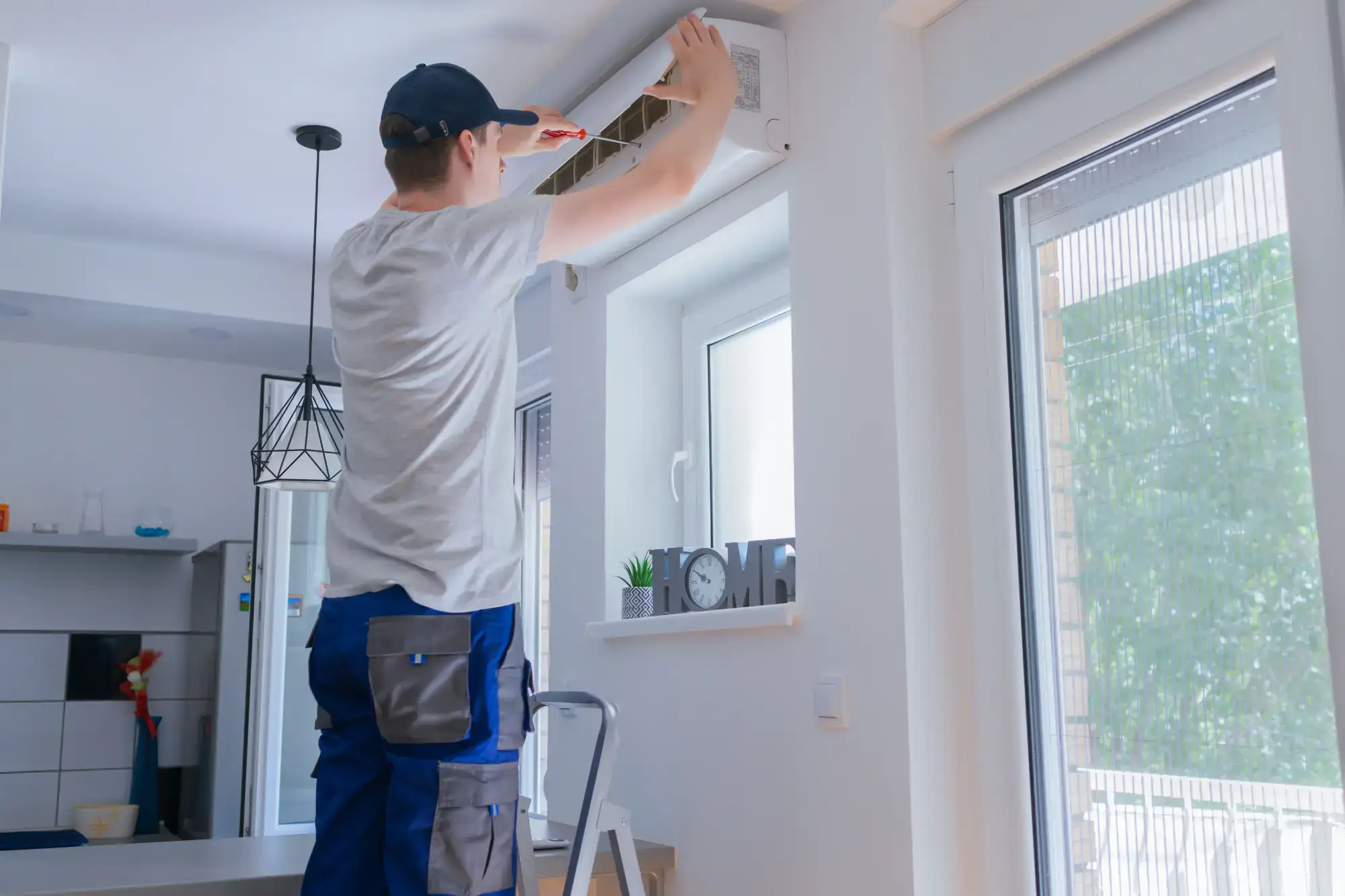
First, we assess your space in person. That means measuring square footage, checking insulation, counting windows, and looking at your electrical panel. We’re doing load calculations to determine what size system you actually need—not what fits our truck or our profit margin.
Once we’ve sized the system correctly, we discuss your options. Central air makes sense if you have existing ductwork in good condition. Ductless mini-splits work better for older Bayswater homes where adding ducts would mean tearing up walls. We explain the difference in costs, efficiency, and what each system will actually do in your specific home.
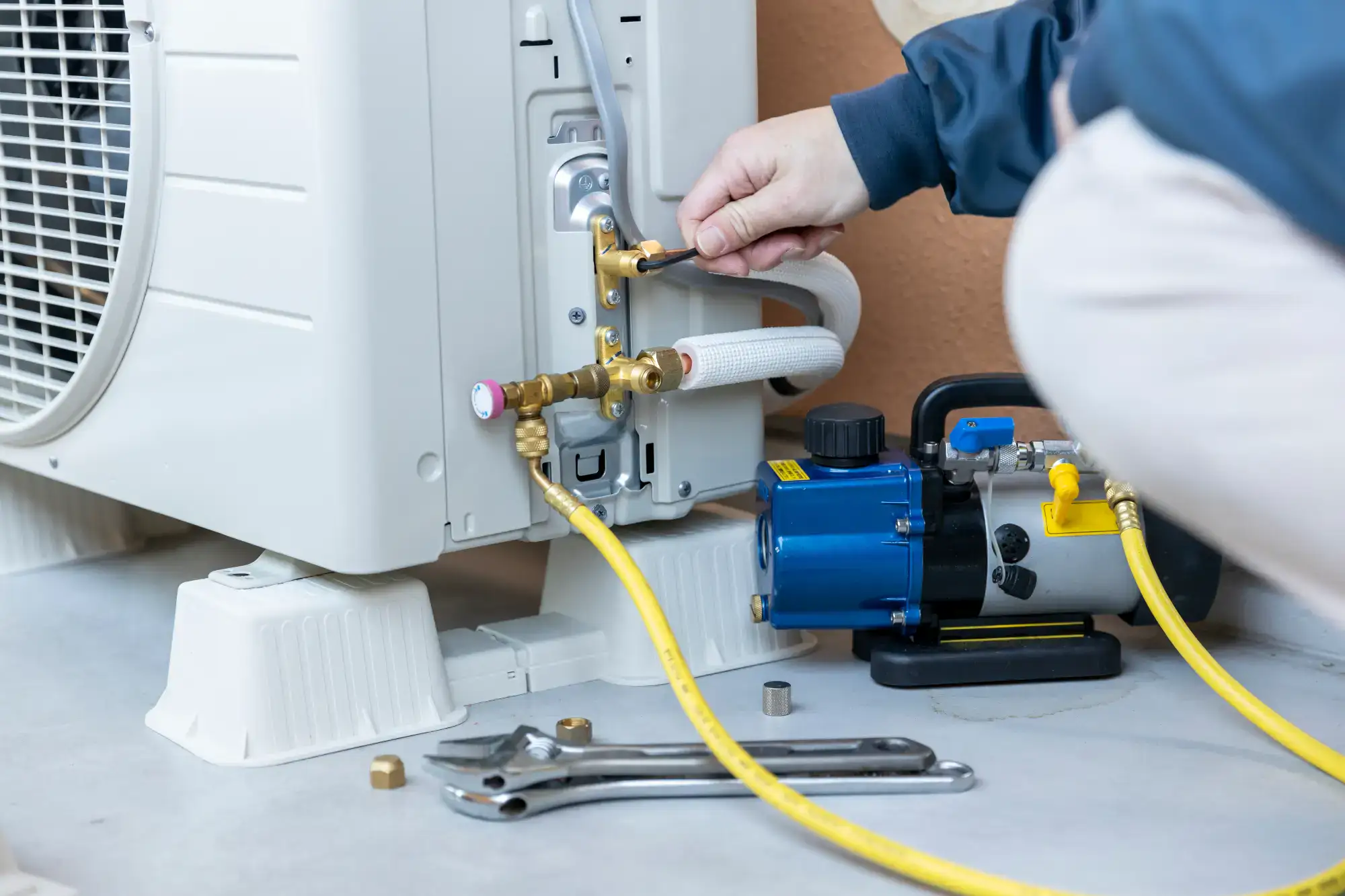
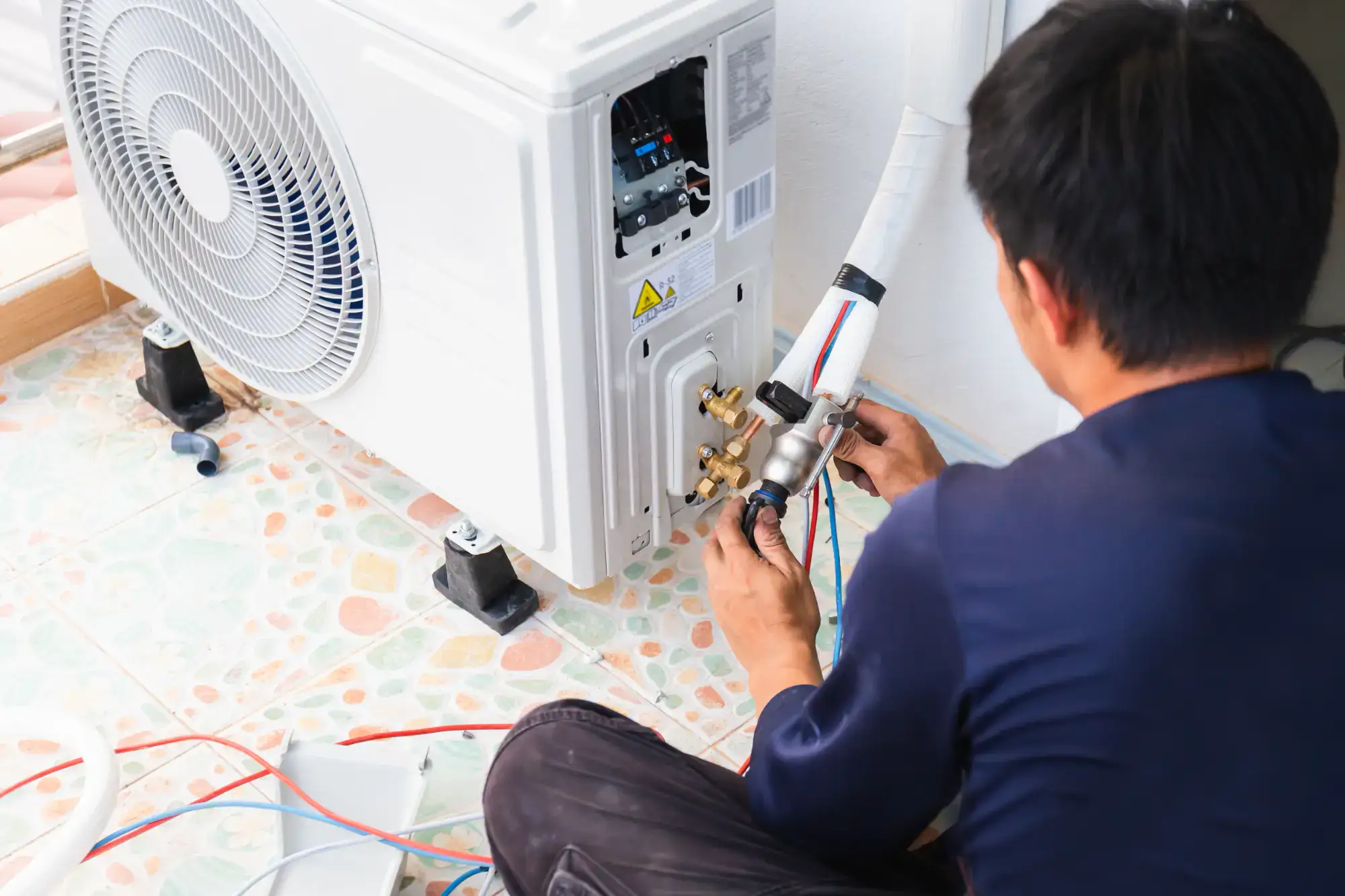
Installation day, we show up on time with everything we need. For central air, that’s typically 4-8 hours. We’re installing the outdoor condenser, connecting refrigerant lines, setting up the indoor air handler or furnace connection, running electrical, and testing the entire system. For ductless systems, expect 2-4 hours per indoor unit.
Before we leave, the system is charged correctly, tested for proper airflow and temperature drop, and you know how to operate it. We handle the final inspection if required, and you get documentation for your warranty and records.

Ready to get started?
When you schedule an AC unit replacement in Bayswater, NY with us, you’re getting a complete system assessment first. We don’t show up and slap in whatever equipment we have on the truck. You get Manual J load calculations that account for your home’s specific characteristics and Bayswater’s climate demands.
The installation includes proper equipment sizing, professional installation of all components—condenser, air handler, refrigerant lines, electrical connections, thermostat—and complete system testing before we consider the job done. We’re checking temperature splits, airflow, and refrigerant charge to manufacturer specifications.
You also get permit handling and code compliance. In New York, AC installations require permits and inspections. We file the paperwork, coordinate inspections, and ensure everything meets local building codes. That protects your home’s value and keeps your equipment warranty valid.
Here’s what matters for Bayswater specifically: we account for humidity control in our recommendations. The moisture coming off Jamaica Bay means your system needs to handle more than just temperature. Oversized units cycle too quickly and never dehumidify properly. Correctly sized systems run longer cycles that actually pull moisture out, which is what makes your home comfortable in this climate.
Central air installation in Bayswater typically runs $5,500-$10,000 for standard residential retrofits. That’s for a complete system including the outdoor condenser, indoor air handler, refrigerant lines, electrical work, thermostat, and labor. Ductless mini-split systems start around $3,000-$5,000 for a single zone and go up from there depending on how many rooms you’re cooling.
The range exists because homes are different. A 1,200 square foot ranch with good insulation needs less equipment than a 2,000 square foot two-story with poor insulation and west-facing windows. Your actual cost depends on the load calculation—the engineering that determines what size system your home actually needs.
Higher efficiency equipment costs more upfront but saves on monthly electric bills. In New York where electricity runs about 23 cents per kilowatt-hour, efficiency matters. A 16 SEER system versus a 14 SEER system might cost $800 more to install but save you $150-$200 annually on cooling costs. We break down these numbers in your estimate so you can make an informed decision based on your budget and how long you plan to stay in the home.
Most residential central air installations take 4-8 hours from start to finish. That’s for a straightforward replacement where you already have ductwork in place and we’re swapping out an old system for new equipment. We’re removing the old condenser and air handler, installing new equipment, running new refrigerant lines if needed, making electrical connections, charging the system, and testing everything.
Ductless mini-split installations are faster—typically 2-4 hours per indoor unit. There’s less involved because you’re not dealing with ductwork. We mount the indoor unit, install the outdoor condenser, run the refrigerant lines and electrical through a small hole in the wall, and test the system.
Complex jobs take longer. If we’re adding ductwork to a home that never had central air, expect a full day or potentially two days depending on your home’s layout. Older Bayswater homes sometimes need electrical panel upgrades to handle the new AC load, which adds time. We give you a realistic timeline during the estimate so you can plan accordingly. We’re not the crew that says “4 hours” and then shows up for three days.
Your home needs whatever size the load calculation says it needs—and that’s different for every house. We use Manual J calculations that factor in your square footage, insulation levels, window count and orientation, ceiling height, and local climate data for Bayswater. That gives us the actual cooling load in BTUs, which determines equipment size.
Most Bayswater homes fall somewhere between 1.5 and 5 tons of cooling capacity, but guessing based on square footage alone is how you end up with problems. A 1,500 square foot home with poor insulation and lots of windows might need a 3-ton system. The same square footage with good insulation and fewer windows might only need 2 tons.
Oversized systems are worse than undersized ones in this climate. An oversized unit cools the air quickly but shuts off before it runs long enough to remove humidity. You end up with a cold, clammy house that never feels comfortable. Correctly sized equipment runs longer cycles, pulls out moisture, and maintains consistent temperatures. That’s why we do the math instead of guessing—your comfort depends on getting this right.
Yes, AC installation in New York requires permits and inspections. This isn’t optional red tape—it’s code enforcement that protects your safety and your property value. Electrical work, refrigerant handling, and structural modifications all fall under building code jurisdiction.
We handle the permit application process as part of our service. That includes filing paperwork with the local building department, scheduling required inspections, and ensuring all work meets code before the inspector shows up. You don’t need to deal with any of it.
Here’s why this matters: unpermitted work can void your homeowner’s insurance, kill a future home sale, and leave you liable if something goes wrong. Your equipment warranty also requires proper installation by licensed contractors following local codes. Skipping permits to save a few hundred dollars can cost you thousands later. Any contractor willing to skip permits is telling you they’re willing to cut other corners too—and those corners usually show up as callbacks, failures, and problems you’ll be dealing with for years.
If your system is over 10 years old and needs a repair that costs more than half of a new installation, replacement makes more financial sense. AC systems have an average lifespan of 10-15 years. After that, you’re throwing money at equipment that’s inefficient, uses outdated refrigerant, and will need another expensive repair soon.
Here’s the math that matters: older systems run at 8-10 SEER efficiency. New minimum efficiency is 14 SEER, and high-efficiency systems hit 16-20 SEER. That efficiency difference translates directly to your electric bill. If you’re spending $200/month cooling your home with a 10 SEER system, a 16 SEER replacement could cut that to $125/month—$75 in savings every month during cooling season.
Factor in repair costs too. If you’ve spent $800 on repairs in the last two years and now you’re facing another $1,200 compressor replacement, you’re $2,000 into a system that’s still old, still inefficient, and still likely to fail again. That $2,000 becomes a down payment on new equipment that’s reliable, efficient, and warrantied. We can run these numbers with you based on your specific situation, but once systems hit that 10-12 year mark and start needing major repairs, replacement usually wins.
Central air uses ductwork to distribute cooled air throughout your entire home from a single indoor unit. Ductless mini-splits use individual indoor units mounted in each room or zone, with no ducts required. Both cool effectively—the right choice depends on your home’s existing infrastructure and your cooling needs.
Central air makes sense if you already have ductwork in good condition from a forced-air heating system. Installation is straightforward, costs are reasonable, and you get whole-home cooling from one thermostat. It’s the standard approach for most Bayswater homes built in the last 50 years that have existing ducts.
Ductless systems work better for older homes without existing ductwork, room additions, or situations where you want zone control. Many older Bayswater homes have radiator heat with no ducts. Adding ductwork means tearing into walls and ceilings—expensive and disruptive. Ductless systems avoid that entirely. You also get individual temperature control for each zone, which saves energy if you’re not cooling unused rooms. The tradeoff is higher upfront cost per ton of cooling and multiple indoor units visible on your walls instead of hidden vents.