

Your home stays comfortable in every room. No more hot upstairs bedrooms in July. No more running the system all day just to keep the main floor tolerable.
A properly installed central air system means consistent temperatures throughout your house. The unit cycles on and off like it should instead of running nonstop. Your electric bills stay reasonable even when Long Island humidity spikes after coastal storms.
You’re not calling for repairs every summer because the system was sized wrong or installed poorly. The equipment lasts longer. The air quality improves because the system actually has time to pull moisture out of the air instead of just blowing cold air that never shuts off.
That’s what happens when the installation is done right the first time. You get the cooling you paid for without the headaches that come from shortcuts or guesswork.
We handle HVAC system installation in Centre Island, NY for homes that need more than a one-size-fits-all approach. Most properties here sit on multiple acres with extensive square footage, which means your cooling load calculation matters more than average.
We’ve worked in Nassau County long enough to know that estate homes don’t cool the same way smaller houses do. Room layouts, ceiling heights, sun exposure, insulation quality—it all factors into what size system you actually need. Too big and you get temperature swings and poor humidity control. Too small and the system never catches up on hot days.
Our team is fully licensed and insured. We pull permits, register warranties, and make sure your installation meets local code. You’re not dealing with a crew that disappears after the job or cuts corners to save time.
First, we calculate your actual cooling load. That means measuring your home, checking insulation, accounting for windows and sun exposure, and figuring out what size system will cool your space without oversizing. This step gets skipped more often than it should, and it’s why so many systems underperform.
Next, we walk you through equipment options. Brands like Carrier, Lennox, Trane, Mitsubishi, Daikin, Rheem, and Goodman all have different efficiency ratings and features. We explain what makes sense for your home and budget without pushing the most expensive option just because.
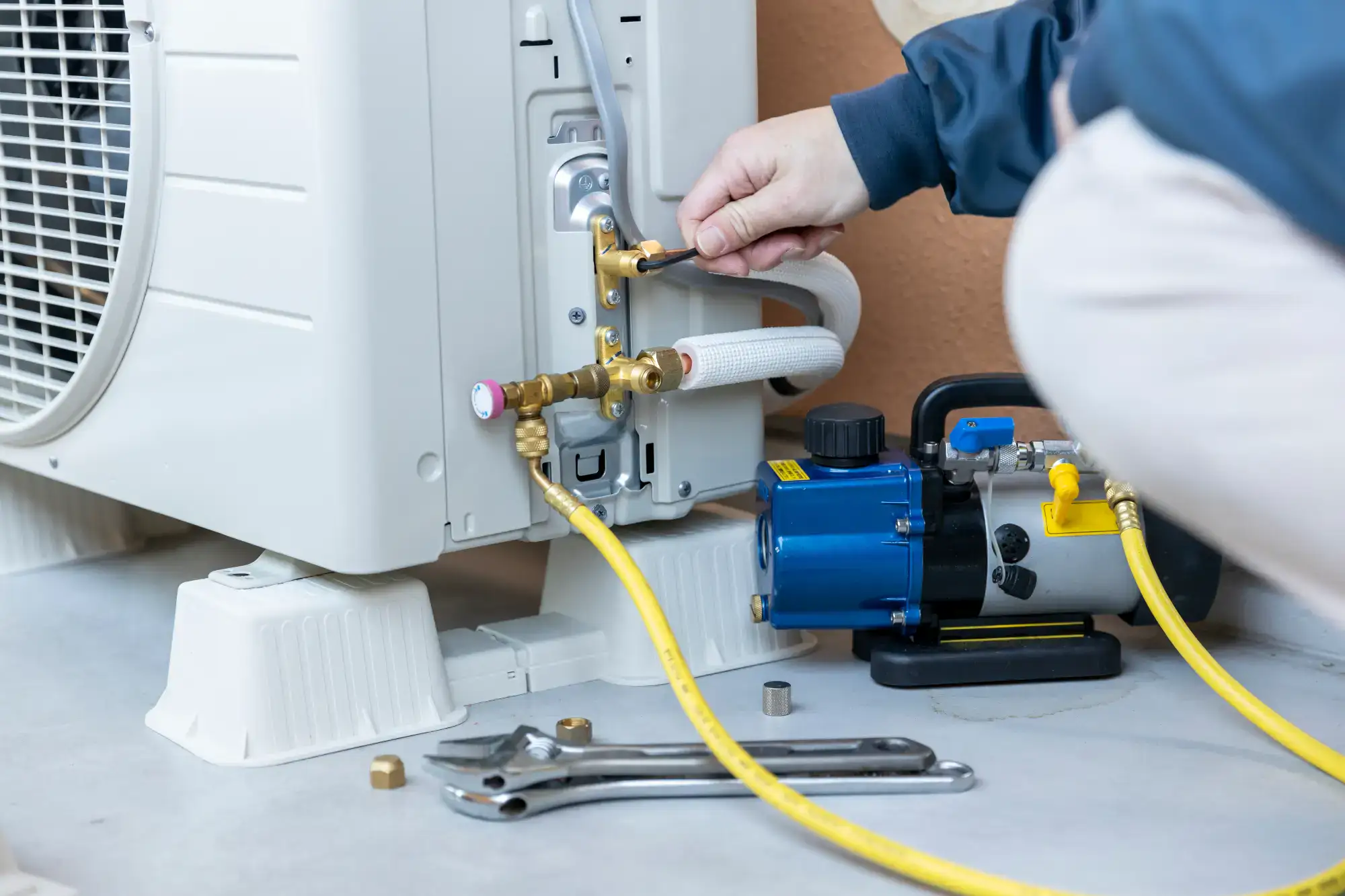
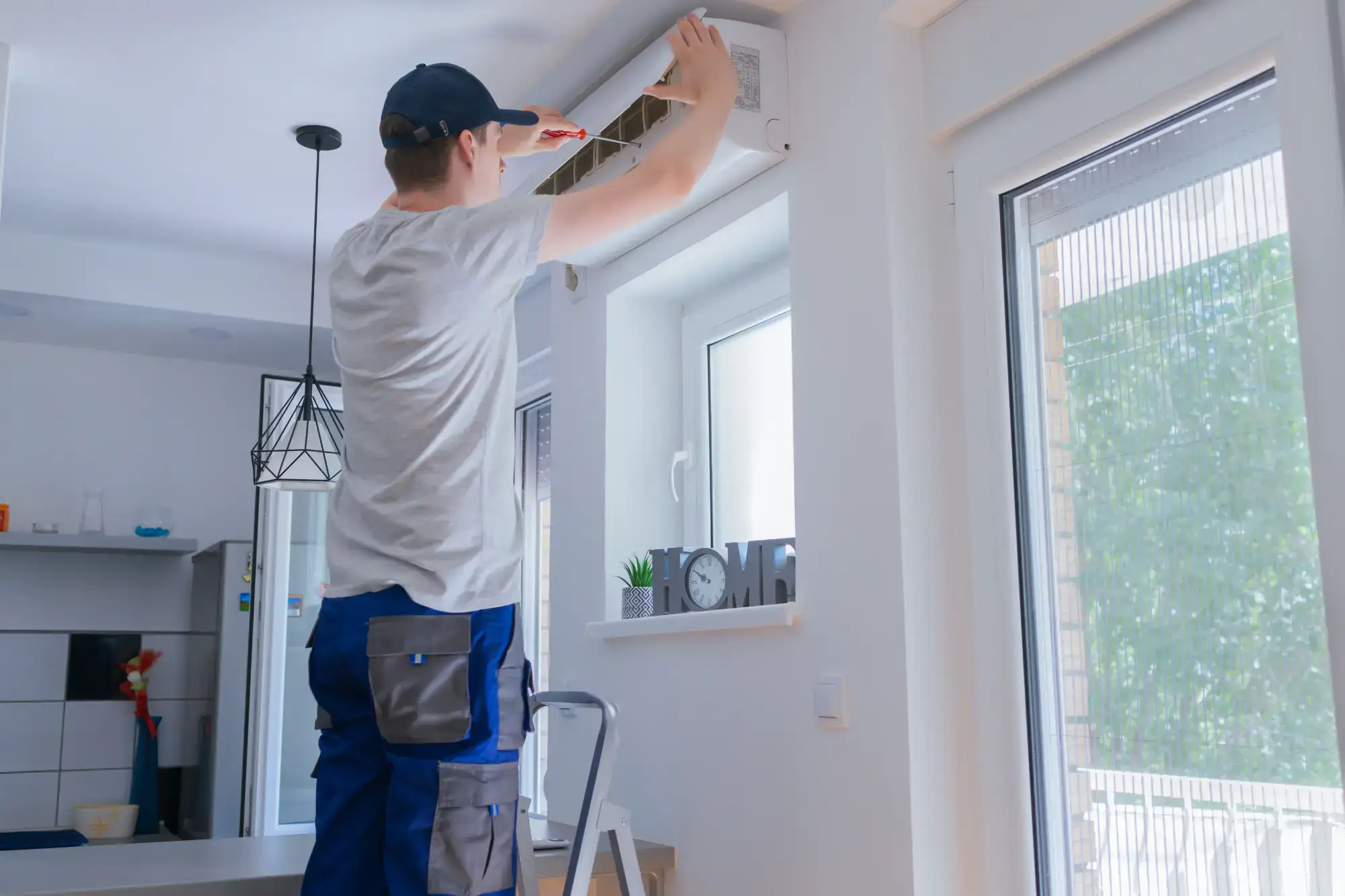
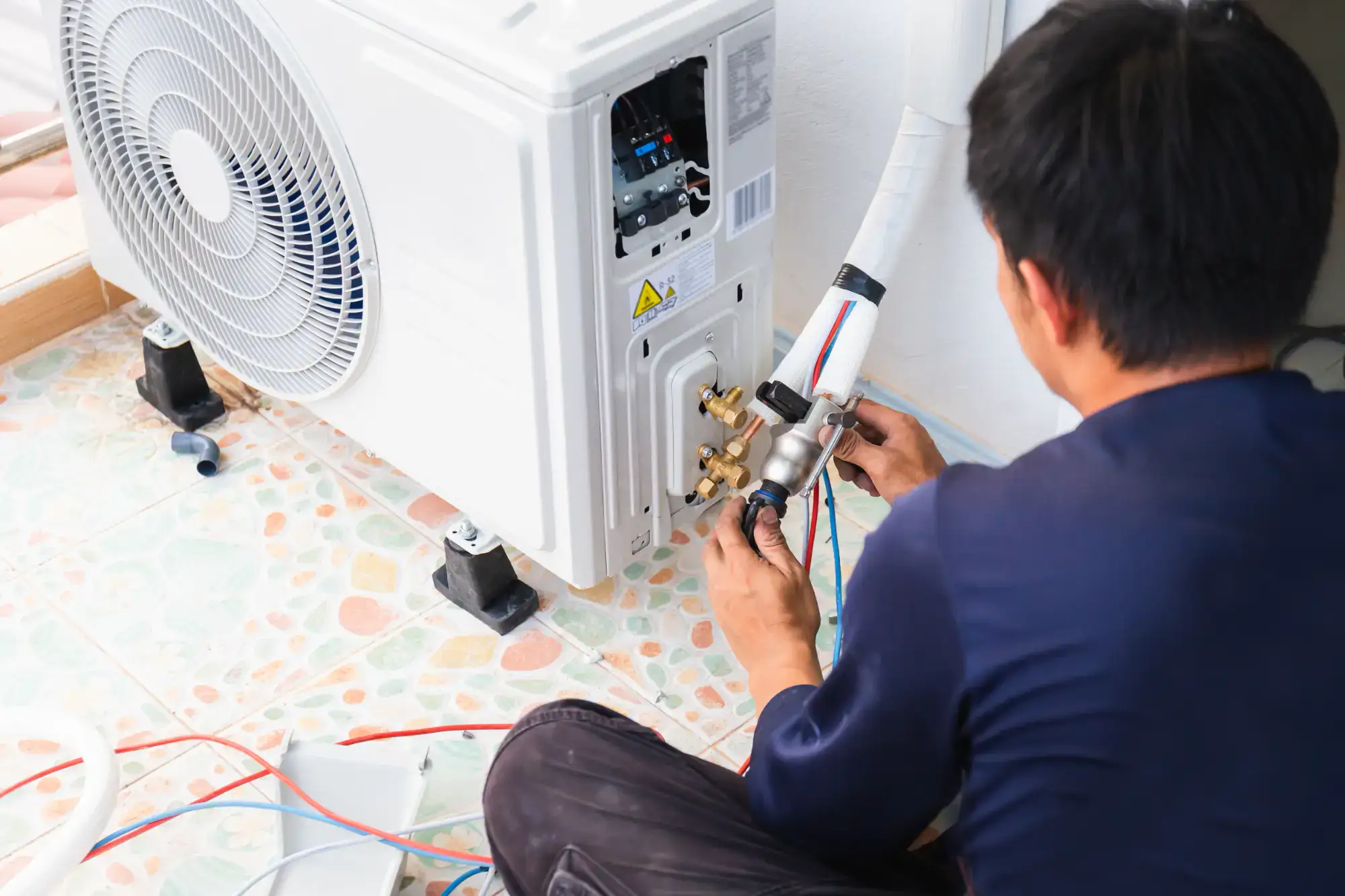
Installation day involves setting the outdoor condenser, connecting refrigerant lines, installing or connecting to your ductwork, mounting the indoor air handler, running electrical, and setting up the thermostat. We handle the permit process and make sure everything is up to code.
After the install, we test the system, check refrigerant levels, verify airflow, and make sure every zone is cooling properly. You get the manufacturer warranty registered and our contact info for anything that comes up down the road.

Ready to get started?
Every central AC unit installation in Centre Island, NY includes a full load calculation so your system is sized correctly for your home. We don’t guess based on square footage alone. Your home’s layout, insulation, and sun exposure all affect what size unit you need.
You get permit handling and code compliance as part of the job. Nassau County has specific requirements for HVAC installations, and we make sure your system passes inspection without delays or callbacks.
We register your manufacturer warranty and provide documentation for everything. If you qualify for rebates through New York State’s Clean Heat Program or other incentives, we can point you toward those applications. Some Nassau County residents can get rebates covering a significant portion of installation costs depending on the system type and household income.
The install includes refrigerant line setup, electrical connections, thermostat installation, and ductwork modifications if needed. For homes that want zoned cooling—where you control temperatures by floor or room—we can set up multi-zone systems that give you better control and efficiency.
You also get a walkthrough after installation so you know how to operate the system, change filters, and spot any issues before they turn into bigger problems.
Most central air installations take one to three days depending on your home’s size and whether we’re working with existing ductwork or installing new ducts. A straightforward replacement where the ductwork is already in place usually wraps up in a day.
Larger homes or properties that need ductwork modifications take longer. If we’re adding zones or running new refrigerant lines to different floors, that adds time. We’ll give you a timeline upfront based on what your specific job requires.
We don’t rush installations to hit an arbitrary deadline. Taking the time to do the refrigerant connections right, check airflow in every room, and verify the system is cooling evenly matters more than shaving off a few hours. You’re better off with an extra day of work than a system that underperforms because we cut corners.
It depends on your home’s cooling load, which we calculate by measuring square footage, checking insulation levels, counting windows, noting sun exposure, and accounting for ceiling heights. There’s no universal formula that works for every house.
A common mistake is oversizing the system. Contractors sometimes install a bigger unit thinking more capacity equals better cooling, but oversized systems cycle on and off too quickly. That leads to uneven temperatures, poor humidity control, and higher energy bills because the system never runs long enough to dehumidify properly.
Undersized systems are just as bad. They run constantly on hot days and never quite cool the house down. The equipment wears out faster because it’s working harder than it should. We size systems based on your actual load calculation, not rules of thumb or guesses based on your home’s square footage alone.
Yes, but you have two options. You can install ductwork throughout your home, which involves running ducts through attics, basements, or walls. That’s more invasive and takes longer, but it gives you traditional central air with vents in every room.
The other option is a ductless mini-split system. These use individual air handlers mounted in each room or zone, connected to an outdoor condenser by refrigerant lines. Installation is less invasive because we’re not cutting into walls to run full duct systems. You get independent temperature control in each zone, which works well for larger homes where different floors have different cooling needs.
Ductless systems are also more efficient in many cases because you’re not losing cooled air through leaky ductwork. For Centre Island homes with unique layouts or additions that don’t connect to existing ducts, ductless can be a better fit than trying to extend old ductwork that wasn’t designed for the extra load.
SEER stands for Seasonal Energy Efficiency Ratio. It measures how efficiently your AC unit converts electricity into cooling over a typical cooling season. Higher SEER ratings mean lower operating costs because the system uses less electricity to produce the same amount of cooling.
New systems in 2026 typically range from SEER 14 to SEER 20 or higher. A SEER 16 system uses about 25% less electricity than a SEER 13 system. For a large Centre Island home running AC all summer, that difference adds up on your electric bill.
Higher SEER systems cost more upfront, but the energy savings can offset that over time. If you’re planning to stay in your home long-term, a higher efficiency system usually makes sense. If you’re selling in a few years, a mid-range SEER rating might be more practical. We walk through the cost-benefit breakdown based on your situation so you’re not overpaying for efficiency you won’t use or underpaying and regretting it every summer.
Not necessarily, but it depends on the age and condition of your furnace and whether your indoor air handler is compatible with the new outdoor condenser. If your furnace is older and likely to need replacement in the next few years, replacing both at the same time can save you money on labor since we’re already accessing the same equipment.
Some homeowners in Centre Island, NY are switching to heat pump systems that handle both heating and cooling. Heat pumps are more efficient than traditional furnaces in moderate climates, and New York State offers rebates that can cover a significant portion of the installation cost. If your furnace is on its last legs, a heat pump might make more sense than replacing the furnace and AC separately.
If your furnace is newer and working fine, we can install a new AC that works with your existing system. We’ll check compatibility during the estimate so you know what makes sense for your setup. There’s no point replacing equipment that still has years of life left unless the efficiency gains or rebates make it worth doing both at once.
Your home should cool evenly without major temperature differences between rooms. The system should cycle on and off regularly instead of running nonstop or short-cycling every few minutes. Humidity levels should stay comfortable, not muggy, even when it’s hot outside.
Check that the outdoor condenser is level and has proper clearance for airflow. The refrigerant lines should be insulated and secured, not hanging loose or kinked. Inside, the air handler should be mounted securely with a clean condensate drain that’s not leaking or clogged.
Your installer should have pulled a permit and registered the manufacturer warranty. If they skipped the permit, that’s a red flag. You should also have documentation showing the system was sized based on a load calculation, not just square footage. If your contractor can’t show you that calculation, there’s a good chance the system is oversized or undersized, which leads to performance issues and higher operating costs over time.