Summary:
You’ve probably spent more time than you’d like researching this. Central air or mini split? Replace the whole system or just the unit? And somewhere in the middle of all that, you’re wondering whether your ductwork is even worth saving.
These are the right questions — and they’re worth answering properly before you spend several thousand dollars. Queens County homes throw a few extra variables into the mix: older construction, steam heat systems, attached row houses, and summers that don’t let up. We’ve been installing and servicing HVAC systems in this area since 2006, and what works in a Bayside brick colonial doesn’t always work in a Flushing co-op. Here’s what you actually need to know.
Central Air Conditioner Installation: When It Makes Sense
Central air is still the right call for a lot of Queens County homes — just not all of them. If you already have ductwork in decent condition, a central system is often the most cost-effective path to whole-home comfort. You get consistent airflow throughout every room, a single outdoor unit, and a system that most homeowners already know how to use.
The catch is that “decent condition” matters more than most people realize. Leaky or undersized ducts can quietly eat up 30% of your system’s output before the air ever reaches a room. That means your new unit works harder, your bills run higher, and the comfort you paid for never quite arrives. Before assuming you can reuse existing ductwork, it needs to be inspected — not assumed.
What Does Central AC Installation Actually Cost in Queens County?
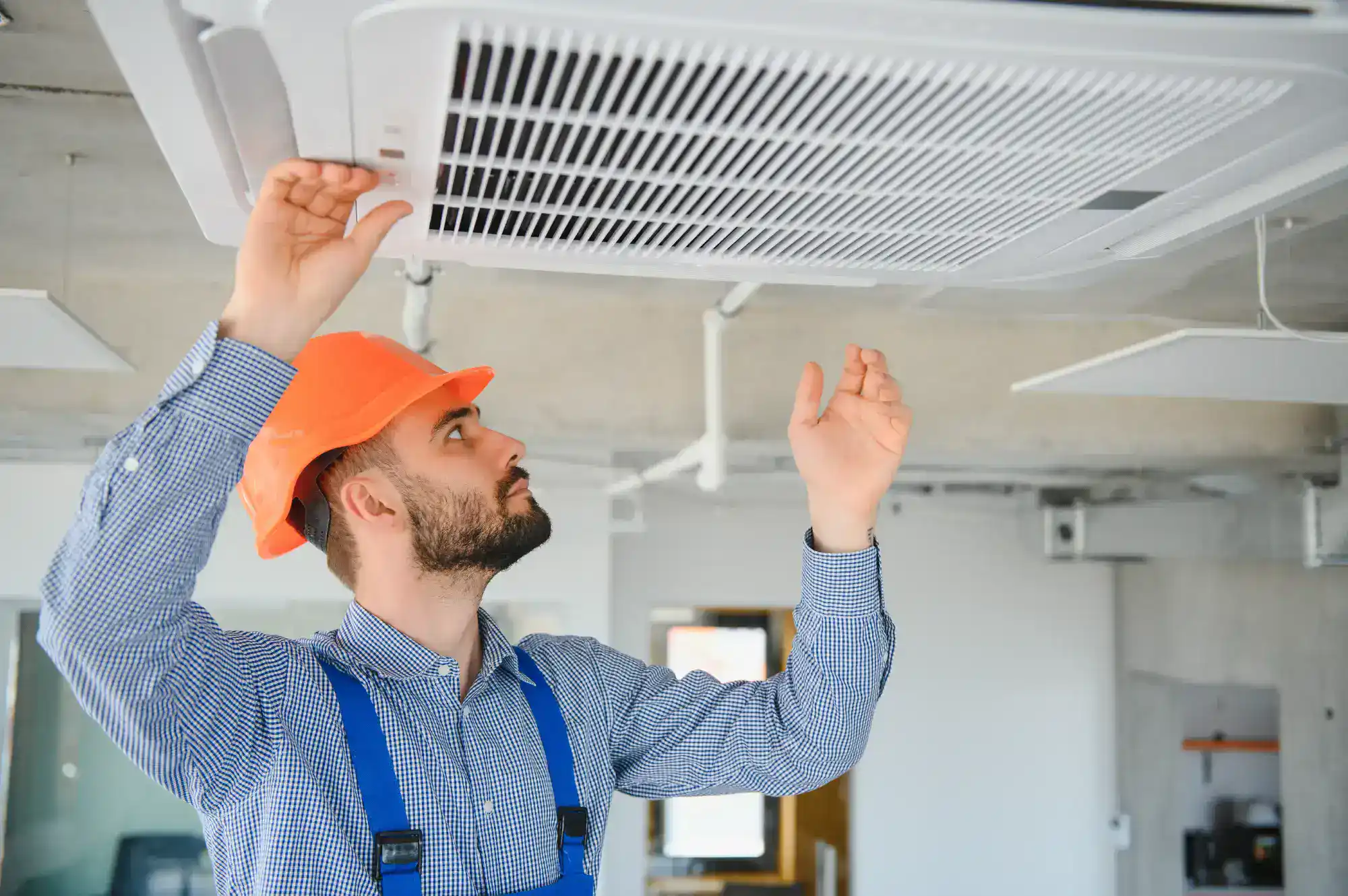
In the New York area, a central air replacement — assuming your ductwork is already there and in reasonable shape — runs around $7,000 to $8,000 on average. That’s for the equipment, labor, and a proper installation. It’s not a small number, but it’s manageable when you’re not starting from scratch.
Where costs climb fast is when ductwork needs to be added or significantly reworked. Installing new duct systems in a home that doesn’t have them can add up to $18,000 on top of the unit itself. In a lot of older Queens County homes — the kind built in the 1930s through 1950s with plaster walls, steam radiators, and no attic space to run ducts through — that math stops making sense pretty quickly.
That’s not a reason to rule out central air entirely. It’s a reason to have someone actually look at your home before quoting you. We do on-site estimates before any work begins, so you know what you’re working with before you commit to anything. A proper sizing assessment — using what the industry calls a Manual J load calculation — also matters here. It accounts for your home’s insulation, window placement, sun exposure, and local climate conditions rather than just square footage. An oversized system short-cycles, meaning it turns on and off constantly without ever pulling the humidity out of the air. In a Queens County summer, that’s a real problem — not just a technical one.
For homes in Fresh Meadows, Little Neck, or Douglaston where detached single-family construction is more common and existing ductwork is already in place, central air is often the cleaner, more straightforward solution. For older attached homes closer to Flushing or Woodside, the calculus usually shifts.
Can You Reuse Old Ductwork With a New Central AC System?
Sometimes yes, sometimes no — and the difference matters enough to check before you assume. Ductwork that’s been sitting in an attic or behind walls for 20 or 30 years may have gaps at the joints, insulation that’s degraded, or sections that were never sized correctly for the system running through them. None of that is visible from the outside.
When ductwork is in good shape, reusing it with a new central air system saves real money and makes the installation significantly simpler. We can often swap out the equipment, connect it to existing ducts, and have you running within a day. When it’s not in good shape, putting a new high-efficiency unit on compromised ductwork is like buying a new car and leaving a slow leak in the tires — you’ll never get the performance you paid for.
The honest answer is that we won’t know until we look. What we can tell you is that we’re not going to push you toward a full duct replacement if it isn’t necessary. If your existing system is serviceable, we’ll tell you that. If it’s not, we’ll show you why and give you a clear number before any work starts. No hidden fees, no surprise invoices — just an honest assessment of what your home actually needs.
One more thing worth knowing: Queens County homes served by Con Edison may qualify for rebates on high-efficiency central AC systems. It’s worth asking about before you finalize your equipment choice, because the right unit can offset some of the upfront cost through utility savings and rebate programs.
Mini Split Installation: The Better Fit for a Lot of Queens County Homes
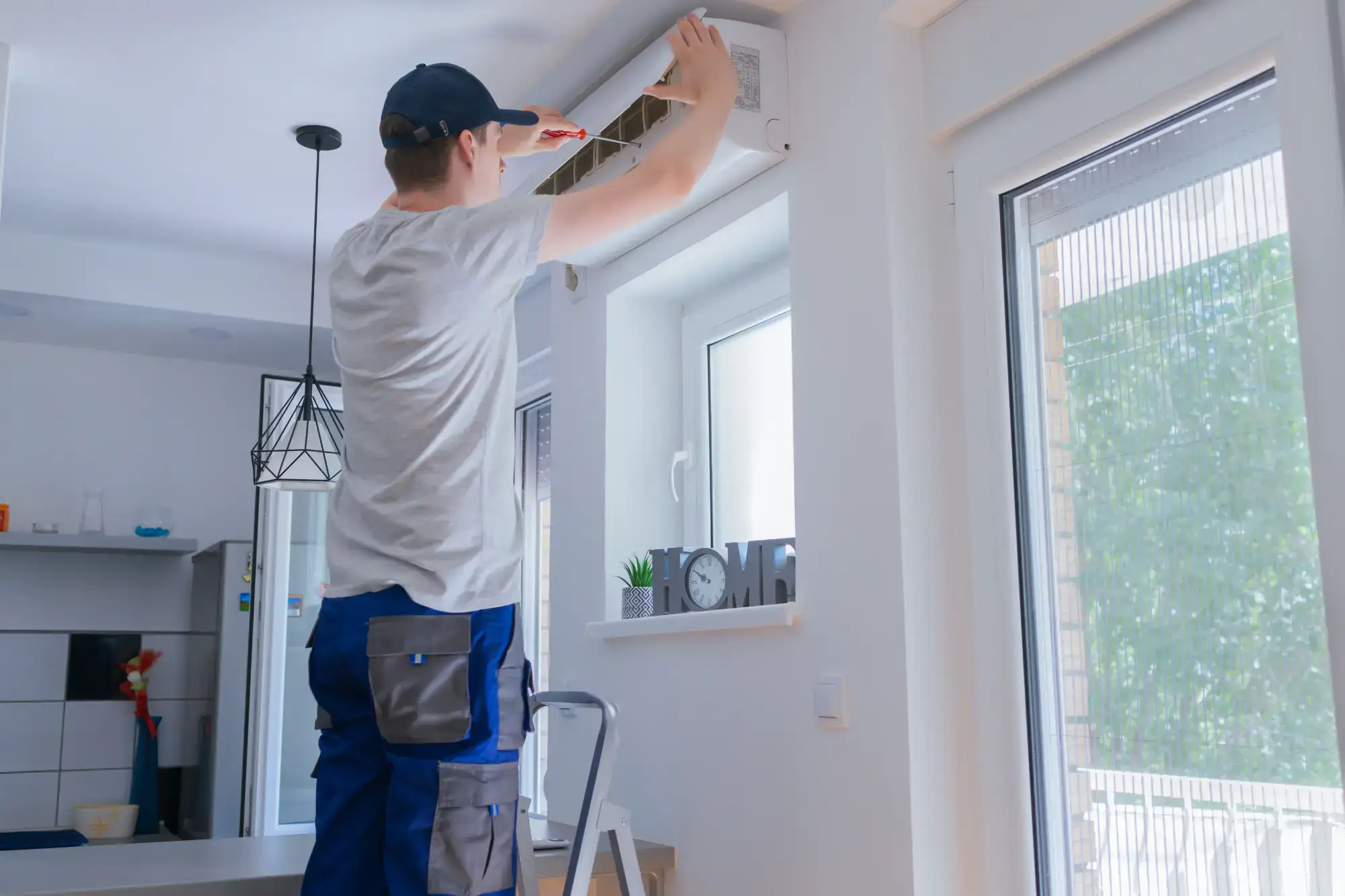
Ductless mini splits have become the go-to solution for a wide range of Queens County homes — and for good reason. If your home has steam heat and no existing ductwork, a mini split skips the expensive and invasive process of building a duct system from scratch. The refrigerant lines run through a small hole in the wall, the indoor unit mounts overhead or on the wall, and you’re cooling the space without tearing anything open.
We install Fujitsu and Mitsubishi systems specifically because of their efficiency and their performance in this climate. Modern mini splits from these brands can reach SEER2 ratings above 30, which means significantly lower operating costs compared to standard central systems. And because they use variable-speed compressors, they run at lower speeds for longer periods — which is actually better for humidity control than a system that blasts on and off.
Mini Split Installation Cost in Queens County: What to Expect
In Queens County, mini split installation typically runs between $2,000 and $12,000 depending on how many zones you need and where the units are going. A single-zone system for one room or a studio apartment sits at the lower end. A multi-zone setup covering three or four rooms — each with its own indoor unit controlled independently — moves toward the higher end of that range.
The zone control piece is one of the main reasons people choose mini splits over central air. If your upstairs is always ten degrees hotter than your living room, or you have a finished basement that the central system never reaches, a multi-zone mini split solves that directly. Each indoor unit has its own thermostat, so you’re not cooling empty rooms or fighting over one thermostat for the whole house.
One thing that separates a quality mini split installation from a rushed one: line hide. The refrigerant lines running between the indoor and outdoor units need to travel along the exterior of the home, and we cover them with a proper line hide — a channel that protects the lines from weather and keeps the exterior looking clean. It’s a small detail that a lot of installers skip. We don’t.
For Queens County homeowners in Whitestone or Bayside who are adding a room addition, finishing a basement, or converting a garage, a single-zone mini split is often the fastest and most cost-effective solution. For older pre-war homes in Jackson Heights or Astoria with steam radiators and no ductwork, a multi-zone mini split can handle the entire house without a single duct being run.
Do Mini Splits Work Well Enough for Queens County Winters?
This comes up a lot, and the short answer is yes — with the right equipment. Older mini split technology struggled in cold weather, which is where the hesitation comes from. Modern cold-climate heat pump systems from Mitsubishi and Fujitsu are a different story. Mitsubishi’s Hyper Heating Inverter technology provides full heating capacity down to 5°F and keeps operating all the way down to -13°F. Queens County winters don’t come close to testing those limits.
What this means practically is that a mini split heat pump can handle both your summer cooling and your winter heating in one system. For homes with steam radiators that are expensive to maintain, or for homeowners who want to reduce their dependence on gas heat, a mini split heat pump is worth a serious look — not just as an AC solution, but as a year-round one.
There’s also the permit question, which is worth addressing directly. AC installation in New York City typically requires permits through the NYC Department of Buildings, particularly when work involves new electrical connections or refrigerant line installation. This is true for both central air and mini split systems depending on scope. Unpermitted HVAC work can create real problems — at resale, with a co-op board, or if a DOB inspector flags it. We handle the permitting process as part of the installation, so you’re not left navigating that on your own.
If you live in a co-op or condo in Queens County, board approval may also be required before installation can begin. It’s something we’re familiar with and can help you work through before the project starts, rather than after.
AC Unit Replacement in Queens County: How to Make the Right Call
Whether you’re replacing a system that finally gave out or planning ahead before next summer, the decision comes down to a few honest questions: Do you have usable ductwork? How many rooms need cooling? What’s your budget, and what do you want your utility bills to look like in five years?
Central air makes sense when the infrastructure is already there and in good shape. Mini splits make sense when it isn’t — or when you want zone control, higher efficiency, or a system that works for heating too. Neither option is universally better. The right answer depends on your specific home, and that’s exactly what a proper on-site assessment is for.
We’ve been doing this in Queens County since 2006, and we’re not going to recommend a system that doesn’t fit your house. If you’re ready to stop researching and start getting real answers, give us a call at 718-428-6987. We’ll come out, look at what you’re working with, and give you a straight quote — no pressure, no surprises.