Summary:
If your house feels sticky at 72°F, your system runs for two minutes and shuts off, or your upstairs is ten degrees hotter than your downstairs — your HVAC system is probably the wrong size. Not broken. Not old. Just wrong for your home. This is one of the most common problems we see throughout Queens County, and most homeowners never find out it’s the cause. They just keep paying high utility bills and wondering why the house never quite feels right. Here’s what’s actually happening, how proper sizing works, and what separates a contractor who does it right from one who doesn’t.
AC Sizing Calculator: Why Square Footage Isn't the Answer
When most contractors size an HVAC system, they measure your square footage, multiply by a number, and call it a day. It’s fast, it’s simple, and it’s wrong about half the time. The 500-square-feet-per-ton rule of thumb that’s been floating around the industry for decades oversizes the average home by 20 to 40 percent. That’s not a rounding error — that’s a system that’s fundamentally mismatched to your home before it’s even installed.
Online AC sizing calculators aren’t much better. They use the same simplified logic: plug in your square footage, maybe your zip code, and get a tonnage recommendation. What they don’t account for is everything that actually drives your cooling and heating load — your insulation levels, window size and orientation, ceiling height, how airtight your home is, and how much heat your appliances generate. For a Queens County homeowner, that’s a lot of missing information.
HVAC Load Calculation: What a Real Sizing Process Looks Like
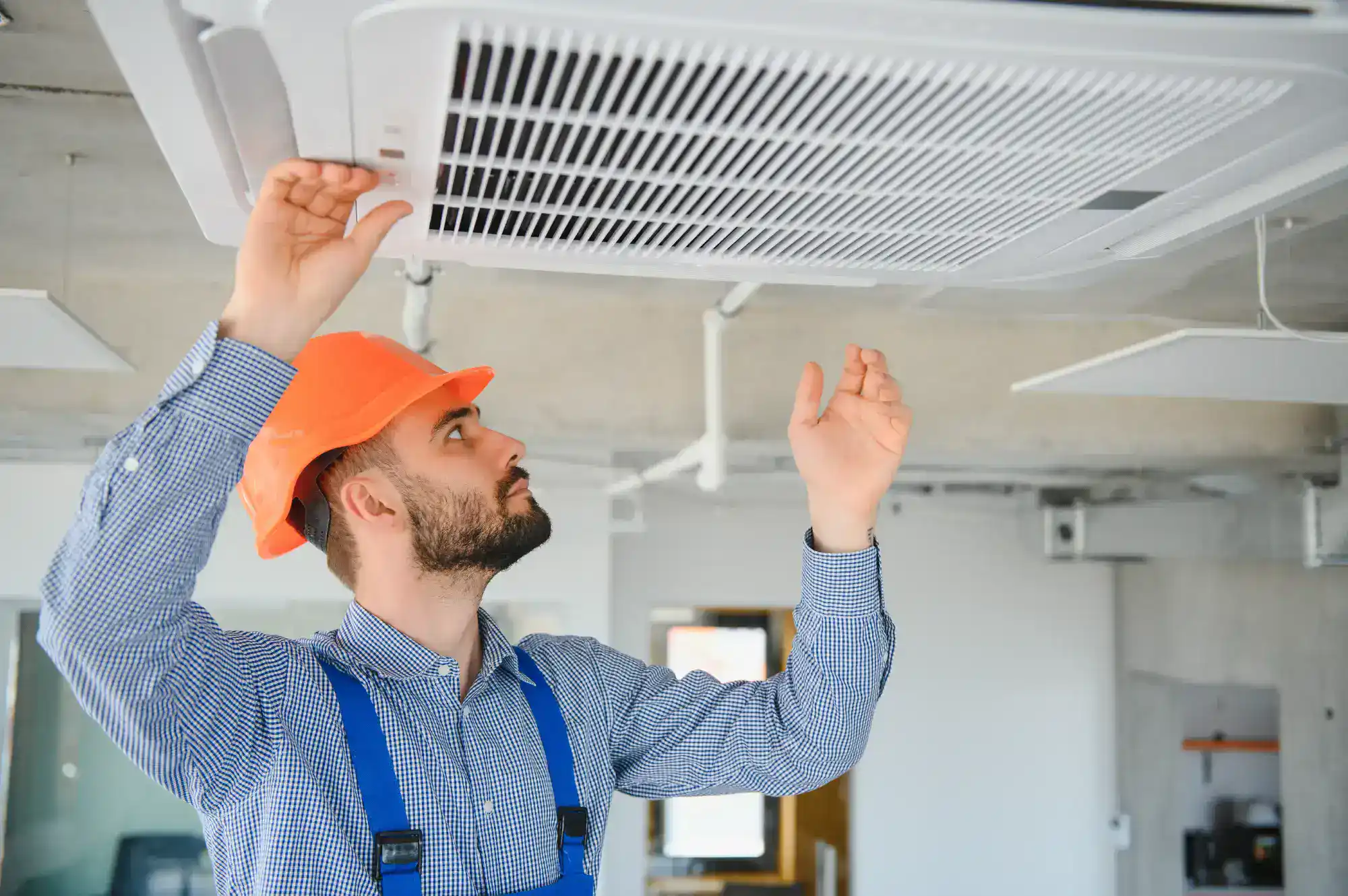
The correct method for sizing an HVAC system is called a Manual J load calculation. It’s the ANSI-recognized national standard published by the Air Conditioning Contractors of America, and it’s not optional in New York — it’s legally required under the state’s energy code for new HVAC installations. Any contractor who can’t produce a Manual J report after sizing your system either didn’t do one or doesn’t know what you’re asking for. Either way, that’s a problem.
A proper Manual J isn’t just a formula. It’s a room-by-room analysis of every factor that affects how much heating and cooling your home actually needs. That includes your insulation values, the area and orientation of every window, your ceiling heights, how much air leaks in and out of the building envelope, local climate data specific to your area, and internal heat gains from people and appliances. Duct losses — especially in homes where ducts run through unconditioned attic space — can add another 20 to 30 percent to the load. A contractor who doesn’t account for that is sizing for a home that doesn’t exist.
Once the load calculation is complete, equipment is selected using a separate methodology called Manual S, which matches the calculated BTU requirement to specific equipment performance data. Manual D governs duct design. These aren’t bureaucratic checkboxes — they’re the difference between a system that works and one that makes you miserable for the next fifteen years.
The practical takeaway: before we or any contractor installs a new system in your home, ask directly for the Manual J report. If we look at you blankly or tell you it’s not necessary, you have your answer about how we work.
Oversized AC Problems: Why a Bigger System Makes Queens County Summers Worse
There’s a persistent belief that a bigger HVAC system is a safer choice. More capacity means it can handle the worst days, right? In practice, the opposite is true — and in Queens County’s coastal climate, an oversized system creates a specific kind of misery that a lot of homeowners recognize but can’t explain.
Here’s what happens. An oversized AC cools your home to the thermostat setpoint faster than it should. The system hits 72°F and shuts off — but it only ran for a few minutes. That short cycle isn’t long enough to remove meaningful moisture from the air. Dehumidification takes time and sustained airflow. When the system short-cycles, it skips that process almost entirely. The result is a house that reads 72°F but feels like 78°F because the relative humidity inside is sitting at 60 or 65 percent instead of the comfortable 45 to 50 percent range.
Queens County is surrounded by water. Jamaica Bay sits to the south. The Atlantic is a few miles beyond that. Long Island Sound influences the north shore. During a typical July or August in neighborhoods like Howard Beach, Broad Channel, or Rockaway, outdoor humidity regularly runs between 65 and 80 percent. That moisture load has to go somewhere, and if your AC isn’t running long enough to pull it out of the air, it stays in your home. The urban heat island effect in denser corridors like Jamaica Avenue or Northern Boulevard adds additional cooling load on top of that — load that a square-footage rule of thumb won’t capture.
Beyond the comfort problem, short-cycling is hard on equipment. The compressor — the most expensive component in your system — takes the hardest hit every time the system starts up. An oversized system that starts and stops thirty times a day instead of running in long, efficient cycles will wear out years ahead of schedule. You pay more upfront for a larger system, more on your Con Edison bill because short-cycling is inefficient, and more in repairs because the equipment ages faster. There’s no upside.
Queens County Housing Stock: Why Your Building Type Changes Everything
Queens County isn’t a city of identical homes. It’s a borough of attached row houses in Ridgewood and Jackson Heights, two-family homes in Jamaica and Queens Village, pre-war brick apartment buildings in Astoria, and post-war colonials and cape cods in Bayside, Fresh Meadows, and Jamaica Estates. Each of those building types has a different heat loss and heat gain profile — and a contractor who sizes them all the same way is cutting corners.
We’re based in Bayside, and we’ve worked in every corner of this borough. The sizing challenges we see in a 1940s semi-detached in Whitestone are completely different from what we see in a finished-basement colonial in Little Neck or a top-floor apartment in Flushing. Location and building type aren’t background details — they’re inputs in the calculation.
How Attached Homes and Two-Families in Queens County Affect Sizing
Attached row houses are one of the most common building types in western and central Queens County, and they present a sizing challenge that generic calculators completely ignore. When you share a wall with your neighbor, that wall surface doesn’t lose or gain heat the way an exterior wall does. The heat transfer across a shared interior wall is dramatically lower than across an exposed exterior wall — which means the actual cooling and heating load for an attached home is meaningfully lower than for a detached home of the same square footage. A contractor sizing by square footage alone will oversize every attached home they touch.
Two-family homes are another story. They’re everywhere in Queens County — Jamaica, Hollis, South Ozone Park, Woodhaven — and they present a split-load challenge. Each unit needs to be sized independently, because the load for the first floor is different from the load for the second floor. Shared floors and ceilings between units affect heat transfer between them. If a contractor sizes a two-family as a single system or treats both units identically, the results are almost always wrong for at least one of them.
Then there’s the post-war colonial problem. A huge portion of the housing stock in eastern Queens County — Bayside, Fresh Meadows, Douglaston, Jamaica Estates — was built between 1945 and 1970 with minimal insulation and original single-pane windows. Over the decades, many of those homes have been upgraded: blown-in insulation added, windows replaced, air leaks sealed. The home’s actual load today may be 20 to 30 percent lower than it was when the original system was installed. If a contractor simply replaces the old system with the same tonnage, they’re sizing for a home that no longer exists — and you end up with an oversized system and all the problems that come with it.
Ductless Mini-Split Sizing for Queens County Apartments and Older Buildings
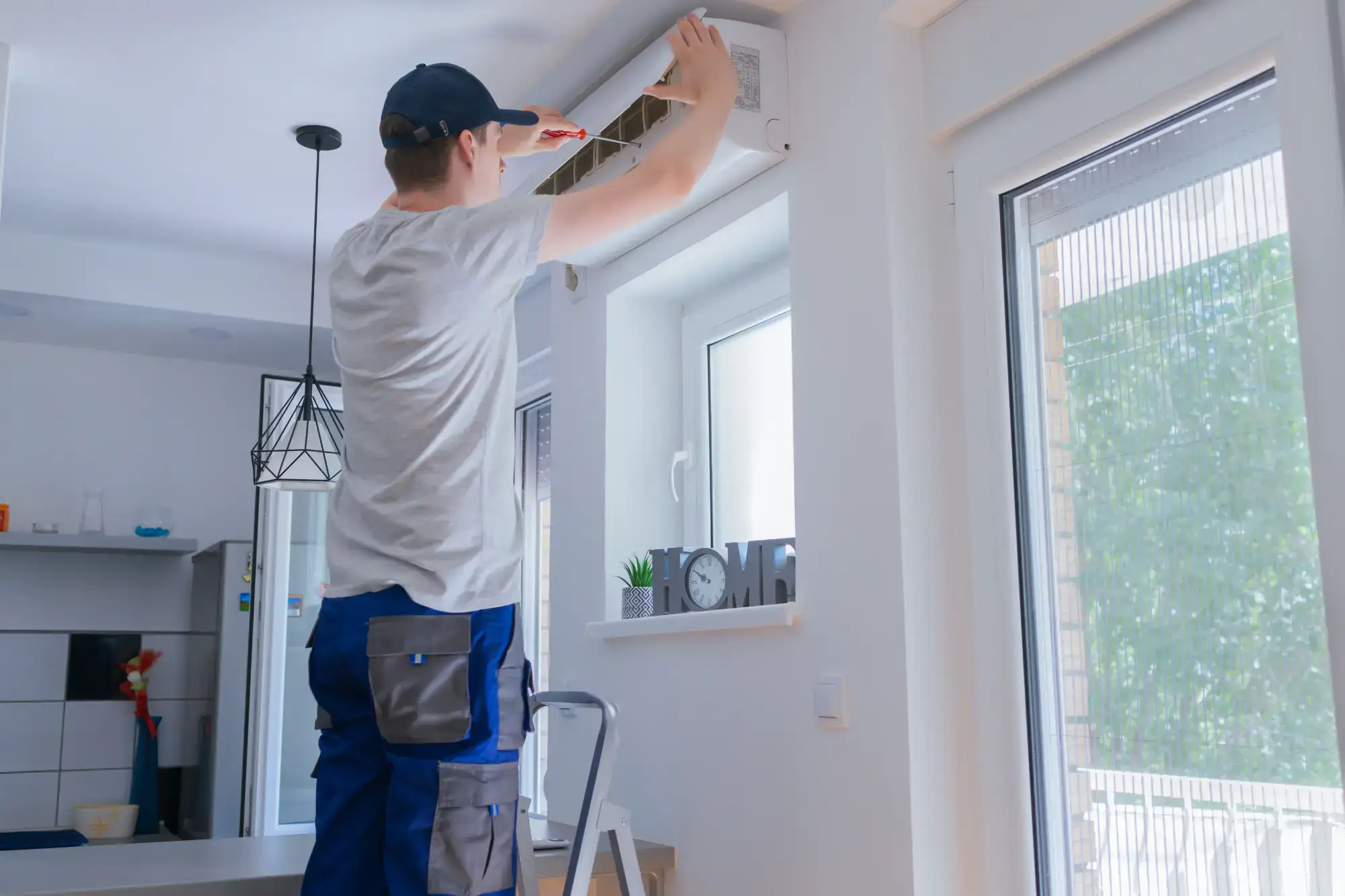
A significant portion of Queens County homes — particularly pre-war brick buildings in Astoria, Woodside, and Sunnyside — have no existing ductwork and no practical way to add it without major renovation. For these homes, ductless mini-split systems are often the right solution. But ductless sizing has its own methodology, and it’s not the same as sizing a central air system.
With a ductless system, each indoor unit (called a head) is sized for the specific room or zone it serves. The outdoor unit is then sized to match the combined load of all the heads it supports. Get the head sizing wrong and you end up with the same short-cycling problem as an oversized central system — just in a single room instead of the whole house. Get the outdoor unit wrong and the system either can’t keep up on the hottest days or runs inefficiently the rest of the time.
The brands matter here too. We install Fujitsu and Mitsubishi ductless systems, and both manufacturers have specific equipment selection tools that go beyond basic square footage. The performance data at different outdoor temperatures, the latent capacity for humidity removal, and the modulation range of the compressor all factor into whether a given head is the right match for a given room. A contractor who picks a ductless head based on square footage alone is skipping the same steps as one who sizes a central system with a rule of thumb.
For Queens County homeowners considering ductless for the first time — whether it’s for a pre-war apartment, a room addition, or a converted garage — the sizing conversation is worth having in detail before any equipment gets ordered. The difference between a system that quietly maintains 72°F with 47 percent humidity and one that blasts cold air for three minutes and shuts off is almost always in how the load was calculated.
Getting HVAC Sizing Right in Queens County, NY
Proper HVAC system sizing isn’t a premium add-on or a technicality — it’s the foundation of everything else. The right system size means lower energy bills, consistent temperatures, humidity that actually stays in check through a Queens County summer, and equipment that lasts. The wrong size means the opposite, regardless of how good the brand is or how clean the installation looks.
The short version: ask for the Manual J. If your contractor can show you the load calculation and walk you through how they selected your equipment, you’re in good hands. If they can’t, keep looking.
We’ve been doing this work in Queens County for a long time, and we know what the housing stock here actually demands — from the row houses in Ridgewood to the colonials in Bayside to the apartment buildings in Flushing. If you want a straight answer about whether your current system is the right size, or you’re planning a replacement and want it done correctly, give Excellent Air Conditioning and Heating Service a call. Queens: 718-428-6987. No guesswork, no upsell, just the right system for your home.