

You’re not looking for the cheapest option. You want an AC system that cools your entire home evenly, doesn’t spike your electric bill, and actually lasts. That means proper sizing, clean installation, and equipment that matches Long Island’s humid summers.
Most systems get installed wrong—undersized units that run constantly, oversized ones that cycle too fast and waste energy, or ductwork that leaks half your cool air into the attic. You end up paying more every month and replacing the system sooner than you should.
When your home AC installation in East Williston is done right, you notice the difference immediately. Even temperatures in every room. Lower energy bills. No service calls every season because something wasn’t installed correctly the first time. You get what you paid for, and it works the way it’s supposed to.
Glenn runs Excellent Air Conditioning and Heating Service, and he’s the one who shows up to measure your space and walk you through what your home actually needs. No sales pitch. No upselling equipment you don’t need. Just straight answers about what works and what doesn’t.
We’ve been installing and servicing HVAC systems across Nassau County for years, and we know East Williston homes inside and out. Many of the properties here were built before central air was standard, which means retrofit work—adding ductwork, upgrading electrical panels, working around older construction. We handle that every day.
You’ll see our trucks in the area regularly because we work with homeowners who value quality and want a contractor they can call back if something comes up. We pull the permits, schedule the inspections, and make sure everything meets New York State building codes so you’re never dealing with that headache yourself.
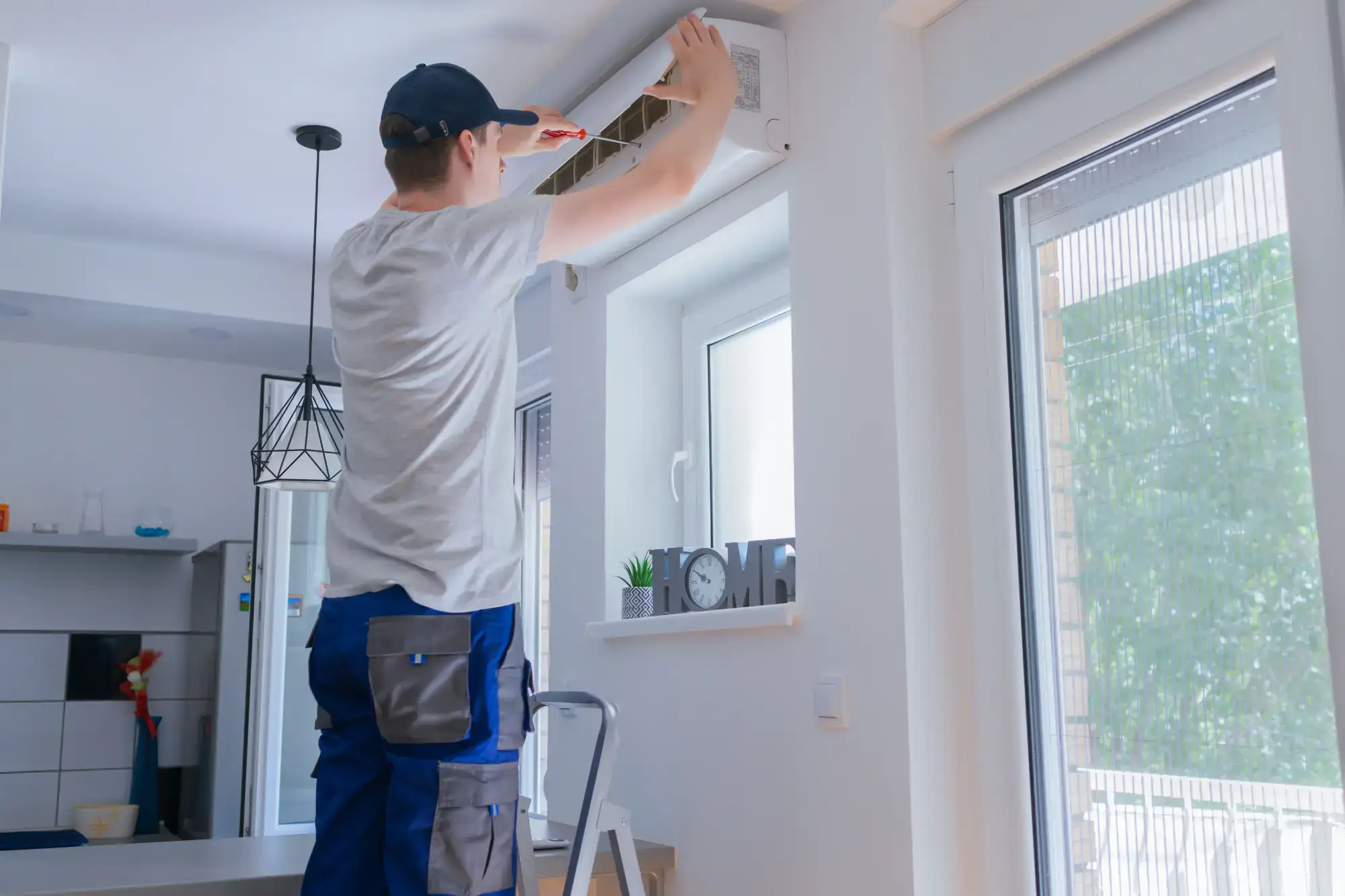
First, Glenn comes out to assess your home. He’s looking at square footage, insulation, ductwork condition, and your electrical setup. That tells him what size system you actually need—not what a chart says, but what works for your specific house. You’ll get a clear estimate with no surprises buried in the fine print.
Once you’re ready to move forward, we handle the permit application with the village. That’s required for any new HVAC system installation in East Williston, and it’s one less thing you have to track down. We coordinate the inspection schedule so you’re not waiting around or dealing with the back-and-forth.
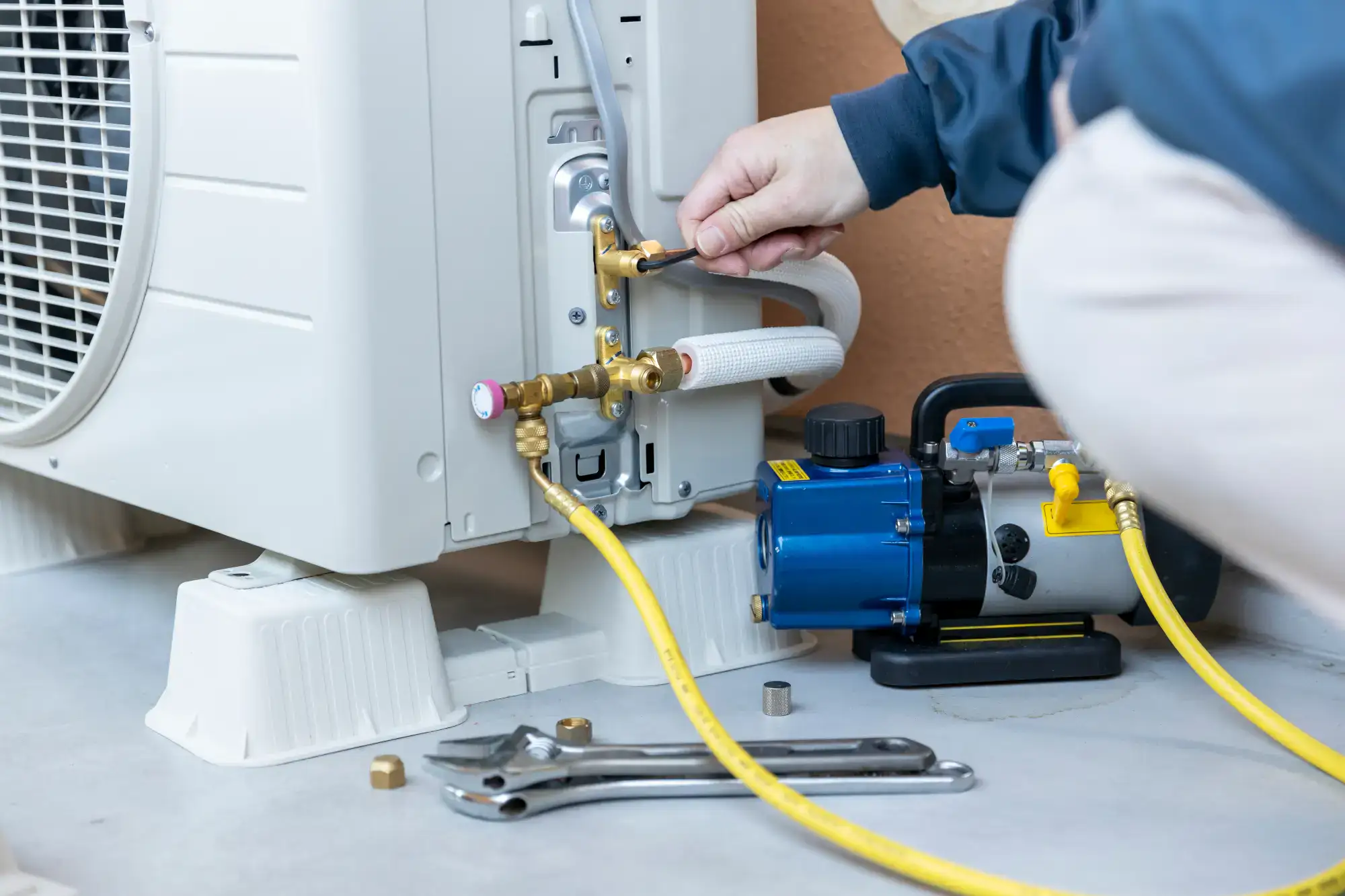
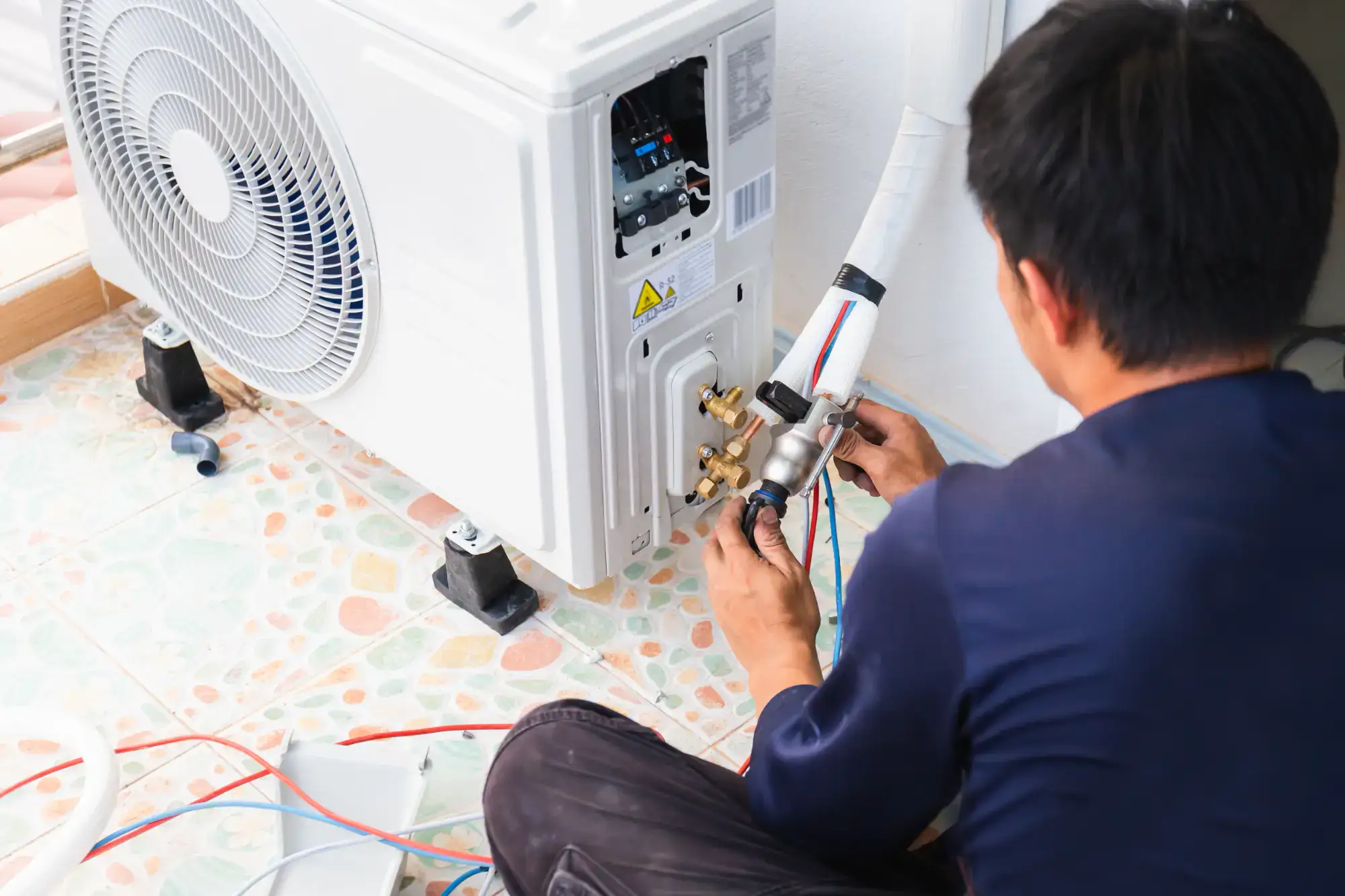
Installation day, our crew shows up on time with everything staged and ready. If you’re adding central AC to a home that didn’t have it, we’ll install the ductwork first—clean runs, properly sealed, no shortcuts. Then we set the outdoor condenser, connect the indoor unit, run the refrigerant lines, and wire everything to code. Before we leave, we test the system fully and walk you through how it operates. You’re not figuring it out on your own after we’re gone.

Ready to get started?
Your central AC unit installation in East Williston includes the outdoor condenser, indoor air handler or evaporator coil, refrigerant lines, thermostat, and all necessary electrical work. If your home needs ductwork added or modified, that’s part of the scope too—we don’t install a system and leave you with leaky ducts that waste half your cooling capacity.
We use equipment from Trane and Carrier because they’re reliable and parts are easy to source if you ever need service down the road. You’re not stuck hunting for a specialty part that takes three weeks to ship. These brands also meet the efficiency standards that help keep your energy bills reasonable, especially during July and August when your system is running most of the day.
East Williston homes often need electrical panel upgrades to handle modern HVAC loads, particularly if you’re replacing an old AC system with a new unit that’s more efficient but draws power differently. We coordinate that work as part of the installation so your system operates safely and doesn’t trip breakers. Everything gets inspected and signed off by the village before we consider the job complete. You’re covered from a permit and code perspective, which matters if you ever sell the house or file an insurance claim.
For a typical East Williston home, you’re looking at somewhere between $5,000 and $12,000 depending on the size of your house, whether you need new ductwork, and what equipment you choose. A straightforward replacement where the ductwork is already in place and in good shape sits on the lower end. If you’re adding central air to a home that never had it, expect the higher range because of the ductwork installation and electrical upgrades.
Homes in East Williston tend to be larger and many were built in the 1950s and 60s, which often means retrofit work. That adds cost, but it’s also what makes the system work correctly. Cutting corners on ductwork or using an undersized unit to save money up front just means higher energy bills and more service calls later.
We give you a detailed estimate after assessing your home so you know exactly what you’re paying for. No line items that don’t make sense, no surprise charges when the job’s done.
Most installations take one to three days depending on the scope. If we’re swapping out an existing system and the ductwork is solid, we can usually finish in a day. If we’re installing ductwork or making electrical upgrades, plan on two to three days.
We don’t rush the job to hit some arbitrary timeline. Refrigerant lines need to be brazed correctly, ducts need to be sealed properly, and electrical connections need to be torqued to spec. Doing it fast and doing it right aren’t always the same thing.
You’ll know the timeline before we start, and if something comes up—like discovering old ductwork that needs more work than expected—we’ll tell you immediately so you’re not caught off guard. We schedule inspections as part of the process, so factor in a day or two for the village inspector to come through and sign off.
Yes. East Williston requires a permit for any new HVAC system installation or major equipment replacement. That’s not optional, and it’s not something you want to skip. Unpermitted work can cause problems when you sell your home or if you ever need to file an insurance claim related to your HVAC system.
We handle the permit application and coordinate with the village inspector so you’re not dealing with that process yourself. The permit ensures the work meets New York State building codes and local requirements, which protects you as the homeowner.
The inspection happens after installation is complete but before we close out the job. The inspector checks refrigerant connections, electrical work, ductwork, and overall system operation. Once it passes, you get the signed permit and you’re done. It’s built into our process so you don’t have to think about it.
If your system is over 12 years old and needs a major repair—like a compressor or evaporator coil replacement—you’re usually better off replacing the whole unit. Repairs on older systems get expensive fast, and you’re still left with an aging system that’s less efficient and more likely to fail again.
Newer systems are significantly more efficient than units installed 10 or 15 years ago, which means lower energy bills. If your current system is struggling to keep up during summer or your electric bills have been climbing, that’s a sign it’s working harder than it should. At that point, you’re paying to run an inefficient system and you’ll eventually pay to replace it anyway.
We’ll tell you honestly whether a repair makes sense or if you’re throwing money at something that’s on its way out. Sometimes a repair buys you another season or two, and that’s fine if you’re not ready to replace it yet. But if the math doesn’t make sense, we’ll walk you through why replacement is the better move.
That depends on your home’s square footage, insulation, window placement, ceiling height, and ductwork condition. There’s no universal answer, which is why we measure and assess your specific house before recommending equipment.
An undersized unit runs constantly trying to keep up and never quite gets your home comfortable. An oversized unit cycles on and off too frequently, which wastes energy and doesn’t dehumidify properly—so your house feels clammy even when the temperature is technically fine. Both scenarios cost you money and shorten the lifespan of the equipment.
Glenn handles the sizing assessment personally because it matters. He’s looking at heat gain from windows, how well your attic is insulated, whether your ductwork is adequate, and how your home is laid out. You get a system that’s matched to your home’s actual cooling load, not a generic recommendation based on square footage alone.
Yes. Ductless mini-splits work well for East Williston homes that don’t have existing ductwork or where adding ducts isn’t practical. They’re also a good option if you’re adding cooling to a finished attic, a home addition, or a room that’s always too hot or too cold with your current system.
Mini-splits are efficient because they don’t lose energy through ductwork, and you can control temperatures in individual rooms or zones. That’s helpful if different areas of your home have different cooling needs. Installation is less invasive than adding ductwork—we mount the indoor units on the wall, run refrigerant lines through a small hole to the outdoor condenser, and connect the electrical.
They do require regular filter cleaning, and the indoor units are visible on your walls, which some homeowners don’t love aesthetically. But if ductwork isn’t an option or you want zone control, they’re a solid choice. We’ll walk you through whether a ducted system or ductless makes more sense for your situation.