

You wake up to consistent cooling in every room. No more hot spots upstairs or that one bedroom that never gets cold enough.
Your energy bills stay predictable because the system was sized correctly for your home’s actual needs, not guessed at. The coastal humidity that makes Long Island summers feel oppressive gets managed properly, so your home feels comfortable at a reasonable temperature setting.
You’re not calling for repairs three months after installation because shortcuts were taken. The permits were handled, the electrical work meets Nassau County codes, and the manufacturer’s warranty is valid because everything was installed to spec. When you need service down the road, there’s a local company that knows your system inside and out because we’re the ones who put it in.
We’ve handled air conditioning installation in Locust Valley, NY long enough to know what works in these older North Shore homes. We know which systems handle the coastal humidity best and how to work around the quirks that come with properties built decades before central air was standard.
We’re licensed, we pull the permits ourselves, and we coordinate the inspections. You’re not dealing with a crew that disappears after the install or a company that’s gone when something needs attention. We’re local, and we’ll be here when you need us.
First, we look at your home. Not a quick glance—an actual assessment of your space, insulation, windows, and existing setup if you have one. We calculate the load requirements so you get a system that’s the right size, not oversized or underpowered.
Then we walk you through equipment options that make sense for your situation and budget. If your home doesn’t have ductwork, we talk about ductless mini-splits that won’t require tearing up walls. If you do have ducts, we evaluate whether they need modification or sealing.
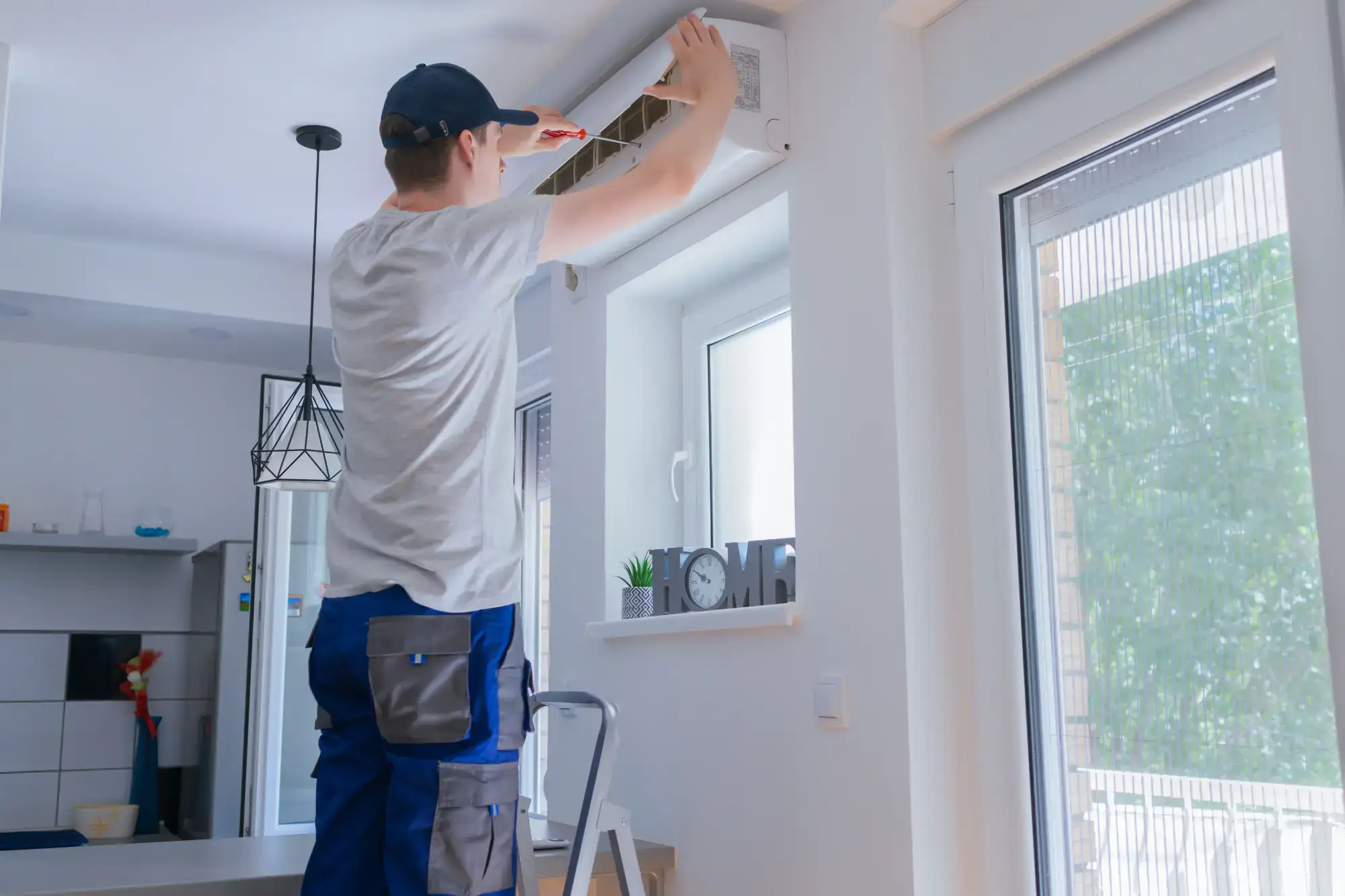
Once you approve the plan, we handle the permit application with Nassau County. When everything’s approved, we schedule the installation. Most jobs take one to two days depending on complexity. We protect your floors and furniture, install everything according to manufacturer specs, run the electrical connections, set up the thermostat, test the system thoroughly, and clean up completely. Before we leave, we show you how everything works and give you our contact information for any questions that come up.

Ready to get started?
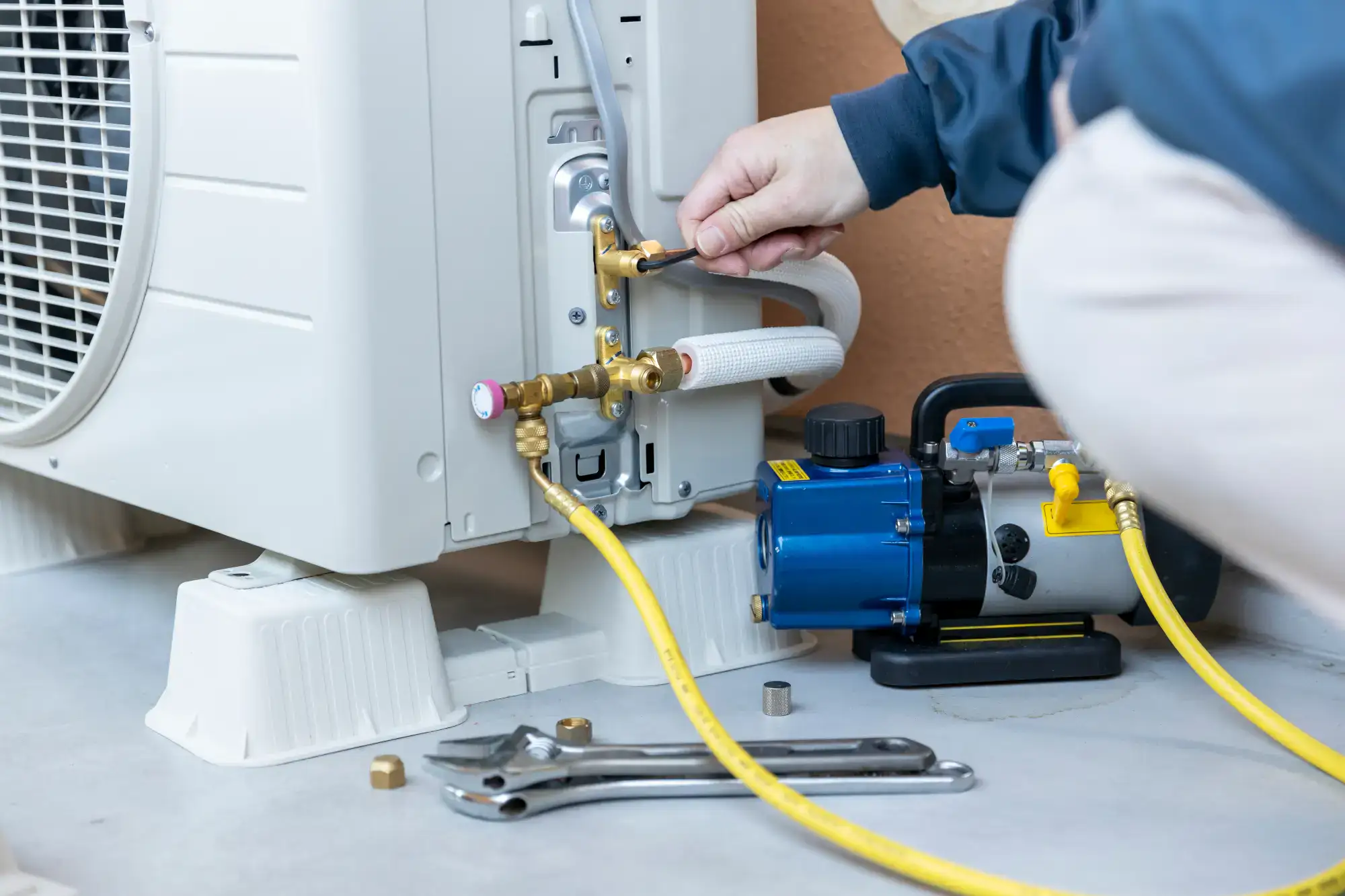
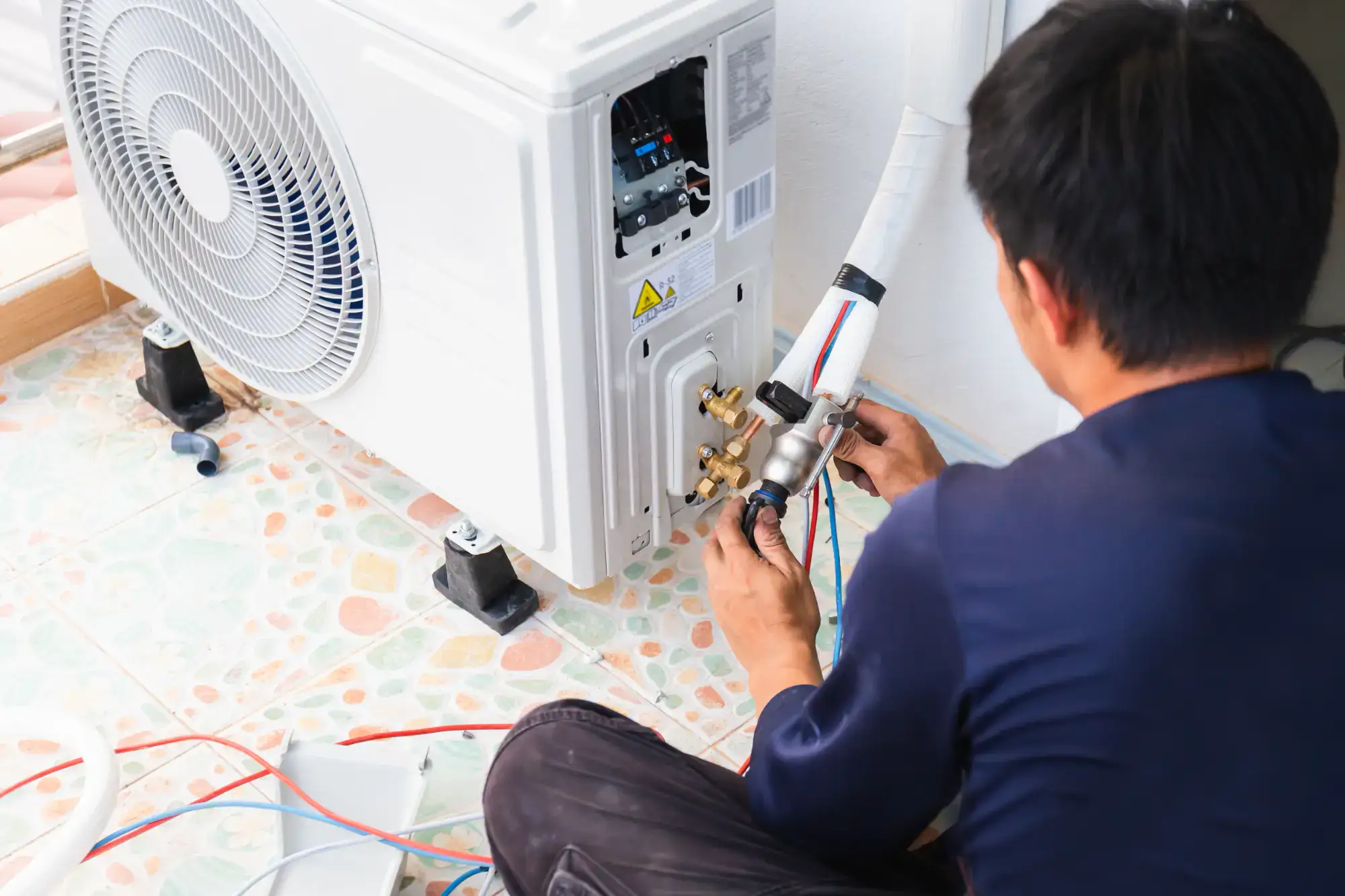
You get the complete system—indoor unit, outdoor condenser, refrigerant lines, electrical connections, condensate drainage, and thermostat setup. If you’re replacing an old AC system with a new unit, we remove and dispose of the old equipment properly.
For homes in Locust Valley without existing ductwork, we specialize in ductless mini-split systems that cool specific zones without major renovations. These work exceptionally well in older North Shore homes where adding traditional ductwork would be invasive or impractical.
We handle all permit applications and coordinate required inspections. Nassau County has specific requirements for HVAC installations, especially when electrical work is involved, and we make sure everything is compliant. The installation comes with manufacturer warranties on the equipment plus our guarantee on the labor. You get both the system documentation and our contact information for future service needs.
Most residential central air installation in Locust Valley takes one to two days once permits are approved and we schedule the work. A straightforward replacement where ductwork is already in place and properly sized usually wraps up in a single day.
If we’re installing a ductless mini-split system, those often complete in one day as well since there’s no ductwork involved. More complex installations—like adding central air to a home that never had it, or situations where we need to modify ductwork or upgrade electrical service—can take two full days or occasionally longer.
Weather can affect outdoor work, and sometimes we uncover issues like outdated electrical panels that need upgrading before we can safely connect the new system. We give you realistic timeframes during the estimate and keep you informed if anything changes.
Yes, Nassau County requires permits for most AC installations, especially when electrical work or significant modifications are involved. This isn’t optional—it’s a code requirement designed to ensure safety and proper installation.
We handle the entire permit process as part of our installation service. We submit the applications, pay the fees, and coordinate any required inspections. You don’t need to visit the building department or figure out what paperwork is needed.
Getting permits might add a few days to the timeline before we can start work, but it protects you. Unpermitted work can create problems when you sell your home, void manufacturer warranties, and potentially create safety hazards if the installation doesn’t meet code. Working with a licensed AC contractor in Locust Valley who handles permits properly is worth the short wait.
Ductless mini-split systems are usually the best solution for older homes in Locust Valley that were built before central air became standard. These systems don’t require ductwork, so you avoid tearing into walls, ceilings, and floors that would be necessary for traditional central air.
A ductless system has an outdoor compressor connected to one or more indoor units mounted on walls in the rooms you want to cool. Installation involves running a small refrigerant line through the wall—much less invasive than adding full ductwork. Each indoor unit can be controlled independently, so you’re not cooling rooms you’re not using.
These systems handle coastal humidity well and are highly efficient. The installation typically takes one day, and because there’s no ductwork, you’re not losing cooled air to leaks that are common in older duct systems. For homes with historical features or where preserving original architecture matters, ductless is often the only practical option that doesn’t compromise the home’s character.
Proper sizing requires a load calculation that accounts for your home’s square footage, insulation levels, window sizes and orientations, ceiling heights, and how many people typically occupy the space. A correctly sized system runs in longer cycles that remove humidity effectively, rather than short-cycling on and off constantly.
An oversized system costs more upfront and cools the air too quickly without removing enough humidity—your home feels cold but clammy. An undersized system runs constantly on hot days and never quite gets your home comfortable, wearing out components faster and driving up energy costs.
We perform these calculations before recommending equipment. You’ll see the numbers, and we’ll explain how we arrived at the recommended system size. If a previous contractor quoted you a much larger or smaller system without doing measurements and calculations, that’s a red flag. Guessing at system size is one of the most common installation mistakes, and it creates problems you’ll deal with for the next 10-15 years.
You have two layers of protection. The equipment itself comes with a manufacturer’s warranty that typically covers parts for 5-10 years depending on the brand and model. Our installation work is also guaranteed—if something fails because of how we installed it, we come back and make it right.
We give you all the warranty documentation and our contact information when the job is complete. If you notice something isn’t working properly, call us. We’ll troubleshoot whether it’s a system issue, an installation issue, or just a setting that needs adjustment.
Most problems that occur shortly after installation are minor—a thermostat setting, a tripped breaker, or getting familiar with how the new system operates differently than your old one. Actual equipment failures or installation defects are rare when the work is done properly, but if they happen, you’re covered. That’s why working with a local company matters—we’re here to stand behind the work, not just during the installation but for years after.
Yes, but it requires either adding ductwork or going with a ductless system. Adding full ductwork to a home that’s never had it is possible but invasive and expensive. We’d need to run ducts through walls, attics, or basements, which often means opening up ceilings and walls.
For most Locust Valley homes with radiator or baseboard heat and no ducts, ductless mini-splits make more sense. You get efficient cooling without the construction mess and cost of adding ductwork throughout the house. The installation is cleaner, faster, and less disruptive.
Some homeowners choose a hybrid approach—adding limited ductwork to serve main living areas and using ductless units for bedrooms or additions where running ducts would be particularly difficult. We’ll assess your specific home and show you what’s realistic. The goal is effective cooling that fits your home’s layout and your budget, not forcing a one-size-fits-all solution that doesn’t make sense for your situation.