

You’ll notice the difference immediately. Your home cools evenly, room to room, without hot spots or that clammy feeling humidity creates. Your energy bills drop because modern systems don’t work as hard to maintain temperature.
The system we install is sized specifically for your home. Not a guess based on square footage alone, but a proper load calculation that factors in your insulation, windows, orientation, and how your home actually uses energy. That means your AC runs efficiently instead of cycling on and off constantly or struggling to keep up during July heat waves.
You get transparent pricing upfront, professional installation that meets code, and a system that’s registered with the manufacturer so your warranty is actually valid. No callbacks because something wasn’t done right the first time. No surprises when you get the final bill.
We’ve been installing central air systems in Mineola, NY and throughout Nassau County long enough to know what works here. The older homes near Jericho Turnpike that were built before central air was standard. The split-levels that need zone control. The properties where ductwork installation costs more than the system itself.
You’re working with licensed, insured technicians who live in this area. We’re not a national chain sending whoever’s available. We know the local codes, the permit process, and how to handle the quirks that come with Long Island homes.
When we say we’ll show up at 9 AM, we show up at 9 AM. When we quote a price, that’s the price. You’ll get straight answers about what you need, what you don’t, and why we recommend what we do.
First, we come to your home and do a proper assessment. We’re looking at your existing setup if you have one, measuring spaces, checking insulation, noting window placement and sun exposure. This isn’t a 10-minute walkthrough. We’re gathering the data needed for an accurate load calculation.
You get a written estimate that breaks down equipment, labor, permits, and any modifications needed to your ductwork or electrical. We’ll explain what size system your home needs and why, what brands we recommend, and what rebates or tax credits you qualify for. Most Mineola homeowners can stack federal tax credits up to $2,000 with PSEG Long Island rebates.
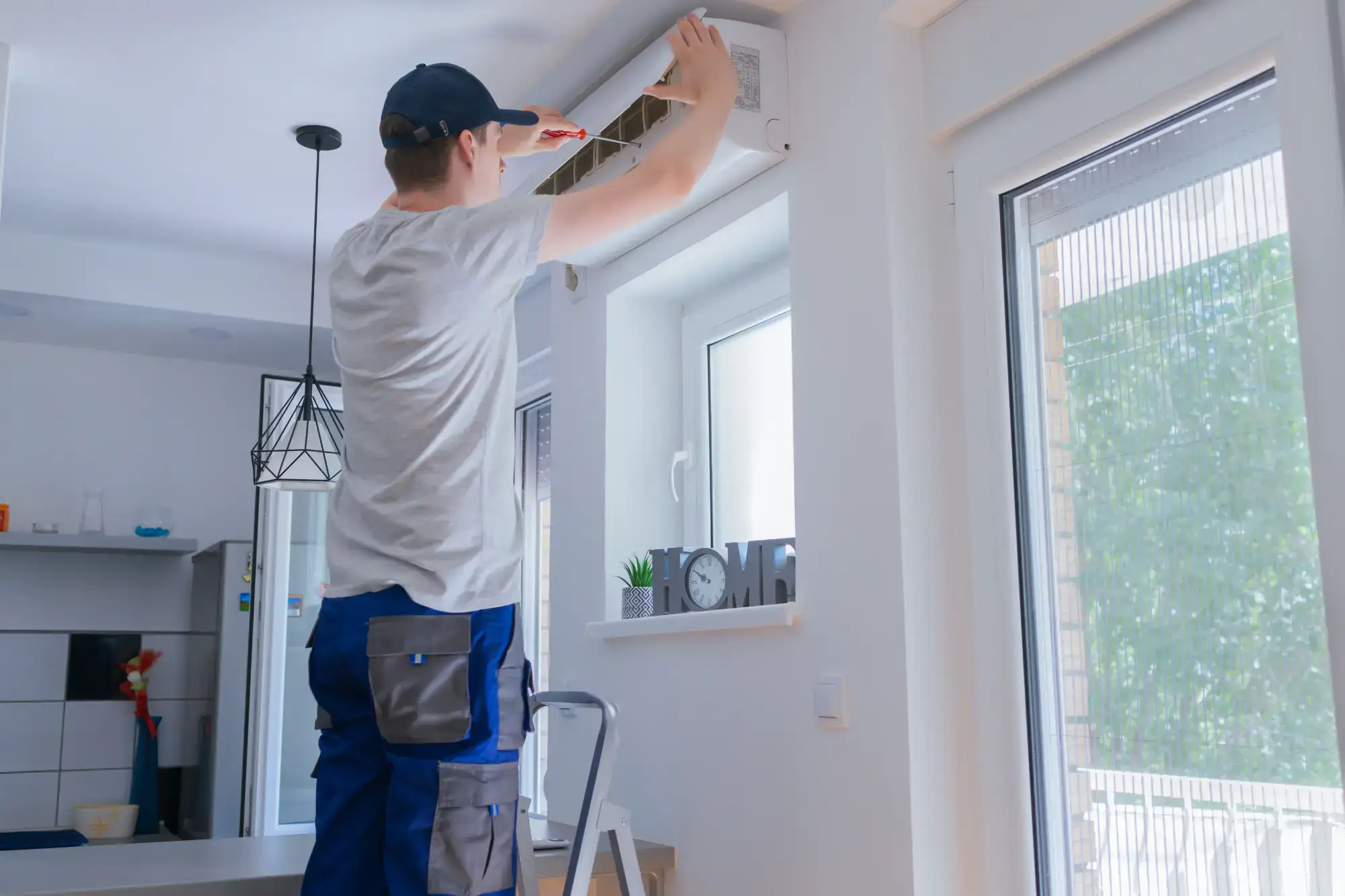
Installation typically takes one to two days for a standard central air system. We handle the permit, do the work, clean up completely, and register your warranty. You’ll get a walkthrough of your new system, including how to use your thermostat and what maintenance you should expect. Then we test everything to make sure it’s cooling properly before we leave.

Ready to get started?
Every home AC installation in Mineola, NY starts with a Manual J load calculation. This determines the right size system for your home, which directly affects your comfort and energy bills. An oversized unit cycles on and off too frequently and doesn’t dehumidify properly. An undersized unit runs constantly and never quite catches up during peak heat.
You’re getting quality equipment from manufacturers like Trane, Carrier, Lennox, or Mitsubishi. We install what makes sense for your home and budget, not whatever we have sitting in the warehouse. If your home doesn’t have existing ductwork, we’ll discuss ductless mini-split systems, which are increasingly popular in older Nassau County homes and eliminate the $10,000 to $18,000 cost of installing ducts.
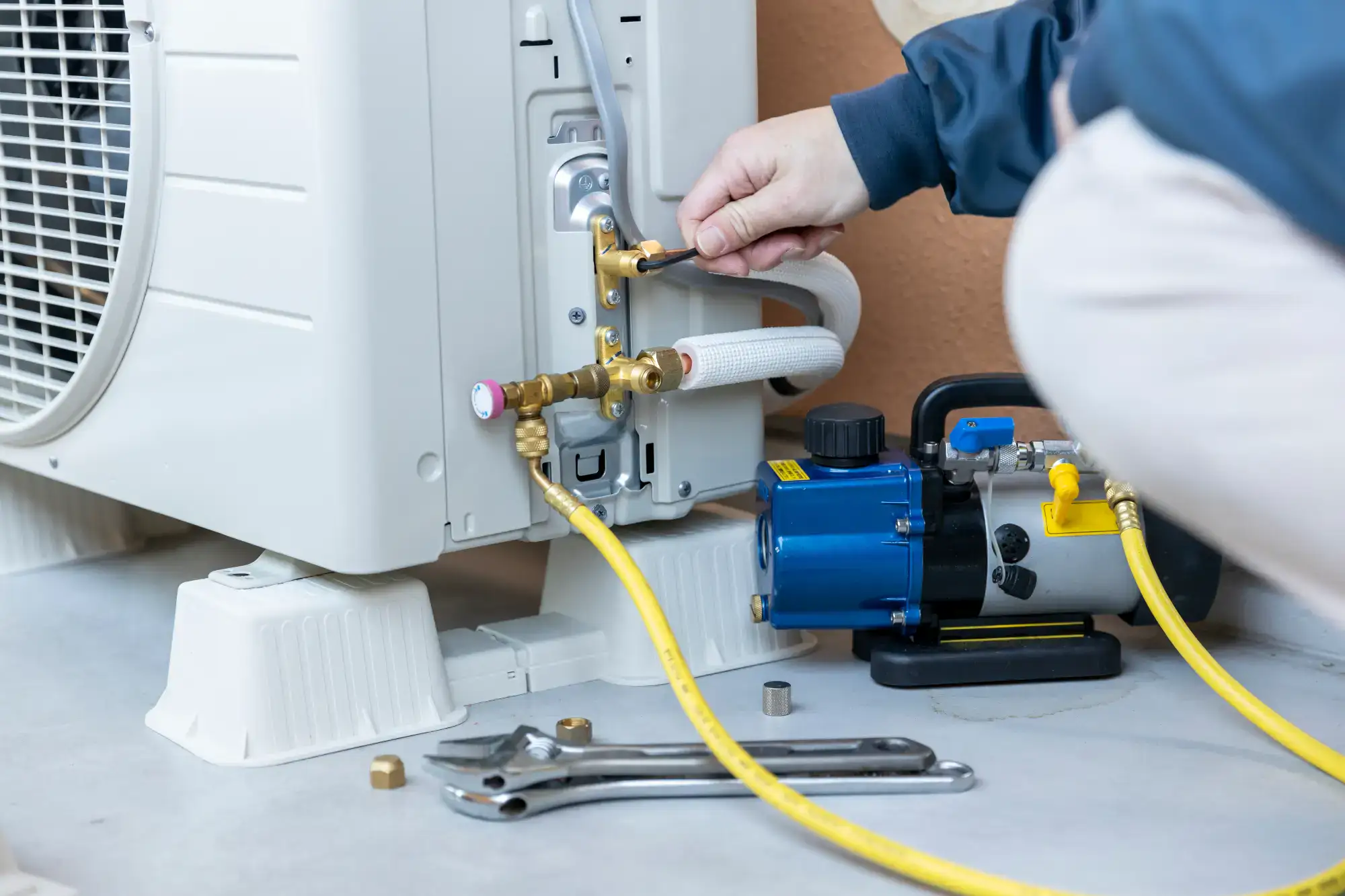
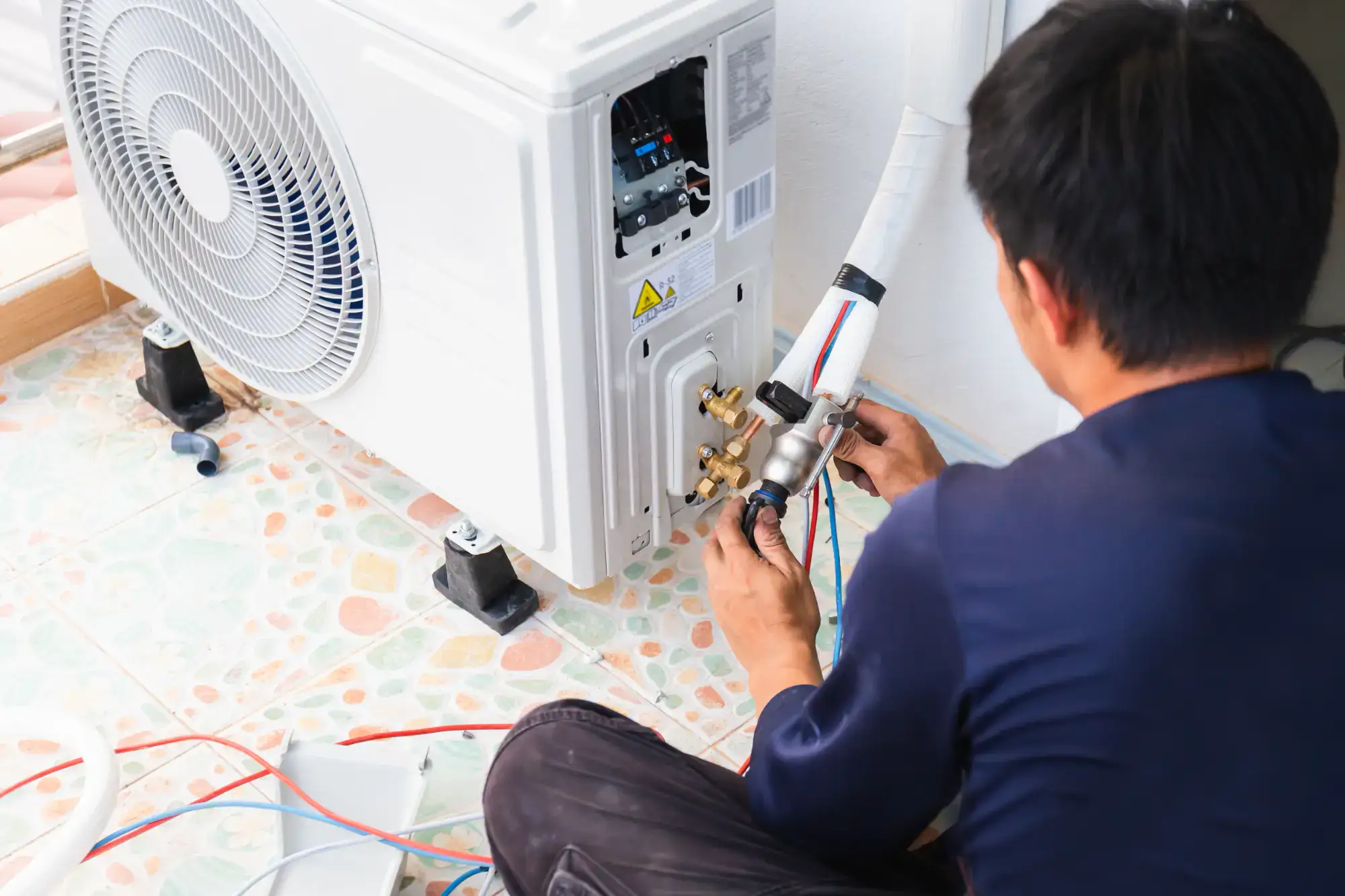
The installation includes all permits, electrical work if needed, refrigerant lines, condensate drainage, thermostat installation, and a complete system test. We register your warranty with the manufacturer, provide you with all documentation, and explain what your maintenance schedule should look like. Most modern AC units last 15 to 20 years when properly maintained, and you’ll get the most out of that lifespan when the installation is done right from day one.
Central AC unit installation in Mineola, NY generally ranges from $5,000 to $12,000 depending on system size, efficiency rating, and whether your existing ductwork needs modification. A basic 2-ton system for a smaller home starts around $5,000, while a 4-ton high-efficiency system for a larger property can reach $12,000 or more.
Here’s what affects the price: the SEER rating (higher efficiency costs more upfront but saves on monthly bills), whether you need new ductwork or repairs to existing ducts, any electrical upgrades required, and the complexity of the installation. If you’re replacing both heating and cooling at once, you’ll save money compared to doing them separately.
Most installations qualify for rebates that reduce your net cost. Federal tax credits cover up to $2,000 for qualifying heat pump systems. PSEG Long Island offers additional rebates for energy-efficient equipment. Some Nassau County residents qualify for NY State’s Clean Heat Program, which can cover 70% to 100% of costs depending on income. We’ll help you identify what you’re eligible for and handle the paperwork.
Most standard air conditioning installation projects in Mineola, NY take one to two days from start to finish. If your home already has ductwork in good condition and no electrical upgrades are needed, we can often complete the installation in a single day, typically six to eight hours.
More complex installations take longer. If we’re modifying ductwork, adding zones, or installing a multi-head ductless system, expect two to three days. New ductwork installation adds one to two days of labor, which is why many older Long Island homes choose ductless mini-splits instead.
Weather can affect timing since we’re working with outdoor equipment. We’ll give you a specific timeline during your estimate and keep you updated if anything changes. The goal is to get your system running as quickly as possible without rushing the details that affect long-term performance. You’ll have cool air by the time we leave, and everything will be tested and working properly.
The right size depends on your home’s specific characteristics, not just square footage. We perform a Manual J load calculation that factors in your home’s insulation levels, window size and placement, ceiling height, sun exposure, number of occupants, and heat-generating appliances. This gives us the accurate tonnage your home requires.
As a rough guideline, most Mineola homes need about one ton of cooling capacity per 400 to 600 square feet. A 1,200 square foot home typically needs a 2 to 3-ton system, while a 2,400 square foot home usually requires 4 to 5 tons. But these are estimates only. Your actual needs could be higher or lower based on those other factors.
Getting the size right matters more than most homeowners realize. An oversized system costs more to buy and operate, cycles on and off too frequently, and doesn’t remove humidity effectively. You’ll feel clammy even when the temperature is technically correct. An undersized system runs constantly during peak heat, drives up your electric bill, and never quite gets your home comfortable. That’s why we don’t guess. We calculate.
Not always, but it depends on the condition and design of your existing ducts. We inspect your ductwork during the initial assessment to check for leaks, poor insulation, improper sizing, and disconnected sections. Even well-designed duct systems typically lose 20% to 30% of conditioned air through these issues, which directly impacts your cooling costs and comfort.
If your ducts are in decent shape, we might recommend sealing leaks and adding insulation rather than full replacement. This costs significantly less and can improve efficiency dramatically. If your ducts are undersized for the new system, badly damaged, or running through unconditioned spaces like hot attics without proper insulation, replacement makes more sense.
Many older Mineola homes don’t have existing ductwork at all since they were built before central air was standard. In these cases, installing a complete duct system adds $10,000 to $18,000 to your project cost. That’s why ductless mini-split installation has become so popular in Nassau County. You get zone control, excellent efficiency, and no ductwork expense. We’ll walk you through both options so you can make an informed decision based on your home and budget.
You can significantly reduce your net installation cost by stacking multiple incentive programs. Federal tax credits cover up to $2,000 for qualifying heat pump systems under the Inflation Reduction Act. These credits apply to high-efficiency equipment that meets specific SEER2 and HSPF2 ratings, and you claim them when you file your taxes.
PSEG Long Island offers rebates for energy-efficient cooling equipment installed in their service territory, which includes Mineola, NY. Rebate amounts vary based on equipment efficiency and type, but they’re typically several hundred dollars and come as a check after installation. Nassau County residents may also qualify for NY State’s Clean Heat Program, which can cover 70% to 100% of installation costs depending on household income and equipment type.
The key to maximizing savings is combining these programs. We help you identify what you’re eligible for, ensure the equipment we install qualifies, and provide the documentation needed for your applications. Most of our Mineola customers save $2,500 to $4,000 between federal credits and local rebates. We also offer financing options including 0% APR for qualified buyers, so you can start saving on energy bills immediately while spreading out the investment.
If your system is over 12 years old and needs a major repair like a compressor or coil replacement, replacement usually makes more financial sense. Modern AC units are far more energy efficient than systems built even five years ago. You’ll save around 30% on cooling costs with a new high-efficiency system, which adds up quickly during Long Island summers.
Consider replacement if you’re experiencing frequent breakdowns, rising energy bills with no change in usage, inconsistent cooling throughout your home, or odd noises and smells. These indicate your system is losing efficiency and reliability. The urgency increases if your unit uses R-22 refrigerant, which is no longer produced and expensive to source for repairs.
Age matters, but so does the cost of repair versus replacement. A good rule: if the repair costs more than half the price of a new system, and your unit is past the halfway point of its expected lifespan, replace it. You’re throwing money at a system that will need another expensive repair soon anyway. We’ll give you an honest assessment of whether repair makes sense or if you’re better off investing in new equipment that comes with a warranty and lower operating costs.