
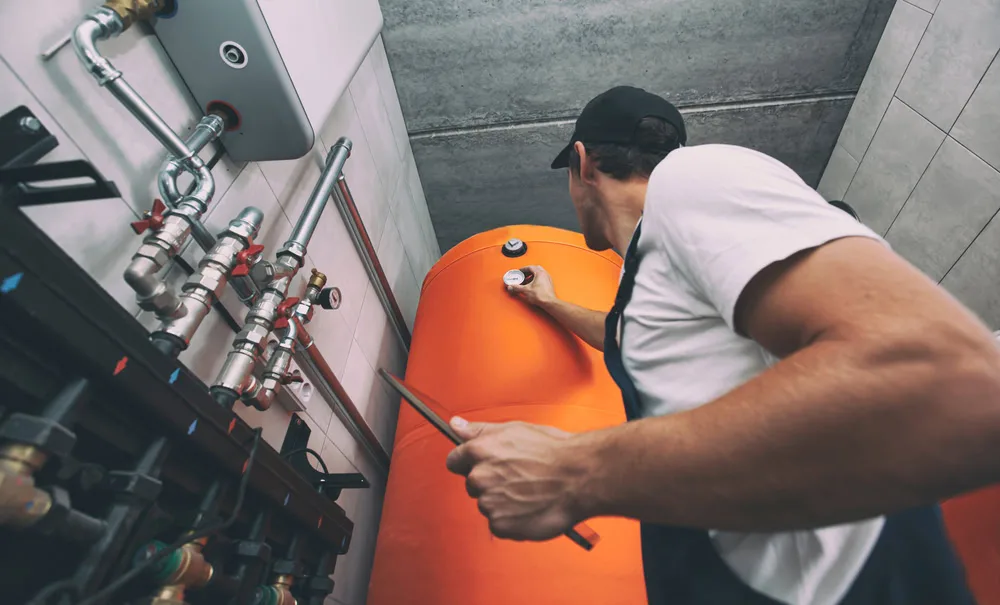
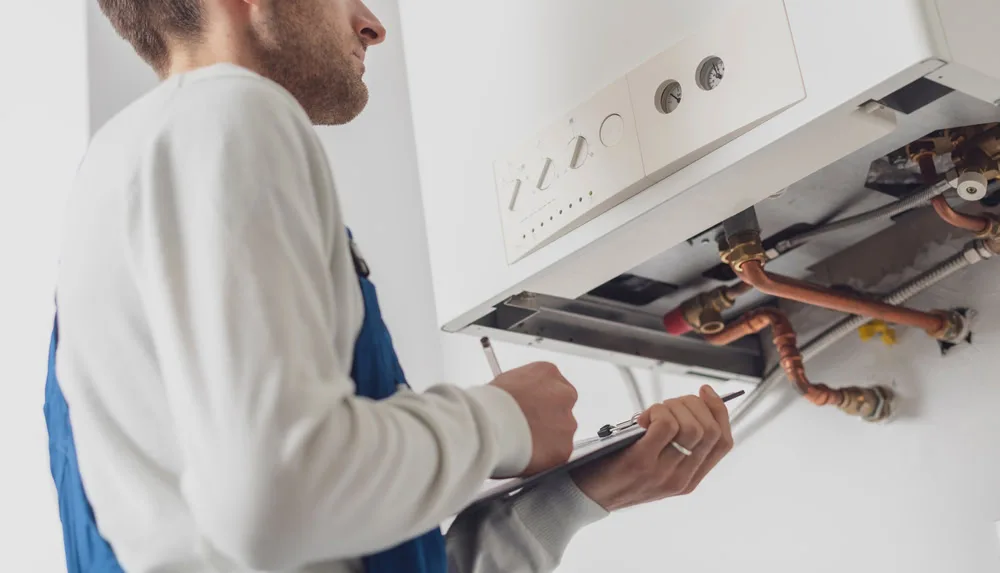
You’re not looking for a sales pitch. You want your house warm again, and you want to know what it’ll cost before anyone touches anything.
That’s what happens when you call us for boiler repair in Massapequa, NY. We respond fast—usually within 90 minutes during emergencies. Our licensed boiler repair technicians diagnose the problem, explain what’s wrong in plain language, and give you a clear estimate before starting work.
Most boiler repairs don’t require a full replacement. A faulty circulator pump, a worn-out valve, or a clogged heat exchanger can often be fixed the same day. We handle steam boilers, hot water boilers, and gas boiler systems across all major brands. You get transparency, speed, and a system that works when you need it most.
We’ve been serving Nassau County homeowners through every kind of winter. We’re based on Long Island, and we know what homes in Massapequa deal with—older housing stock built in the 1950s and 60s, original boiler systems that have seen decades of use, and the kind of cold snaps that test every heating system.
We’re not a national chain. We’re local, licensed, and we show up when we say we will. Our technicians live and work in this area, so when your boiler goes down at 11 p.m. on a Tuesday, you’re calling someone who understands what that means for your family.
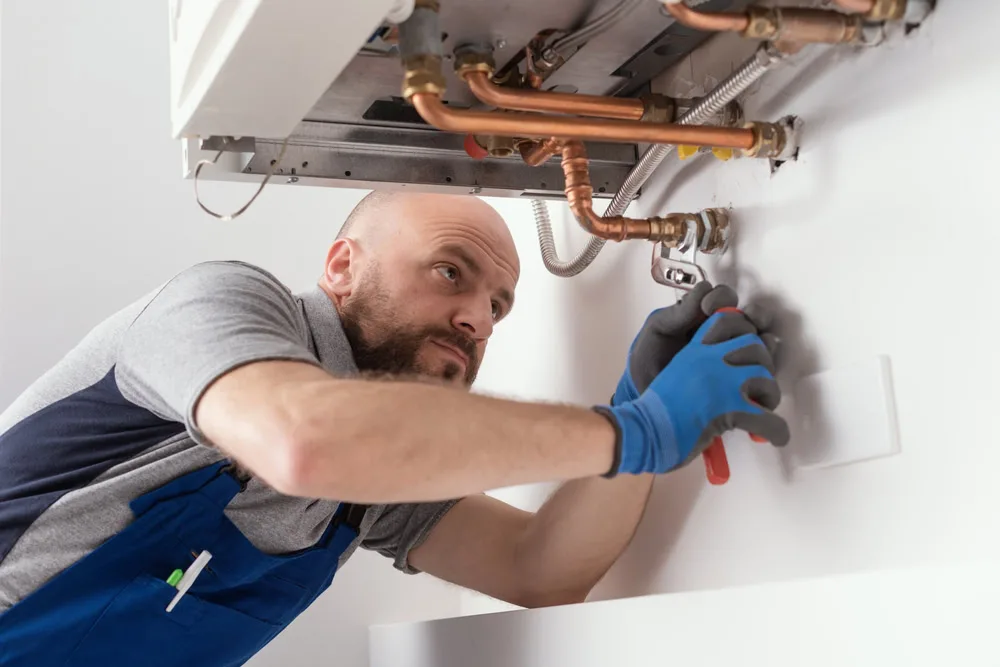
First, we listen. You tell us what’s going on—no heat, strange noises, the system cycling on and off, whatever it is. We ask a few questions to get a sense of urgency and schedule a time that works, or we head out immediately if it’s an emergency.
When we arrive, we run a full diagnostic. That means checking your thermostat, inspecting the boiler itself, testing the circulator pump, examining the pressure and temperature, and looking for leaks or corrosion. We also perform a complete digital combustion analysis to see how efficiently your system is burning fuel.
Once we know what’s wrong, we explain it to you. Not in technical jargon—in terms that make sense. We tell you what needs to be fixed, what it’ll cost, and how long it’ll take. If there are options, we lay them out. If it’s a simple repair, we handle it on the spot. If parts need to be ordered, we let you know the timeline.
After the repair, we test everything to make sure your boiler is running safely and efficiently. We also include carbon monoxide testing with every residential heating service, because your safety matters as much as your comfort.
Ready to get started?
Every boiler repair service in Massapequa, NY includes a full system diagnostic, not just a quick look at the obvious problem. We check the entire heating system because one issue often points to another.
You get transparent pricing before we start. No surprise charges, no hidden fees. If we find something else that needs attention, we tell you about it and let you decide. Most repairs come with a service warranty, so if something goes wrong with the work we did, we come back and make it right.
Massapequa homes face specific challenges. The salt air from the South Shore speeds up corrosion on exterior components. Freeze-thaw cycles stress older pipes and fittings. Homes built in the mid-20th century often have original or near-original boiler systems that need more frequent attention. We’ve seen it all, and we know how to fix it without overselling you on things you don’t need.
If your boiler is beyond repair—if it’s 25+ years old, rusted through, or would cost more to fix than replace—we’ll tell you that too. But if a repair makes sense, that’s what we recommend. We’re here to keep your heat on, not to push you into a new system you don’t need yet.
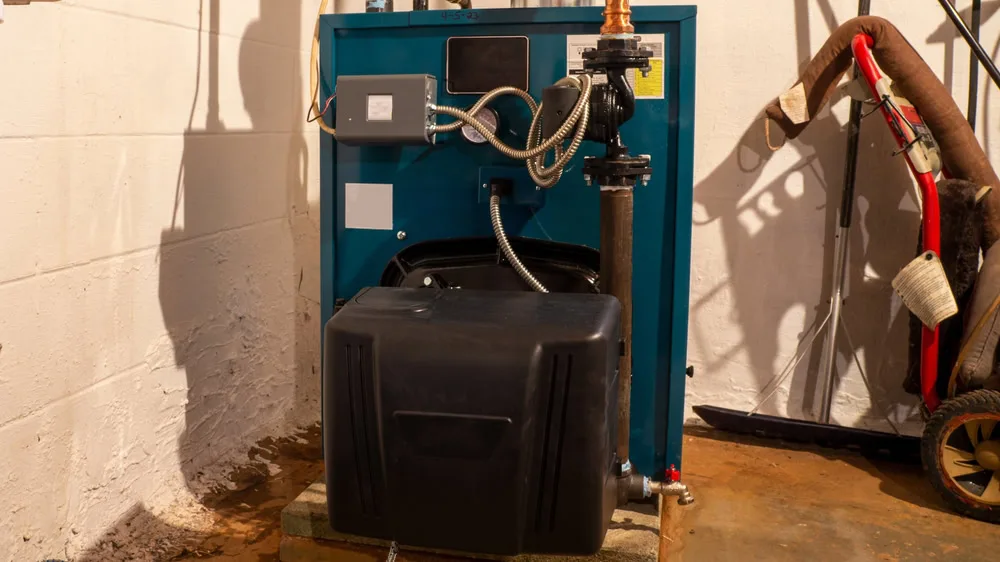
Most boilers last 15 to 20 years with regular maintenance. If yours is in that range and you’re facing a major repair—like a cracked heat exchanger or a failed boiler section—it’s worth having a conversation about replacement.
But age alone doesn’t mean you need a new boiler. If your system is 12 years old and the circulator pump fails, that’s a straightforward repair. Same with a faulty pressure relief valve, a broken thermostat, or a clogged burner. These are common issues that don’t require replacing the entire unit.
Here’s what we look at: the cost of the repair compared to the value of the boiler, how often you’ve needed service in the past year, and whether the system is still heating your home efficiently. If repairs are becoming frequent and expensive, replacement starts to make sense. If it’s a one-off issue, repair is usually the smarter move. We’ll walk you through the math and let you make the call.
The most common culprit is a faulty component that finally gives out under heavy use. When your boiler runs nonstop during a cold snap, any weak point in the system gets exposed fast.
Circulator pumps fail when they’ve been running for years without maintenance. Pressure relief valves stick or leak. Thermostats lose calibration. Igniters wear out on gas boilers. Expansion tanks lose their air charge and cause pressure problems. Any of these can shut your system down completely.
Low water pressure is another frequent cause, especially in older homes where small leaks go unnoticed until the system can’t maintain enough pressure to operate. Sediment buildup in the heat exchanger can block water flow and trigger a safety shutoff. In Massapequa, we also see issues related to corrosion from salt air, particularly on outdoor vents and exhaust pipes. The good news is that most of these problems are fixable, often the same day.
It depends on what’s broken. A simple fix like replacing a thermostat or resetting a tripped safety switch might cost a couple hundred dollars. A circulator pump replacement usually runs between $400 and $800, depending on the model. A pressure relief valve or expansion tank replacement falls in a similar range.
More involved repairs—like fixing a leaking heat exchanger, replacing a gas valve, or addressing a cracked boiler section—can run higher, sometimes into the $1,500 to $3,000 range. At that point, we’ll have a real conversation about whether the repair makes financial sense or if you’re better off planning for a replacement.
We give you a clear estimate before we do any work. No guessing, no “we’ll see once we get in there” unless we genuinely can’t diagnose the problem without disassembly—and even then, we tell you that upfront. Emergency service calls outside of business hours may carry an additional trip charge, but we’ll let you know that when you call. You’ll always know what you’re paying for.
Yes. We service steam boilers, hot water boilers, and gas boiler systems across all major brands. That includes older cast iron units common in Massapequa homes built in the 1950s and 60s, as well as newer high-efficiency condensing boilers.
Steam systems require different expertise than hot water systems. Steam boilers operate at higher temperatures and rely on gravity and pressure differentials to move heat through your home. They need proper water levels, clean sight glasses, and functioning steam traps. Hot water boilers use pumps and zone valves to circulate heated water, and they’re more forgiving when it comes to minor leaks or pressure fluctuations.
We’ve worked on everything from 40-year-old Weil-McLain cast iron boilers to modern Navien and Buderus units. If it heats your home with steam or hot water, we can diagnose it and fix it. And if we run into something unusual—which is rare—we’ll tell you straight and help you find someone who specializes in that specific system.
Yes. We’re available 24/7 for heating emergencies because we know your boiler doesn’t care what time it is when it decides to quit. If you wake up to a freezing house or your heat goes out during a snowstorm, you can call us and we’ll get someone out as fast as possible—usually within 90 minutes.
Emergency boiler repair in Massapequa, NY means we prioritize your call and dispatch a licensed technician right away. We carry common parts on our trucks, so there’s a good chance we can fix the problem the same night. If we need to order a part, we’ll do everything we can to get your heat back on temporarily while we wait for it to arrive.
We don’t outsource emergency calls to an answering service that doesn’t know anything about your system. You’re talking to someone who understands boilers and can give you real guidance, even over the phone. Sometimes we can walk you through a quick reset or safety check that gets your heat back on until we arrive. Other times, you just need a technician on-site, and we make that happen fast.
Once a year, ideally in the fall before heating season starts. Annual maintenance catches small problems before they become expensive emergencies. It also keeps your boiler running efficiently, which matters when you’re heating a home through a Long Island winter.
During a maintenance visit, we clean the heat exchanger, check the burner and ignition system, test the circulator pump and zone valves, inspect for leaks, verify proper water pressure, and test all safety controls. We also run a combustion analysis to make sure your boiler is burning fuel efficiently and not wasting energy or producing dangerous carbon monoxide levels.
Skipping maintenance doesn’t seem like a big deal until your boiler quits on the coldest night of the year. Sediment builds up. Components wear out. Efficiency drops, and your energy bills climb. A $200 annual tune-up is a lot cheaper than a $1,500 emergency repair in January. If your boiler is over 10 years old, regular service becomes even more important because parts are closer to the end of their lifespan.