
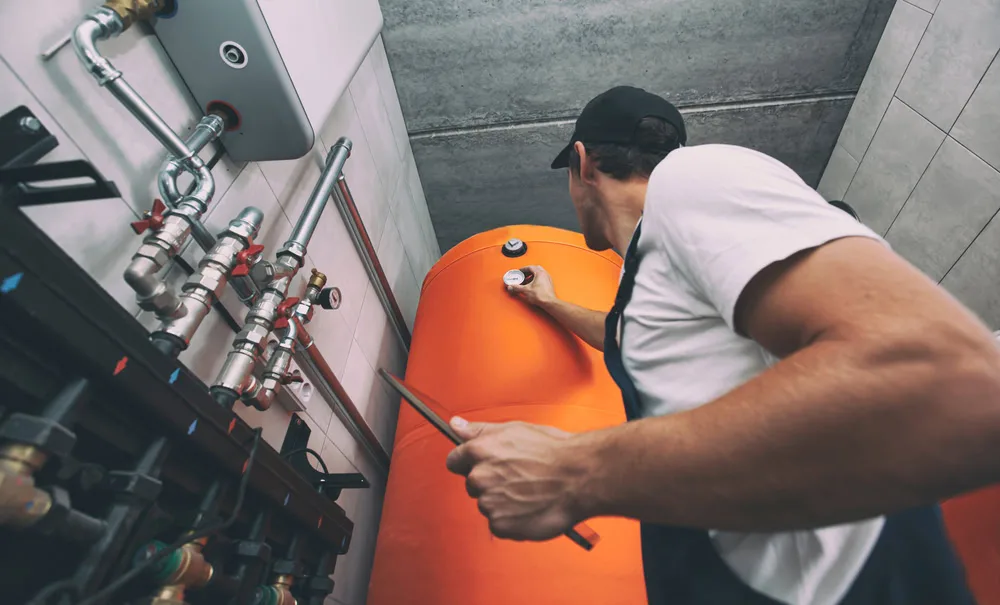
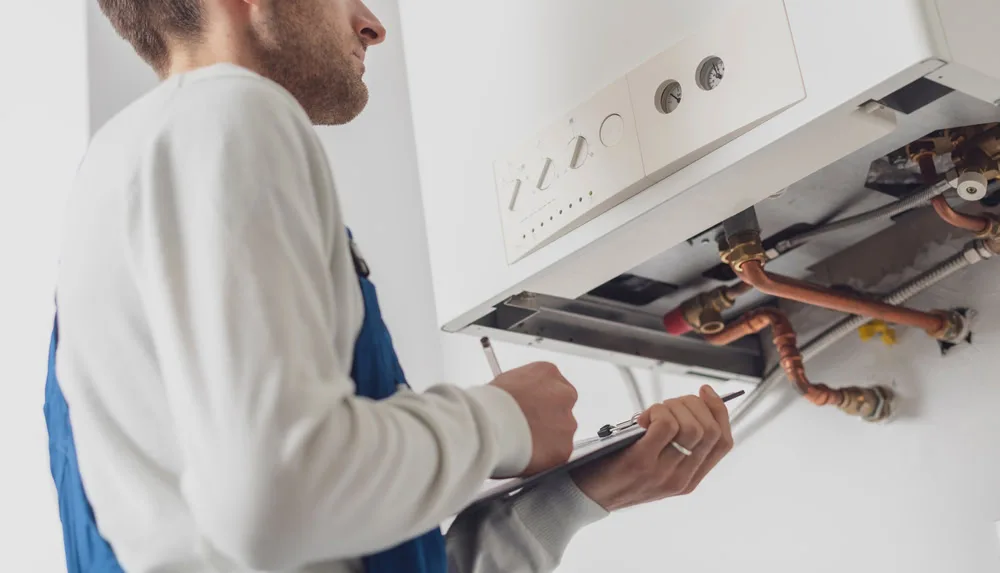
Your boiler quits on the coldest night of the year. You’re calling around, getting voicemails, or hearing “maybe Thursday.” That’s not how this works with us.
You get someone who picks up the phone. You get a technician who knows Neponsit and has probably fixed the exact problem you’re dealing with in a house two blocks over. Most importantly, you get heat back before your pipes freeze or your family bundles up in winter coats indoors.
Living this close to the ocean means your boiler faces conditions most systems never see. Salt air corrodes connections faster. Humidity works its way into components. The same coastal breeze that makes summer evenings perfect accelerates wear on your heating system year-round.
We stock the parts that fail most often in coastal homes. That means fewer trips, faster fixes, and your boiler running properly before dinner. Most residential boiler repair calls in Neponsit, NY get completed the same day we arrive.
We’ve been handling emergency boiler repair in Neponsit, NY long enough to know which systems hold up in this environment and which ones don’t. We’ve worked on everything from 40-year-old oil boilers in brick colonials to newer gas systems in renovated Cape Cods.
Your neighborhood sits right on the water. That’s beautiful until your boiler’s exhaust vent corrodes through or a pressure relief valve seizes up from salt exposure. These aren’t problems you read about in a manual—they’re things you learn from actually doing the work here.
Every technician we send is licensed and carries the parts that matter for coastal properties. No guessing, no three-day waits for special orders. Just straightforward gas boiler repair in Neponsit, NY that gets your heat working again.
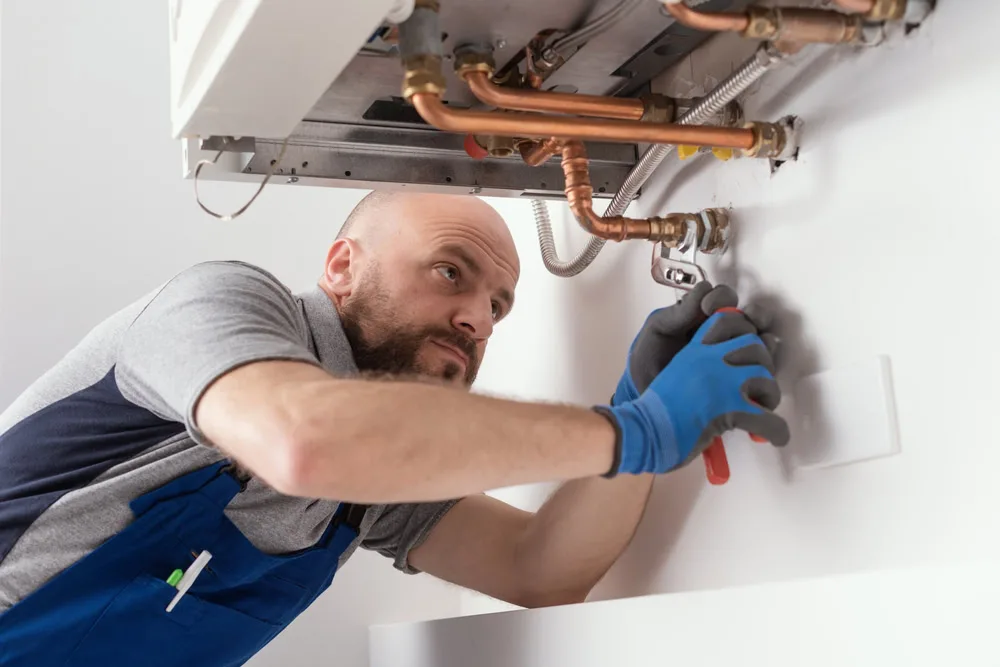
You call, we answer. Not a recording, not a call center—someone who can actually help. If it’s an emergency, we’re usually there within a few hours. If it’s routine maintenance or a repair that can wait, we schedule something that works for you.
When we arrive, our technician diagnoses the problem first. No assumptions, no upselling. You get a clear explanation of what’s wrong and what it’ll cost to fix before any work starts.
Most hot water boiler repair jobs in Neponsit, NY get finished on the first visit because we stock common parts. Circulator pumps, zone valves, ignition assemblies, pressure controls—the stuff that actually fails. If your system needs something unusual, we’re upfront about timing and cost.
Once the repair is done, we test everything. Pressure, temperature, safety controls. Your boiler should run quietly and heat evenly. If something doesn’t feel right after we leave, you call back and we make it right.
Ready to get started?
Every boiler repair service in Neponsit, NY starts with figuring out what’s actually broken. That sounds obvious, but plenty of companies guess, replace parts, and hope it works. We test components, check pressure, inspect venting, and look for the root cause.
Coastal homes deal with specific issues. Corroded pipe connections leak slowly until they don’t. Vent terminals deteriorate from salt exposure. Expansion tanks fail early because of temperature swings. We check for these problems even if they’re not why you called, because catching them early saves you from a bigger repair later.
Your repair includes quality parts, not the cheapest option we can find. A $40 part that lasts three years costs more than a $70 part that lasts ten. We install what we’d put in our own homes.
You also get honest advice about whether repair makes sense. If your boiler is 25 years old and needs a $1,200 repair, we’ll tell you straight whether that’s smart money or if you’re better off replacing it. Some companies won’t have that conversation. We do, because it’s your money and your decision.
It depends entirely on what’s broken. A simple fix like a faulty thermostat or pressure relief valve runs $150-$300. Circulator pump replacement costs $400-$600. Heat exchanger repairs or control board replacements can hit $800-$1,500.
Emergency calls outside normal hours cost more—usually $100-$200 extra for the service call alone. That’s standard across the industry. A valve replacement that costs $200 during a scheduled visit might run $600 on a Sunday night.
We give you the total cost upfront before starting work. No surprises, no “oh, we found something else” upsells. You approve the price or you don’t. If you’re comparing estimates, make sure you’re comparing the same scope of work and the same quality of parts.
Yes, usually within a few hours if you have no heat. We prioritize true emergencies—no heat in winter, gas smell, visible leaks, anything that threatens safety or property damage.
If your boiler is running but making noise, or your heat works but one zone doesn’t, that’s still urgent but not quite the same as a house dropping into the 40s with a toddler and elderly parents. We’ll get there same-day or next morning depending on the schedule.
When you call, be specific about what’s happening. “No heat at all” gets a faster response than “heat seems weak.” Both matter, but one is an emergency and one is a priority repair. We’re not going to leave you in the cold either way, but knowing the situation helps us respond appropriately.
Yes. Neponsit has plenty of both, especially in older homes. Oil boilers are less common now but they’re still running in a lot of brick colonials and pre-1970 construction.
Gas boiler repair in Neponsit, NY is more common because most homes have converted over the years. Gas systems are cleaner, more efficient, and easier to maintain. But oil systems can run forever if they’re maintained properly—we’ve worked on units from the 1970s that still heat perfectly.
The repair process is similar for both. Diagnose the problem, explain what’s wrong, fix it with quality parts. Oil systems need more frequent maintenance and cleaning, but they’re reliable when cared for. If you’re thinking about converting from oil to gas, we can walk through what that involves and whether it makes financial sense for your situation.
Age and cost are the two biggest factors. Most gas boilers last 15-20 years with proper maintenance. Oil boilers can push 25-30 years. If your system is in that range and needs a major repair, replacement often makes more sense.
Here’s a rough guideline: if the repair costs more than half what a new boiler would cost, and your system is past 70% of its expected lifespan, replacement is usually smarter. A $2,000 repair on an 18-year-old boiler means you’re likely facing more expensive fixes soon.
But if your boiler is 10 years old and needs a $600 circulator pump, that’s an easy repair. You’ve got years of life left. We’ll tell you honestly which route saves you money long-term. Some companies push replacement because the ticket is bigger. We’d rather you trust us for the next repair, and the one after that, because we gave you straight advice this time.
We come back and make it right. Our work is guaranteed because we’re not interested in patch jobs that fail in three weeks.
If we replace a part and it fails prematurely, we cover the labor to replace it again. If we misdiagnosed the problem and the real issue is something else, we own that and fix it properly. You shouldn’t pay twice for the same repair.
That said, boilers are systems with multiple components. Fixing one problem doesn’t prevent a different part from failing later. If we replace your circulator pump and your zone valve fails two months later, that’s a separate issue. But if your circulator pump fails again, that’s on us. We’ll explain what’s covered and what’s not before we start any work so there’s no confusion later.
Salt air is corrosive. It accelerates rust and deterioration on any metal component exposed to the elements—vent terminals, external piping, pressure relief valves, anything outside the main heat exchanger.
Humidity also plays a role. Coastal air holds more moisture, which works its way into electrical components and control boards over time. Connections corrode faster. Sensors fail earlier than they would ten miles inland.
Temperature swings from ocean breezes create thermal stress. Your boiler heats up, cools down, heats up again—more cycling than a system in a stable environment. That wears on expansion tanks, pressure controls, and heat exchangers. None of this means your boiler is doomed, but it does mean maintenance matters more here. Annual tune-ups catch corrosion and wear before they turn into expensive emergency repairs. A $200 service call that replaces a $30 part before it fails completely saves you from a $600 emergency call in January.