
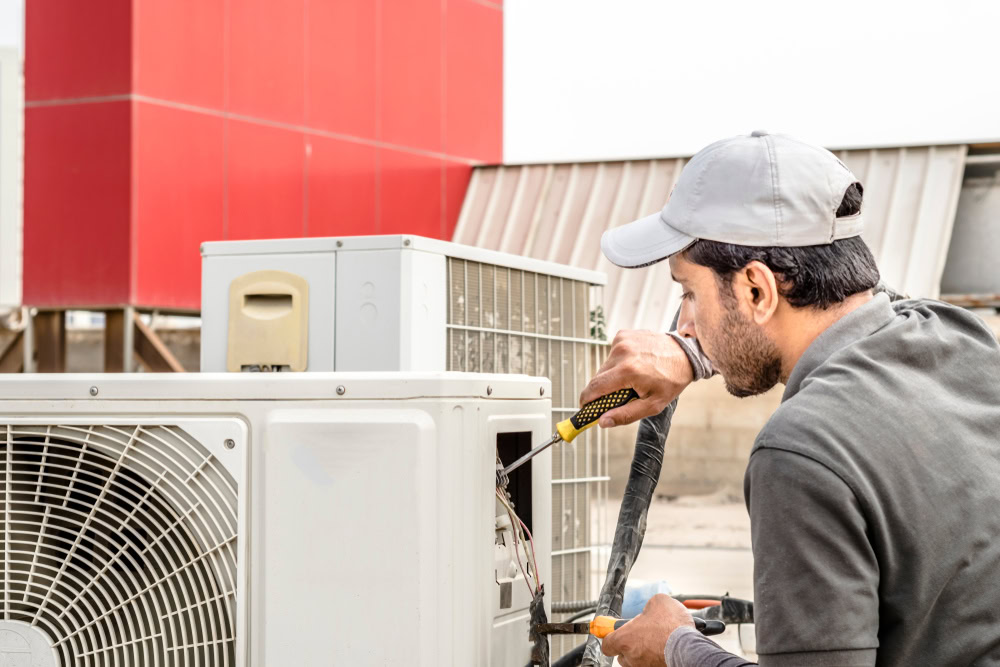

You’re not calling for air conditioner repair in Barnum Island, NY because everything’s fine. You’re calling because your system quit during a heat wave, or your energy bill doubled, or half your house feels like a sauna while the other half freezes.
Here’s what actually changes after we fix it. Your home cools evenly again—no more hot spots in the bedrooms or that clammy feeling even when the thermostat says 72. Your system stops cycling on and off every ten minutes, which means it’s not burning through electricity trying to catch up. And when the next heat wave rolls through Long Island, you’re not sweating through another breakdown.
We handle the full range of residential AC repair in Barnum Island—compressor failures, refrigerant leaks, frozen coils, electrical issues, and those mystery problems where the unit runs but nothing happens. Most repairs happen the same day. You get your comfort back without the runaround.
We’ve been handling HVAC repair in Barnum Island, NY and across Nassau County long enough to know what breaks, when it breaks, and how to fix it right the first time. We’re not a national chain that sends whoever’s available. We’re local, licensed, and we understand what coastal humidity does to AC systems on Long Island.
After Hurricane Sandy flooded Barnum Island with up to eight feet of water, plenty of HVAC systems took a beating. We repaired units that sat in saltwater, replaced corroded components, and helped homeowners rebuild their cooling systems from the ground up. That kind of experience matters when you’re diagnosing problems that don’t fit the textbook.
You’re not getting a sales pitch when you call. You’re getting a straight answer about what’s broken, what it costs, and how long it takes.
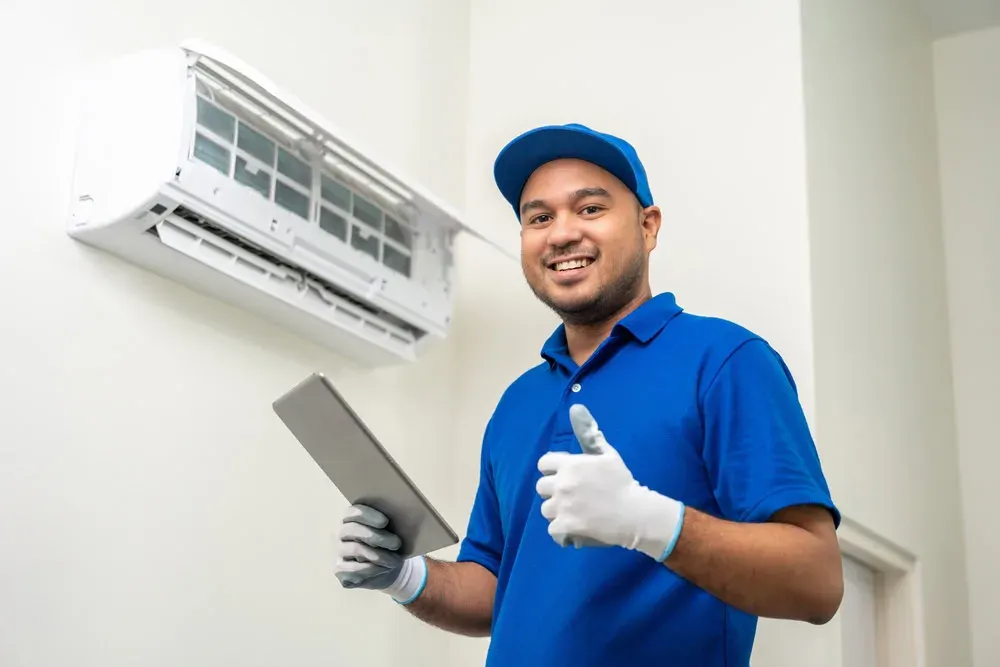
When you call for home AC repair in Barnum Island, NY, we schedule a visit that works with your day—not ours. Our technician shows up with the tools and parts that handle 90% of common repairs, so there’s a good chance we’re fixing it on the spot.
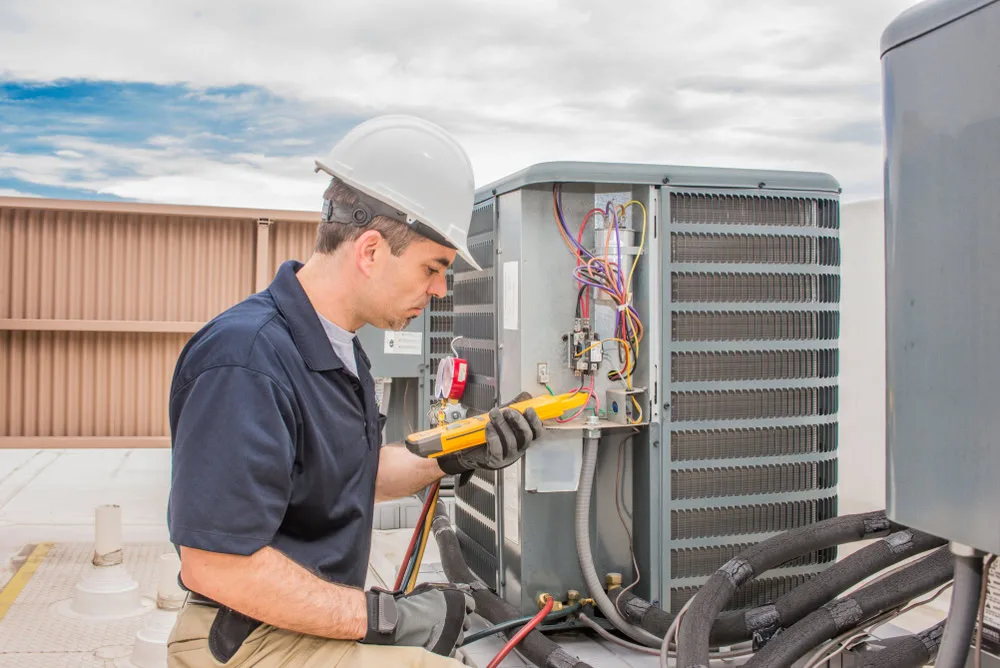
First, we run a full diagnostic. That means checking refrigerant levels, testing electrical components, inspecting the compressor and condenser, and measuring airflow. We’re looking for the root cause, not just the symptom. If your AC is leaking water, we’re finding out whether it’s a clogged drain line, a frozen evaporator coil, or a cracked drain pan—because the fix is different for each one.
Once we know what’s wrong, we explain it in plain terms and give you a price before we touch anything. No surprises. If you approve the repair, we get to work. After the fix, we test the system under load to make sure it’s cooling properly, holding pressure, and running efficiently.
You’ll know it’s done when your house feels comfortable again and your system isn’t making that noise anymore.
Ready to get started?
Every air conditioning repair company in Barnum Island should do more than swap a part and leave. Here’s what you get when we handle your central AC repair: a complete system evaluation, not just a quick look at the obvious problem. We check the whole unit because one failure often points to another issue waiting to happen.
You get honest recommendations. If your compressor is shot and the system is 18 years old, we’ll tell you repair costs versus replacement costs so you can make the call. If it’s a $200 fix on a system with years left, we’ll say that too. We’re not upselling you into a new unit when a repair makes sense.
Nassau County’s humidity is brutal on AC systems. When outdoor air hits 85°F and humidity pushes past 70%, your air conditioner is working overtime to pull moisture out of your house. If it’s low on refrigerant or the evaporator coil is dirty, it can’t dehumidify properly—and that’s when your home feels sticky even at 72 degrees. We address the cooling and the humidity side of the equation because both matter here.
You also get a warranty on the repair work. If something goes wrong with what we fixed, we’re coming back to make it right.
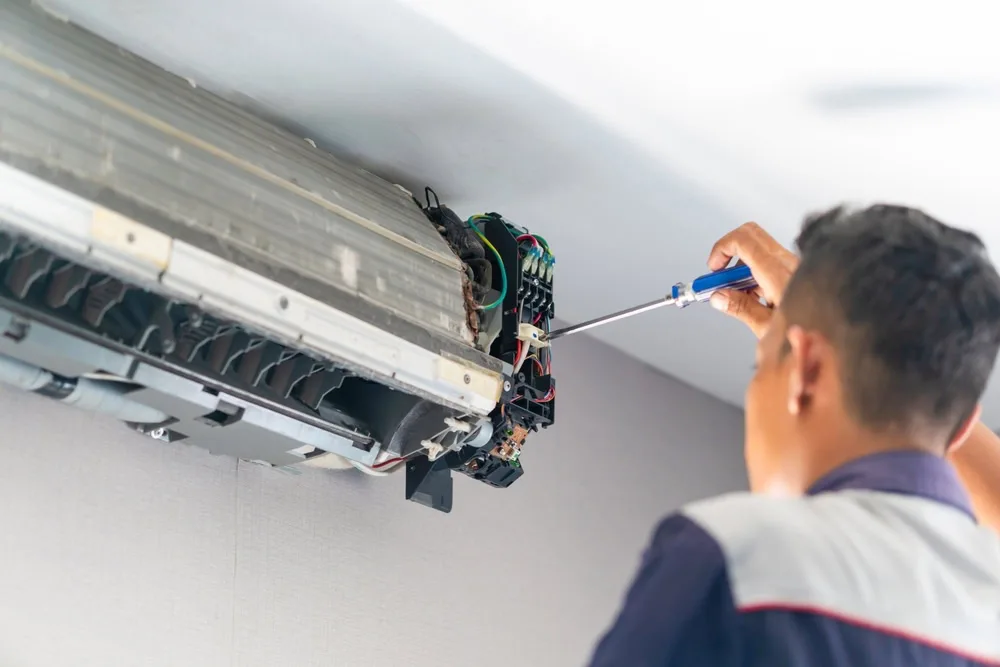
Your air conditioner will tell you when something’s wrong—you just need to know what to listen for. Warm air blowing from the vents is the obvious one, but it’s not always a catastrophic failure. Sometimes it’s low refrigerant from a slow leak, sometimes it’s a bad compressor, and sometimes it’s a tripped breaker or blown fuse.
Strange noises mean something’s loose, worn out, or about to fail. Grinding or squealing usually points to a motor or belt issue. Hissing can mean a refrigerant leak. Banging or clanking might be a loose component inside the unit. None of these get better on their own.
If your system is cycling on and off every few minutes, that’s short-cycling—and it’s hard on the equipment. It also means your AC isn’t running long enough to remove humidity, which is a real problem in Barnum Island’s coastal climate. Short-cycling usually comes from an oversized unit, a refrigerant issue, or a failing thermostat. Water pooling around your indoor unit is another red flag. It could be a clogged condensate drain, a frozen evaporator coil that’s thawing, or a cracked drain pan. All of these need attention before you’re dealing with water damage.
Repair costs depend entirely on what’s broken. A simple fix like a clogged drain line or a bad capacitor might run $150 to $300. A refrigerant leak that needs to be located, sealed, and recharged can cost $500 to $1,500 depending on how bad the leak is and how much refrigerant the system needs. Compressor replacement is the expensive one—often $1,500 to $3,000—because the compressor is the heart of the system.
If your AC is older and needs a major repair, you’ll want to weigh the cost against the system’s remaining lifespan. Dropping $2,000 into a 15-year-old unit that might last another two years doesn’t always make sense. But if the system is only seven years old and well-maintained, that same repair could buy you another decade of cooling.
We give you the price before we start the work, and we’ll walk you through whether the repair makes financial sense or if you’re better off considering replacement. No one wants to spend money twice, so we’re upfront about what’s worth fixing and what’s not. Location matters too—Nassau County’s cost of living is higher than most of the country, and that shows up in labor rates and parts availability. But you’re also paying for licensed, insured technicians who know what they’re doing.
Yes. We work on all major residential AC brands—Carrier, Trane, Lennox, Rheem, Goodman, York, American Standard, Bryant, and more. The fundamentals of air conditioning don’t change much from brand to brand. Refrigerant cycles, compressors, evaporator coils, and condensers all work the same way whether it’s a budget unit or a high-end system.
What does change is the specific components, error codes, and quirks each manufacturer builds into their units. That’s where experience matters. We’ve been repairing HVAC systems in Nassau County long enough to know the common failure points for each brand and how to source the right parts quickly.
Some older or specialty systems require manufacturer-specific parts that take longer to get. If that’s the case, we’ll tell you upfront and give you a realistic timeline. Most of the time, we’re carrying common parts on the truck or we can get them same-day from local suppliers. If you’ve got a newer system with a smart thermostat or variable-speed components, we handle those too. The technology is changing, but the core repair process isn’t.
Most air conditioner repairs in Barnum Island, NY take between one and three hours once we’re on-site. Simple fixes like replacing a capacitor, cleaning a clogged drain line, or swapping a contactor can be done in under an hour. Mid-level repairs like fixing a refrigerant leak, replacing a blower motor, or addressing electrical issues usually take two to three hours.
Compressor replacements or extensive refrigerant line repairs can take four to six hours because there’s more involved—recovering old refrigerant, replacing the component, pressure testing the system, and recharging it to the correct levels. If we need to order a part that’s not in stock, that adds time. We’ll give you an honest estimate when we diagnose the problem so you know what to expect.
Emergency repairs during a heat wave might take longer to schedule because demand spikes when everyone’s AC fails at once. That’s why we recommend calling as soon as you notice a problem—before it turns into a full breakdown on the hottest day of summer. If you’re in an urgent situation, we prioritize those calls and do everything we can to get someone out fast.
Yes. When your air conditioner fails during a Nassau County heat wave and indoor temperatures are climbing into the 80s or 90s, that’s not just uncomfortable—it’s a health risk, especially for older residents and anyone with respiratory issues. We offer emergency air conditioner repair in Barnum Island, NY because we know how fast things get unbearable in Long Island’s summer humidity.
Emergency calls get priority scheduling. We’ll do everything we can to get a technician to your home the same day, even on weekends. If it’s late at night or early morning, we’ll walk you through temporary measures to keep your home safer until we arrive—things like closing blinds, running fans, and staying hydrated.
Not every AC problem is a true emergency. If your system is running but not cooling efficiently, that’s a problem, but it’s not the same urgency as a complete failure in 95-degree heat. We’ll help you figure out whether you need emergency service or if a next-day appointment makes more sense. Emergency rates are higher because of the after-hours response, but when your home is unlivable and your family is suffering, it’s worth it.
Water leaking from your indoor AC unit almost always comes down to three causes: a clogged condensate drain line, a frozen evaporator coil, or a damaged drain pan. All three are common in Barnum Island, NY because of how hard coastal humidity makes your air conditioner work.
The condensate drain line carries moisture that your AC pulls out of the air. In humid climates like Long Island, that’s a lot of water—sometimes gallons per day. Over time, algae, mold, and debris clog the line. When it backs up, water overflows from the drain pan and leaks onto your floor. This is the most common cause and usually the easiest fix. We clear the line, flush it with a cleaning solution, and you’re done.
A frozen evaporator coil happens when airflow is restricted or refrigerant levels are low. The coil gets so cold that condensation freezes on it. When the system shuts off or the ice melts, you get a sudden flood of water that overwhelms the drain pan. This one requires more diagnosis—we need to figure out why the coil froze in the first place and fix that root cause.
A cracked or rusted drain pan is less common but still happens, especially in older systems. The pan sits under the evaporator coil and catches condensation. If it’s corroded or damaged, water leaks straight through. Replacement is the only fix. If you’re seeing water around your AC, don’t ignore it. What starts as a small leak can turn into ceiling damage, mold growth, and expensive repairs that go way beyond the HVAC system.