

When your air conditioner fails during a New York summer, you’re not just uncomfortable. You’re dealing with sleepless nights, health risks for anyone vulnerable to heat, and the stress of not knowing if you’re about to drop thousands on a replacement.
A proper repair fixes the immediate problem and often improves how your system runs overall. That means lower energy bills, better air quality, and a unit that actually lasts instead of limping along until the next breakdown.
You get your comfort back without overpaying for parts you don’t need or services that don’t solve the real issue. The right repair extends your system’s life and keeps your home livable when temperatures outside are pushing into the 90s.
Excellent Air Conditioning and Heating Service has spent years learning what breaks down in this climate and what actually holds up. We’re not a national franchise reading from a script. We’re local technicians who understand how humidity off the water affects your system and why units in Beechhurst face different challenges than systems ten miles inland.
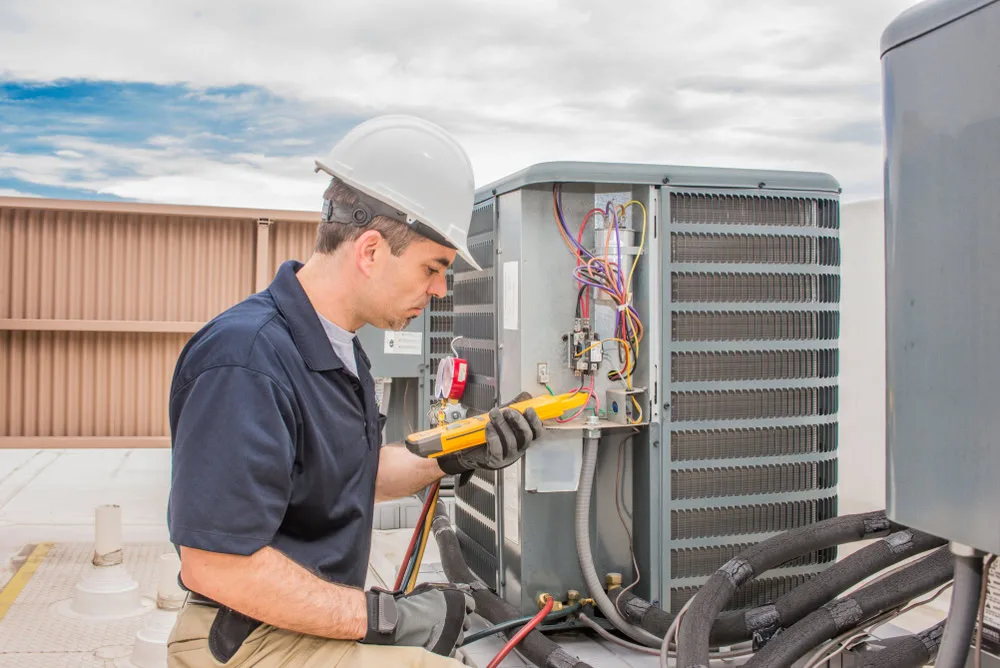
Our technicians carry EPA Section 608 certification, NATE credentials, and the diagnostic tools that matter—manifold gauges, refrigerant leak detectors, and digital multimeters that find problems other companies miss. Every repair comes with a 90-day workmanship warranty because we fix it right the first time.
You’re not getting an estimate that doubles when the work is done. You get upfront flat-fee pricing, no upsells, and technicians who show up when they say they will.
You call, and we schedule a time that works for you—often same-day if it’s an emergency. Our technicians arrive with the tools and parts that handle most common repairs on the spot.
First, we diagnose the actual problem. That means checking refrigerant levels, testing capacitors and compressors, inspecting electrical connections, and looking for leaks or blockages. We don’t guess. We measure.
Once we know what’s wrong, we explain it in plain terms and give you a flat price before any work starts. If you approve, we make the repair, test the system to confirm it’s running correctly, and walk you through what we did. You’re back to cool air, usually within an hour or two of us arriving.
Ready to get started?
Most air conditioner repair calls in Beechhurst involve refrigerant leaks, failed capacitors, or compressor issues. Refrigerant leaks cause your system to freeze up and stop cooling. You’ll hear hissing sounds, see ice on the lines, and feel warm air from your vents. We locate the leak, seal it, and recharge your system to the correct level.
Capacitors fail in hot weather and prevent your AC from starting. It’s one of the most common residential AC repair issues we see in July and August. The fix is straightforward—replace the capacitor, test the system, and you’re back online.
Compressor problems are more serious. If you’re hearing grinding or clicking sounds, the compressor may be failing. We’ll test it, give you honest advice on whether repair makes sense or if replacement is smarter, and explain the cost difference. Beechhurst’s climate is tough on HVAC systems—temperatures are climbing, and heat waves are lasting longer. Your AC works harder here than it would in cooler parts of the state, which means components wear faster.
Your AC tells you when something’s wrong. Warm air from the vents means you’ve lost cooling capacity—usually from low refrigerant, a bad compressor, or a frozen evaporator coil. Strange sounds like hissing, grinding, or clicking point to specific problems: hissing means a refrigerant leak, grinding means worn motor bearings, and clicking often means a failing capacitor or electrical issue.
Higher energy bills without a change in usage indicate your system is working harder than it should. That happens when airflow is restricted, refrigerant is low, or components are failing. If you see water pooling around your indoor unit, your drain line is clogged or your evaporator coil is frozen—both need immediate attention to prevent damage.
Short cycling—when your AC turns on and off every few minutes—means the system can’t maintain temperature. That’s often a thermostat issue, an oversized unit, or a refrigerant problem. Any of these signs mean you need a repair before the problem gets worse and more expensive.
Most repairs fall between $150 and $600 depending on what’s broken. A capacitor replacement runs $150 to $300. Refrigerant leak repairs range from $200 to $500 depending on where the leak is and how much refrigerant you need. Compressor replacement is the expensive one—$1,200 to $2,500—because it’s the heart of your system.
Thermostat issues cost $100 to $300 to fix. Drain line clogs are usually under $200. Electrical repairs vary based on what’s damaged, but most fall in the $200 to $400 range. If your system is older and needs a major component like a compressor, you’ll want to compare repair cost against replacement cost. A new compressor on a 15-year-old system might not make financial sense.
We give you the price before we start work. No surprises, no “we found something else” upsells. You know what you’re paying and why. That’s how pricing should work.
Most repairs take one to three hours once we’re on site. Capacitor replacements are quick—usually 30 to 60 minutes including diagnosis and testing. Refrigerant leak repairs take longer because we need to locate the leak, seal it, vacuum the system, and recharge it properly. That’s typically two to three hours.
Compressor replacement is a half-day job, sometimes longer depending on your system’s configuration. Electrical repairs vary—simple fixes take an hour, complex wiring issues can take three or four. Drain line clears are usually done in under an hour.
The diagnosis itself takes 30 to 45 minutes. We’re checking refrigerant levels, testing electrical components, inspecting for leaks, and measuring airflow. We don’t rush it because a missed problem means you’re calling us back in a week. Once we know what’s wrong and you approve the work, most repairs are done that same visit.
Yes, and it’s one of the most common calls we get. Water leaks usually mean your drain line is clogged or your evaporator coil is frozen. The drain line carries condensation away from your indoor unit. When it clogs with algae or debris, water backs up and overflows. We clear the line, flush it, and treat it to prevent future clogs.
If your coil is frozen, water drips as it melts. Frozen coils happen when airflow is restricted—dirty filters, blocked vents, or a failing blower motor—or when refrigerant is low. We identify the cause, fix it, and prevent it from happening again.
Sometimes the drain pan itself is cracked or rusted through. That requires replacement, which we can handle on the spot if we have the part or source quickly if it’s an unusual size. Water damage gets worse fast in humid climates like ours, so addressing leaks quickly prevents mold, ceiling damage, and bigger repair bills.
Yes. When your AC fails during a heat wave, waiting three days isn’t an option—especially if you have young kids, elderly family members, or anyone with health conditions affected by heat. We prioritize emergency calls and typically arrive within an hour or two depending on call volume.
New York summers are getting hotter. We’re seeing more days above 90°F, longer heat waves, and higher overnight temperatures that don’t give your home a chance to cool down. Heat-related health risks are real—NYC averages ten heat-related deaths per year, with the majority happening in homes without working air conditioning.
Emergency service costs more than scheduled repairs because we’re pulling technicians from other jobs or calling them in after hours. But you’re not paying double or triple. You’re paying a premium for immediate response when you actually need it. We’ll tell you the emergency rate upfront so you can decide if you want to wait or need us now.
Age is the first factor. If your system is under ten years old, repair almost always makes sense unless you’re looking at a major component failure. Between ten and fifteen years, it depends on the repair cost and how well the system has been maintained. Over fifteen years, you’re usually better off replacing—especially if the repair costs more than half of a new system.
Frequency of repairs matters. If you’re calling for service twice a year or more, you’re throwing money at a dying system. One major repair might be worth it. Constant small repairs add up fast and mean more failures are coming.
Energy bills tell you how efficiently your system runs. If your bills have climbed significantly over the past few years and your usage hasn’t changed, your AC is losing efficiency. Newer systems use 30-50% less energy than units from the early 2000s. Sometimes the monthly savings on a new system pay for the upgrade within a few years.
We’ll give you honest advice on whether repair makes sense or if you’re better off replacing. We’re not in the business of selling you something you don’t need, but we’re also not going to let you sink $2,000 into a system that’s going to fail again in six months.