
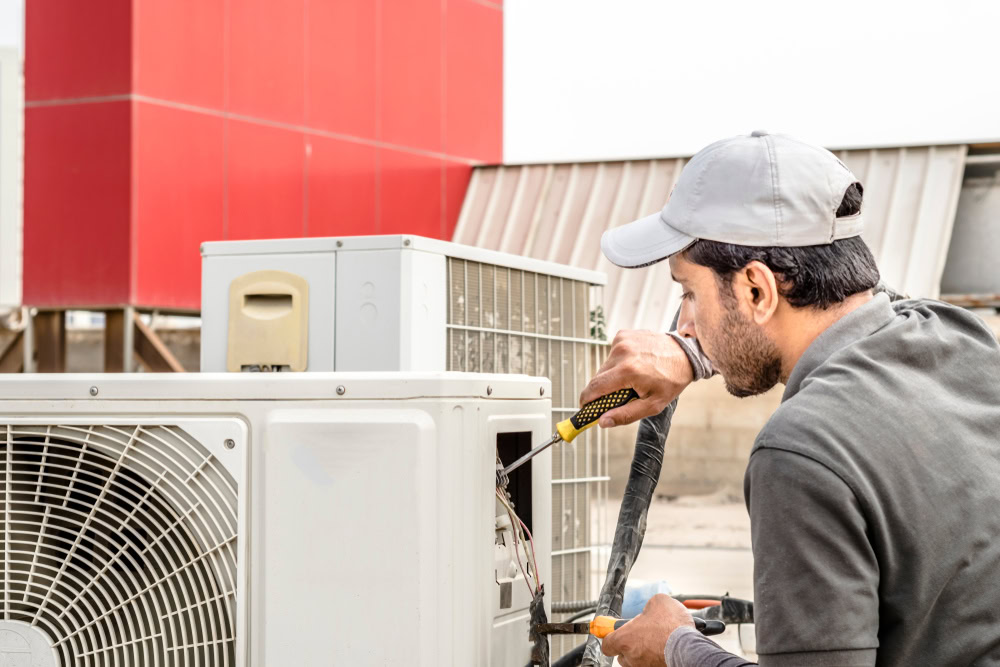

You’re not looking for a sales pitch. You need your home comfortable again without spending hours on the phone or days waiting for a callback.
When we handle your air conditioner repair in Bellerose Terrace, NY, you get a technician who knows how humidity from the Atlantic affects your system differently than it would inland. We’ve worked in enough homes here to recognize when a problem is a quick fix or when your electrical panel needs an upgrade before we can safely repair your unit.
Most HVAC repair calls in Nassau County come down to a handful of issues: refrigerant leaks, clogged filters, blocked airflow, or failed capacitors. We carry the parts that fail most often, so there’s a good chance we’re fixing your system the same day we diagnose it. And if your system is older and repair costs are climbing, we’ll walk you through whether fixing or replacing makes more sense for your situation—not ours.
Excellent Air Conditioning and Heating Service has been BBB Accredited since 2007, serving homeowners across Nassau and Queens County. We’re not the biggest name on Long Island, but we’re the ones who show up when we say we will and explain what’s wrong in plain terms.
Bellerose Terrace sits right on the Queens-Nassau border, where tree-lined streets and older homes mean dealing with electrical systems that weren’t built for modern central air. We’ve upgraded panels, coordinated with electricians, and handled enough permit processes in this area to know what Nassau County inspectors expect before we start the job.
You won’t get pressured into equipment you don’t need. If your system can be repaired affordably, that’s what we’ll recommend. If it’s time to replace, we’ll explain why and give you options that fit your home and budget.
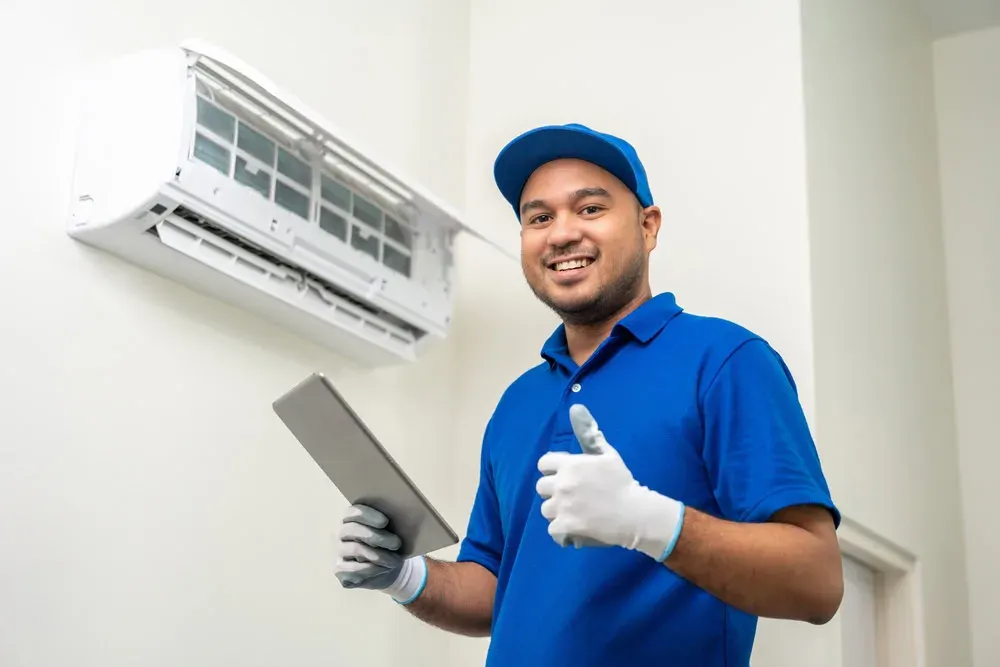
First, we schedule a time that actually works for you—not a four-hour window where you’re stuck waiting around. When our technician arrives, they’ll listen to what’s happening with your system: strange noises, weak airflow, water pooling, or just no cold air at all.
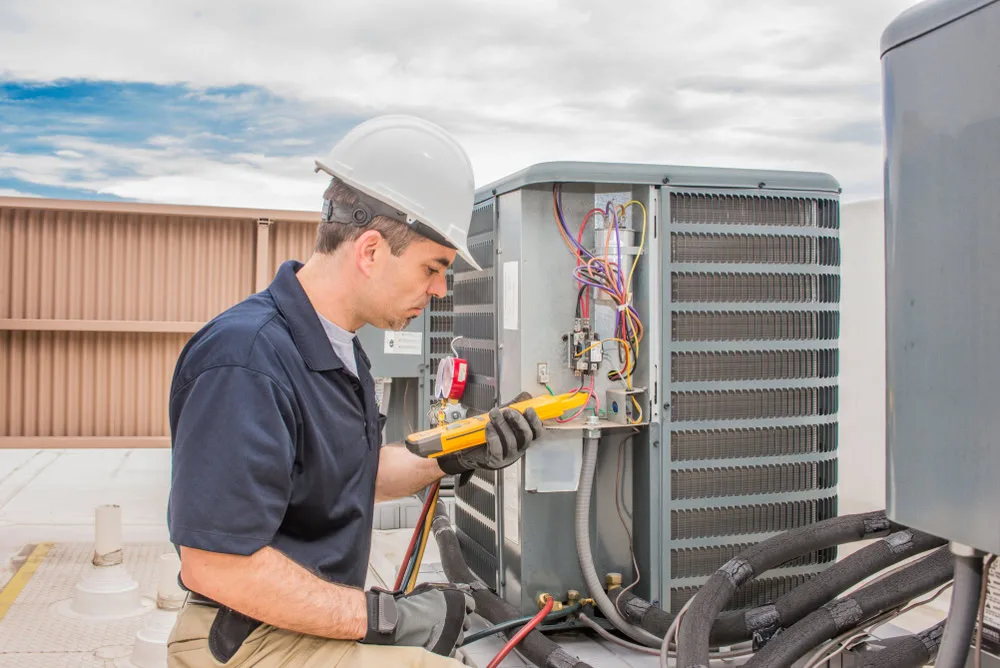
Then we run diagnostics. That means checking refrigerant levels, testing electrical components, inspecting your condenser and evaporator coils, and looking at airflow through your ductwork. We’re looking for the root cause, not just the symptom. If your AC isn’t cooling, it could be a dirty filter or it could be a failing compressor—and the fix for each is very different.
Once we know what’s wrong, we explain it in terms that make sense and give you an upfront price before we do any work. If we have the part on the truck, we fix it that day. If we need to order something, we’ll tell you how long it’ll take and what to expect. After the repair, we test the system to make sure it’s running the way it should—consistent cooling, proper airflow, no leaks.
Ready to get started?
Every air conditioning repair company in Bellerose Terrace will tell you they’re thorough. Here’s what that actually means when we’re at your house.
We start with a full system assessment—not just the part that’s broken. Long Island’s humidity puts extra strain on your AC, especially the evaporator coil and condensate drain. If your system is leaking water, it’s often because that drain line is clogged with algae or mold. We clear it, treat it, and make sure it’s draining properly so you’re not dealing with the same problem next month.
For refrigerant issues, we don’t just top it off and leave. If your system is low on refrigerant, there’s a leak somewhere. We find it, fix it, then recharge the system to the manufacturer’s specs. Overfilled or underfilled refrigerant both cause problems, so we measure it right.
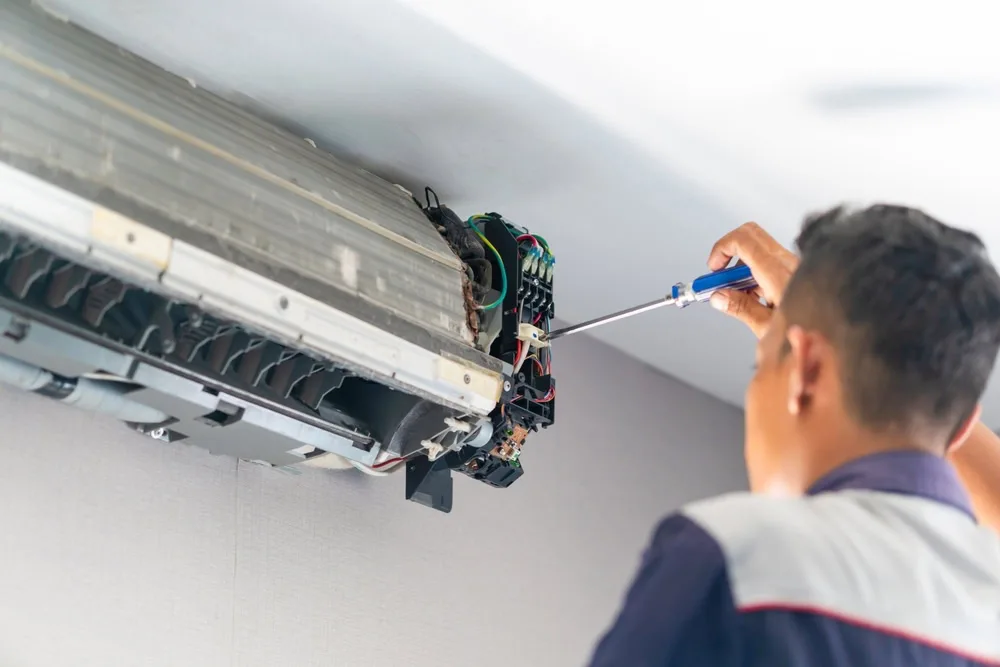
Electrical components get tested too—capacitors, contactors, and relays all wear out over time, especially in coastal areas where salt air accelerates corrosion. If your outdoor unit isn’t turning on or your system is short-cycling, it’s usually one of these parts. We replace them with quality components and make sure your connections are solid.
Most homeowners in Nassau County spend between $130 and $600 on AC repairs, depending on what’s broken. A simple fix like replacing a capacitor or cleaning a clogged drain line usually runs $130 to $250. Refrigerant leaks, compressor issues, or evaporator coil replacements cost more—sometimes $400 to $2,000—because the parts and labor are more involved.
We give you a clear estimate before we start any work, so there’s no surprise bill at the end. If your system is older and the repair cost is climbing toward half the price of a new unit, we’ll have that conversation with you honestly. Sometimes fixing makes sense. Sometimes it doesn’t. But that’s your call to make, and we’ll give you the information you need to make it.
Location matters too. Bellerose Terrace homes built before the 1980s sometimes need electrical work before we can safely repair or replace an AC system, and that’s an additional cost we’ll flag upfront if it applies to your situation.
If your system isn’t cooling like it used to, that’s the most obvious sign. But there are others that show up before a total breakdown.
Weak airflow usually means a clogged filter, blocked ductwork, or a failing blower motor. If you’re changing your filter regularly and airflow is still weak, it’s time to call someone. Strange noises—grinding, squealing, or banging—mean a component is loose, worn out, or about to fail. Ignoring those sounds doesn’t make them go away; it just makes the repair more expensive later.
Water pooling around your indoor unit means your condensate drain is clogged or your drain pan is cracked. In Long Island’s humid climate, that drain line works overtime, and algae builds up fast. If you’re seeing water, get it checked before it damages your floors or drywall.
Short-cycling is another red flag. If your system turns on and off every few minutes instead of running in steady cycles, it’s usually an electrical issue, a refrigerant problem, or an oversized unit for your space. Any of those will drive up your energy bill and wear out your compressor faster.
In most cases, yes—especially if it’s a common issue like a bad capacitor, clogged filter, or tripped breaker. We stock the parts that fail most often in residential AC systems, so if that’s what’s wrong with yours, we’re fixing it the same day.
If your system needs a less common part—like a specific blower motor, control board, or evaporator coil—we’ll need to order it. That usually takes one to three days depending on the manufacturer and what’s in stock locally. We’ll give you a timeline as soon as we know what’s needed.
Emergency breakdowns during heat waves get priority. If your AC goes out when it’s 90 degrees and humid, we’ll do everything we can to get someone to your house fast. We’ve been through enough Long Island summers to know that waiting three days for AC repair isn’t realistic when your home feels like a sauna.
The biggest delay we see in Bellerose Terrace isn’t parts—it’s electrical. If your home’s panel can’t safely handle your AC system, we’ll need to bring in a licensed electrician before we can complete the repair. We’ll coordinate that for you, but it does add time to the process.
If your system is under 10 years old and the repair costs less than $500, fixing it almost always makes sense. If it’s over 15 years old and you’re looking at a $1,000+ repair, replacement is usually the smarter move.
Here’s the math we use: multiply your system’s age by the repair cost. If that number is over $5,000, replace it. If it’s under $5,000, repair it. So if your unit is 12 years old and the repair is $600, that’s $7,200—replace. If it’s 8 years old and the repair is $400, that’s $3,200—repair.
Efficiency matters too. If your system uses R-22 refrigerant (Freon), it’s at least 15 years old, and that refrigerant is expensive and hard to find now. Recharging an R-22 system can cost as much as a down payment on a new unit that uses modern refrigerant and cuts your cooling costs by 20-30%.
We’ll walk you through the numbers when we’re at your house. You’ll know what the repair costs, what a replacement costs, and what your energy savings would look like over the next five years. Then you decide what makes sense for your situation.
For most repairs, you don’t need a permit. Replacing a capacitor, fixing a refrigerant leak, or clearing a drain line doesn’t require county approval.
But if we’re replacing your entire outdoor unit, upgrading your electrical panel, or installing a new air handler, then yes—Nassau County requires a permit. We handle that process for you: pulling the permit, scheduling the inspection, and making sure everything passes the first time.
Bellerose Terrace sits right on the Nassau-Queens line, so depending on where exactly your property is, you might fall under Queens or Nassau jurisdiction. We know which applies and what each requires. Skipping permits might save money upfront, but it creates problems when you sell your house or file an insurance claim, so we do it right from the start.
If your home needs electrical work before we can safely install or repair your AC system, that’s a separate permit the electrician will pull. We coordinate with them to keep the process moving and make sure inspections happen on schedule.
Nine times out of ten, it’s a clogged condensate drain line. Your AC pulls humidity out of the air, and that moisture drains out through a small pipe. In Long Island’s climate, algae and mold grow in that line fast, especially if your system runs constantly during summer. When the line clogs, water backs up and overflows from the drain pan onto your floor.
We clear the clog, flush the line, and treat it so it doesn’t clog again right away. If your drain pan is cracked or rusted through, we’ll replace that too. Older systems sometimes have pans that corrode from years of condensation, and once they crack, they need to be swapped out.
Another cause is a frozen evaporator coil. If your filter is dirty or your refrigerant is low, the coil can freeze, then melt and drip water everywhere when your system shuts off. That’s a bigger issue than just a clogged drain—it means your system isn’t cooling efficiently and something else is wrong.
If you’re seeing water, don’t wait. It can damage drywall, flooring, and create mold problems fast. We’ll figure out where it’s coming from and fix it before it turns into a bigger mess.