

Your air conditioner quits on the hottest day of summer. The humidity creeps in. Your family’s uncomfortable, and you’re watching the clock, wondering how long you’ll be stuck waiting for help.
You need someone who shows up when they say they will, diagnoses the problem correctly the first time, and fixes it without trying to sell you a new system you don’t need. That’s what matters when your home’s heating up and Long Island’s summer isn’t letting up.
Fast air conditioner repair in Bellmore means your system gets back online before you’re dealing with a house that feels like an oven. It means honest answers about what’s broken, what it’ll cost, and how long it’ll take. No games, no inflated estimates, just straight talk from technicians who’ve been doing this work across Nassau County for over three decades.
We’ve been handling residential AC repair in Bellmore and throughout Nassau County since before most HVAC companies in the area existed. We’re local—we live here, we work here, and we understand what Long Island’s coastal humidity does to air conditioning systems.
When your AC unit struggles with the moisture that rolls in after summer storms, or when it’s running nonstop during heat waves, you’re dealing with problems we’ve seen and fixed thousands of times. Our crew knows Bellmore homes, the systems they run, and the specific issues that pop up when you’re this close to the Atlantic.
You’re not getting a corporate call center or a technician who just moved to the area. You’re getting experienced professionals who test everything, explain what they find, and stand behind the work with real service warranties.
You call us, and we get someone out to your Bellmore home as quickly as possible—often the same day if you’re dealing with an emergency. No vague scheduling windows that waste your afternoon.
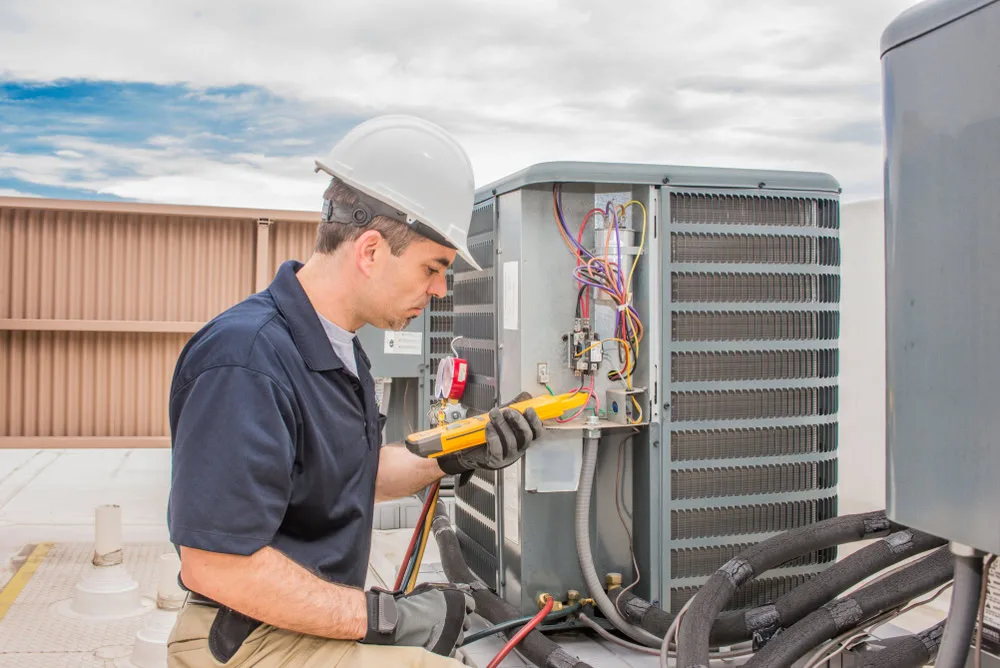
Our technician arrives and runs a complete diagnostic on your central AC system. We’re not guessing. We’re testing refrigerant levels, checking electrical connections, inspecting the compressor and condenser, looking at airflow, and identifying exactly what’s causing the problem. If it’s a refrigerant leak, we’ll find it. If your compressor’s failing, you’ll know before we touch anything.
Once we’ve pinpointed the issue, we explain what’s wrong in plain language—not technical jargon designed to confuse you. We tell you what it costs to fix, how long it’ll take, and whether this is a repair that makes sense or if you’re better off considering replacement. Then we fix it, test the system to make sure it’s running properly, and clean up before we leave.
Ready to get started?
Every air conditioner repair in Bellmore, NY starts with a full system inspection. You’re not paying for a quick patch job that fails again in two weeks. We’re diagnosing the root cause, whether that’s a failing capacitor, a refrigerant leak, a frozen evaporator coil, or a compressor that’s on its last legs.
You get clear communication about what we find. If your AC is leaking water because the condensate drain is clogged with algae—a common issue in humid Long Island summers—we’ll show you, clear it, and explain how to prevent it. If your system’s low on refrigerant, we’ll locate the leak, repair it, and recharge the system to manufacturer specifications.
Our HVAC repair services in Bellmore also include efficiency testing. We run a complete digital combustion analysis on heating systems and check cooling efficiency on AC units. You get a printout of the results so you know exactly how your system’s performing. If your energy bills have been climbing, this tells you why.
We also include carbon monoxide testing with every heating service call—because safety isn’t optional. And every repair comes with a service warranty, so if something goes wrong with the work we did, we’re coming back to make it right.
We offer same-day service for most emergency calls in Bellmore and throughout Nassau County. When your air conditioner fails during a heat wave, waiting days for a technician isn’t realistic—especially when temperatures are pushing into the 90s and your home’s humidity is spiking.
We prioritize emergency AC repair calls because we know how quickly a broken system becomes a health and safety issue, particularly for elderly family members or young children. Most of the time, we can get someone to your door within hours of your call.
That said, peak summer days when everyone’s AC is running overtime can get busy. If we can’t make it same-day, we’ll tell you exactly when we can be there—and we’ll actually show up when we say we will. No vague windows, no missed appointments.
Your air conditioner is making strange noises—hissing, grinding, or banging sounds that weren’t there before. Hissing usually means a refrigerant leak. Grinding points to worn motor bearings. Banging suggests loose components rattling around inside the unit.
You’re seeing ice forming on the evaporator coils or refrigerant lines. This happens when refrigerant levels drop due to leaks, or when airflow gets restricted by dirty filters or blocked vents. Either way, it means your system isn’t cooling properly and needs immediate attention.
Your AC is running constantly but not cooling your home. Long Island summers are brutal, and systems do run more during heat waves—but if your unit never cycles off and your house still feels warm, something’s wrong. Could be low refrigerant, a failing compressor, or ductwork issues. Could also be an undersized system that was never right for your home’s square footage.
You’re noticing water pooling around your indoor unit. This typically means your condensate drain line is clogged—common in humid coastal areas like Bellmore where algae growth blocks drainage. Left alone, this can cause water damage and mold growth.
If your air conditioner is less than 10 years old and the repair costs less than half the price of a new system, repair usually makes sense. You’re getting more life out of equipment that still has years left, and you’re avoiding the expense and disruption of a full replacement.
If your system is 15+ years old, requires frequent repairs, and your energy bills keep climbing, replacement is probably the smarter move. Older units run less efficiently, especially if they’re using R-22 refrigerant (which is being phased out and costs significantly more now). A new, high-efficiency system will cost more upfront but typically pays for itself through lower energy bills within a few years.
The middle ground—systems that are 10-15 years old—depends on the specific repair. If you’re looking at a $500 capacitor replacement, fix it. If the compressor’s shot and you’re staring at a $2,000+ repair bill on a 12-year-old system, that money’s better spent on new equipment.
We’ll walk you through the math honestly. We’re not trying to sell you a new system if a repair makes sense, and we’re not going to patch something that’s going to fail again in six months just to get a service call out of you.
Low refrigerant is the most common culprit. Your system needs a specific amount of refrigerant to absorb heat from your home and release it outside. When levels drop due to leaks, the cooling capacity drops with it. Your AC keeps running because the thermostat’s calling for cooling, but it can’t actually deliver cold air.
A dirty or frozen evaporator coil will also kill your cooling. If your air filter hasn’t been changed in months, restricted airflow causes the coil to freeze. Once ice forms, air can’t pass over the coil to get cooled, and your system just circulates warm air. This is especially common during Long Island’s humid summers when moisture in the air accelerates ice formation.
Your compressor might be failing. The compressor is the heart of your AC system—it pressurizes refrigerant and keeps it moving through the system. When it starts to go, you’ll hear unusual noises, and cooling performance drops off. Eventually, it stops working entirely.
Could also be an issue with your thermostat, ductwork leaks, or an undersized system that was never adequate for your home’s cooling load. A proper diagnostic will pinpoint exactly what’s causing the problem so you’re not guessing or wasting money on the wrong repair.
Simple repairs like replacing a capacitor or contactor typically run $150-$400. These are common failures, especially on older systems, and they’re quick fixes that get your AC back online fast.
Refrigerant leak repairs vary widely based on where the leak is and how much refrigerant you’ve lost. Finding and sealing a leak, then recharging the system, usually costs $500-$1,500. If you’re still using R-22 refrigerant (common in pre-2010 systems), expect higher costs because that refrigerant is being phased out and prices have skyrocketed.
Compressor replacement is one of the most expensive repairs, often running $1,500-$3,000+ depending on your system. At that price point, especially if your unit is older, replacement often makes more financial sense than repair.
Evaporator coil replacement typically costs $1,000-$2,000. Blower motor replacement runs $400-$800. Condensate drain cleaning is usually under $200.
We’ll give you an exact price before we start any work. No surprises, no “we found additional problems” upsells after we’re already halfway through the job. You’ll know what it costs, why it costs that, and what you’re getting for your money.
Yes, and it’s the single best way to avoid emergency repairs during the hottest weeks of summer. Regular maintenance catches small issues—a worn belt, a loose electrical connection, early signs of refrigerant loss—before they turn into complete system failures.
Our maintenance visits include cleaning your condenser coils (which get caked with pollen and debris in Long Island’s coastal air), checking refrigerant levels, testing electrical components, inspecting your condensate drain for clogs, and replacing your air filter if needed. We also run efficiency testing to make sure your system isn’t working harder than it should be, which drives up your energy bills.
Most AC breakdowns happen during heat waves because that’s when your system is under maximum stress. If there’s a weak point—a capacitor that’s starting to fail, a compressor that’s struggling—that’s when it’ll give out. Catching those issues during a spring maintenance visit means you’re not dealing with a dead AC unit when it’s 95 degrees outside and your family’s melting.
We offer maintenance programs for Bellmore homeowners who want to stay ahead of problems rather than reacting to them. Regular service extends your system’s lifespan, keeps it running efficiently, and dramatically reduces the chances you’ll need emergency repairs when you can least afford the downtime.