
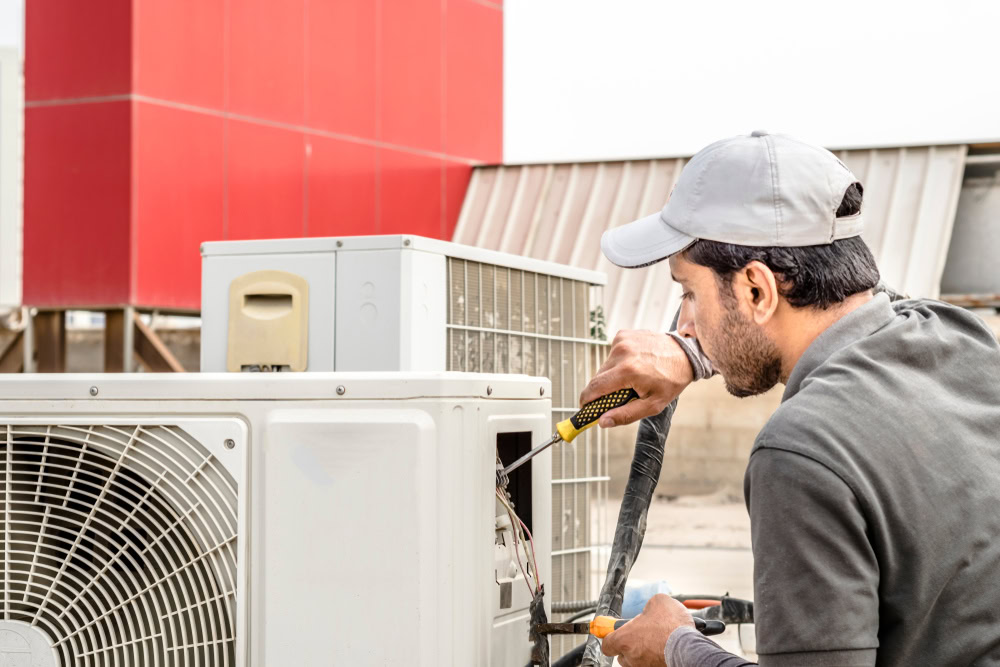

You’re not looking for a lecture about maintenance schedules or a sales pitch for a new system. You need your air conditioner working again before your house becomes unbearable, before you’re sweating through another night, before the kids start complaining or elderly family members face real health risks.
Home AC repair in Rosedale, NY means dealing with buildings that have seen decades of summers. Most homes here were built in the 1940s, and those older systems don’t fail gracefully. Capacitors blow when temperatures spike. Compressors overheat during the third straight day above 90 degrees. Refrigerant leaks show up right when humidity makes everything feel ten degrees hotter.
When we handle residential AC repair in Rosedale, NY, the goal is simple: diagnose what actually broke, fix it the same day if possible, and give you a straight answer about whether repair makes sense or if you’re throwing money at a dying system. Most repairs run $200-$300 for common issues—bad capacitors, faulty contactors, clogged drain lines. We carry those parts on the truck because waiting three days for an order doesn’t work when it’s 85 degrees inside your house.
We’ve spent over 30 years working on HVAC systems across Queens and Nassau County. We’re based in Long Island City, which means we reach Rosedale faster than Manhattan companies without their overhead costs.
This matters in a neighborhood where 75% of households are families. When your central AC repair in Rosedale, NY can’t wait until next week, you need a local air conditioning repair company that understands what’s at stake. We’ve seen what happens when systems fail during heat waves—it’s not just uncomfortable, it’s a health risk, especially for kids and older adults.
We don’t upsell replacements when repairs make sense. We don’t charge Manhattan rates for Queens work. And we don’t leave you guessing about what broke or what it’ll cost before we start.
You call because your AC isn’t cooling, isn’t turning on, or is making sounds that weren’t there yesterday. We ask a few questions to understand what you’re experiencing—not to waste time, but because some details tell us what parts to bring.
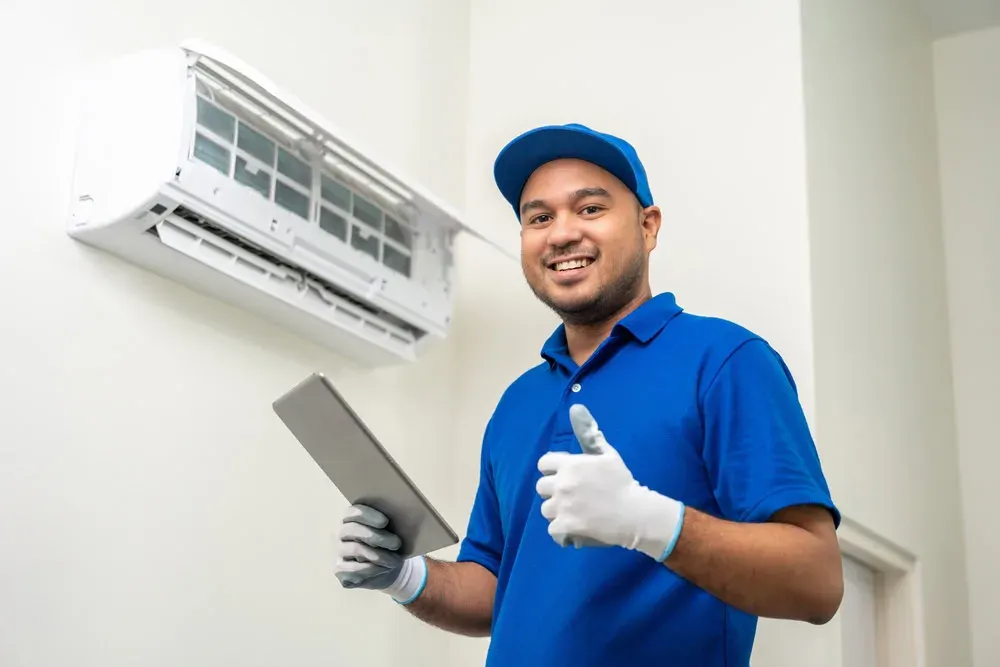
We schedule same-day service when possible, especially during summer when delays mean another night of heat. Our technician shows up with diagnostic tools and the most common failure parts already on the truck. For Rosedale homes, that usually means capacitors, contactors, and refrigerant—the components that fail most often in older residential systems.
The diagnostic takes 20 to 45 minutes depending on what’s wrong. Electrical issues are usually fastest to pinpoint. Refrigerant leaks take longer because we have to find where the system is losing pressure. Mechanical failures like seized motors or bad compressors are obvious once we open the unit.
Before any repair starts, you get the full cost and an honest assessment. If your compressor died and the system is 18 years old, we’ll tell you that repair costs half what replacement does—but you’re likely looking at another failure within two years. If it’s a $250 capacitor fix on a system with years left, we’ll have you running within the hour.
Most repairs finish the same visit. We test the system, make sure temperatures drop where they should, and confirm airflow is back to normal before we leave.
Ready to get started?
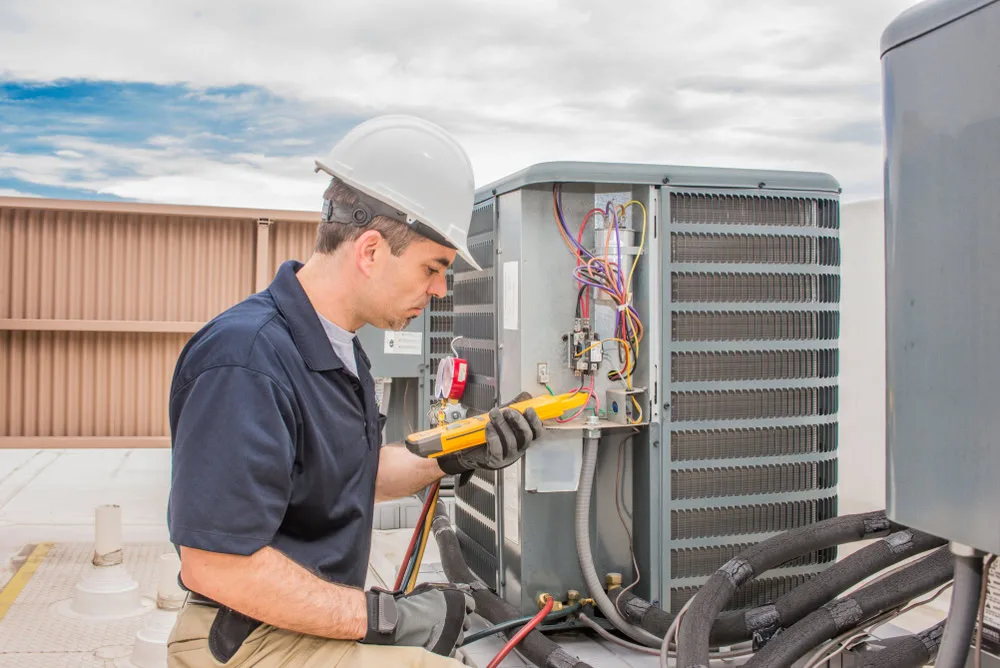
AC repair services in Rosedale, NY cover the breakdowns that happen when systems run nearly nonstop through July and August. Electrical failures top the list—capacitors that can’t handle the startup load anymore, contactors that pit and burn out, wiring that degrades in outdoor units exposed to weather for decades.
Refrigerant issues come next. You’ll notice your AC running constantly but not cooling, or ice building up on the lines outside. That’s usually a leak somewhere in the system, and it needs to be found, sealed, and recharged. We don’t just top off refrigerant and hope for the best—that leak will empty again in weeks.
Mechanical failures show up as loud noises, burning smells, or units that won’t start at all. Blower motors seize up. Compressors overheat and lock. Fan blades crack. These aren’t subtle problems—you know something’s seriously wrong.
Then there’s AC leaking water repair in Rosedale, NY, which sounds minor until you’ve got a puddle spreading across your floor. Clogged condensate drain lines are the usual culprit, but sometimes the drain pan rusts through or the pump fails. Either way, water damage adds up fast if it’s not handled quickly.
Signs you need AC repair in Rosedale, NY aren’t always dramatic. Weak airflow means something’s restricting the system—dirty coils, failing blower, ductwork problems. Short cycling where the unit turns on and off every few minutes points to electrical issues, refrigerant problems, or an oversized system that was never right for the house. Strange smells—burning, musty, chemical—all mean different failures that need immediate attention.
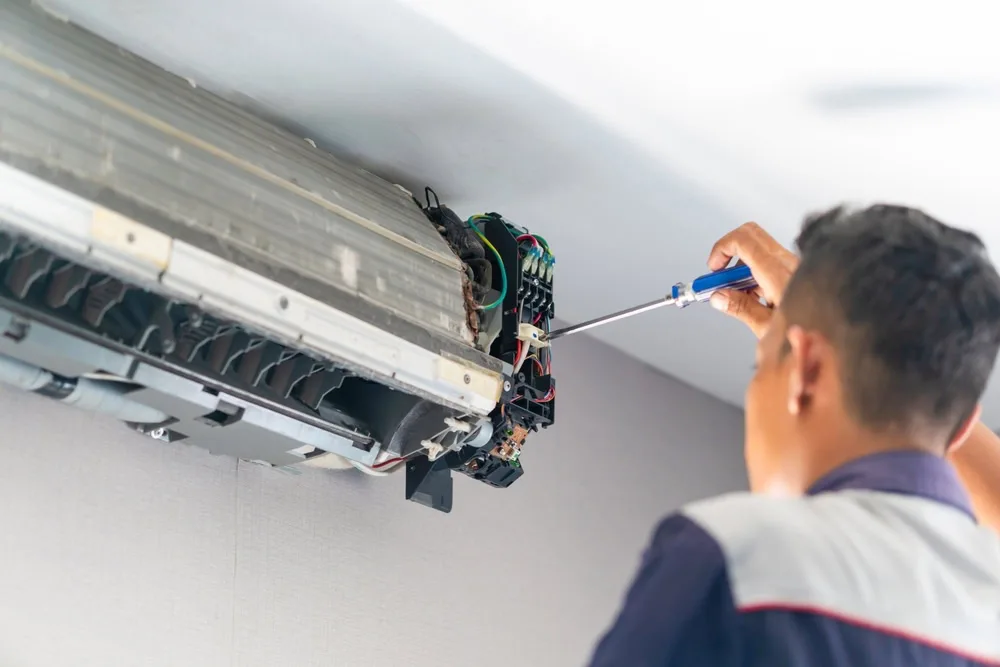
Most common repairs in Rosedale run between $200 and $300—that covers capacitors, contactors, drain line clears, and minor electrical fixes. These are the failures we see most often during summer, and we carry the parts on every truck.
Refrigerant leak repairs cost more, usually $400 to $700 depending on where the leak is and how much refrigerant the system needs. If your compressor failed, you’re looking at $800 to $1,300, but at that point we’re having a different conversation about whether repair makes sense given the age of your system.
You’ll know the exact cost before work starts. We don’t believe in “diagnostic fees” that disappear into the final bill or surprise charges after the job’s done. The price we quote is what you pay.
Same-day service is standard during summer, especially for complete breakdowns. If you call in the morning, we’re usually there by early afternoon. Afternoon calls typically get evening slots.
Being based in Long Island City means we reach Rosedale in under 30 minutes in normal traffic. We’re not coming from Manhattan or out east on the island—we’re local to Queens, and that response time matters when your house is heating up by the hour.
During extreme heat waves when everyone’s system is maxed out, response times can stretch. We prioritize homes with young children, elderly residents, or medical conditions that make heat dangerous. If your situation is urgent, tell us when you call.
If your system is under 10 years old and the repair costs less than $500, fix it. You’ve got years of life left, and even a $700 repair is cheaper than $4,000 to $8,000 for replacement.
Between 10 and 15 years, it depends on what broke. A $250 capacitor? Absolutely repair it. A $1,200 compressor? That’s tougher—you’re putting significant money into a system that’s approaching the end of its lifespan. We’ll walk through the math with you, but usually if the repair costs more than half of replacement and the system is over 12 years old, replacement makes more sense.
Over 15 years, most systems are on borrowed time. If you’re facing a major repair, you’re likely looking at another failure within a year or two. At that point, you’re better off replacing before you’re stuck in an emergency situation with fewer options and higher prices.
Heat waves force your AC to run almost continuously, and that constant operation exposes weak points. Capacitors fail under sustained electrical load—they’re designed to handle startup surges, but when your system is starting and stopping dozens of times per day in extreme heat, they burn out faster.
Compressors and motors overheat when they can’t cycle off and cool down. Outdoor units sitting in direct sun can reach internal temperatures well above what they’re rated for, especially in older systems where efficiency has degraded. That heat buildup leads to mechanical failures.
Refrigerant leaks get worse under pressure. Your system runs at higher pressures when it’s working harder to cool against 95-degree outdoor temps. A small leak that was barely noticeable in May becomes a serious problem in July when the system can’t maintain pressure. Rosedale’s humidity makes everything worse—your AC has to work harder to remove moisture from the air on top of cooling it, which adds even more strain to every component.
Low refrigerant is the most common reason. Your system needs a specific amount of refrigerant to absorb heat from inside your house and release it outside. When there’s a leak and levels drop, the AC runs constantly but can’t actually cool the air passing through it. You’ll often see ice forming on the refrigerant lines outside—that’s a clear sign of low refrigerant.
Dirty or frozen evaporator coils will do the same thing. The evaporator coil inside your house is where the actual cooling happens, and if it’s covered in dust or frozen solid, air passes through without getting cold. This usually happens when airflow is restricted—dirty filters, closed vents, failing blower motors.
Sometimes the issue is outside the AC itself. Ductwork leaks in your attic or crawlspace mean cold air never makes it to your rooms. Undersized systems that were never right for your house will run nonstop on hot days and still struggle. And in Rosedale’s older homes, poor insulation means you’re losing cool air as fast as the system produces it. We check all of this during diagnostics because fixing the AC doesn’t help if the real problem is somewhere else.
Yes. We’ve worked on commercial HVAC systems across NYC and Long Island for over 30 years, so we handle everything from single-family homes to multi-unit buildings to retail and office spaces in Rosedale.
Commercial systems are different animals—larger capacity, more complex controls, and failures that affect businesses and multiple tenants instead of one household. Response time matters even more because downtime costs you customers or creates liability issues with tenants. We carry commercial-grade parts and have the licensing for larger refrigerant systems that residential techs can’t touch.
For residential work, we’re set up for the specific challenges of Rosedale’s housing stock—older homes, window units, central systems added to houses that weren’t built for them, and the electrical limitations that come with 1940s-era wiring. Whether it’s a single-family house or a small apartment building, we’ve seen the failure patterns that show up in this area and know how to fix them efficiently.