Summary:
Energy-Efficient Cooling That Actually Reduces Your Bills
Energy bills tell the real story. When your AC runs all day cooling an empty house or struggles to maintain temperature because it can’t adapt to changing conditions, you see it every month. Smart-integrated systems address this directly by using real-time data to make decisions your old thermostat never could.
These systems track when you’re typically home and adjust cooling schedules automatically. You’re not paying to cool bedrooms at 2 PM when nobody’s there or running the system at full blast all day. Most homeowners see energy savings between 10% and 15% after installation—real dollars back in your pocket every month, not hypothetical savings.
The benefits go deeper than smarter scheduling. Smart thermostats reduce unnecessary strain on your compressor and fan motors. Less wear means fewer repairs and a longer lifespan for your equipment. In Nassau County, NY and Queens, NY, where summer humidity pushes systems hard for months, that longevity translates directly to avoiding premature replacement costs that can run $5,000 to $16,000.
Remote climate control for Queens and Nassau County households
Remote control changes how you interact with your home’s comfort. Forgot to adjust the temperature before leaving for work? Handle it from your phone in the car. Want the house cool before you return from a weekend away? Set it up from wherever you are, whenever you think of it.
This access matters for busy households. You’re no longer locked into rigid schedules or forced to choose between comfort and wasted energy. When plans change—and they always do—your cooling adapts with you instead of running on autopilot.
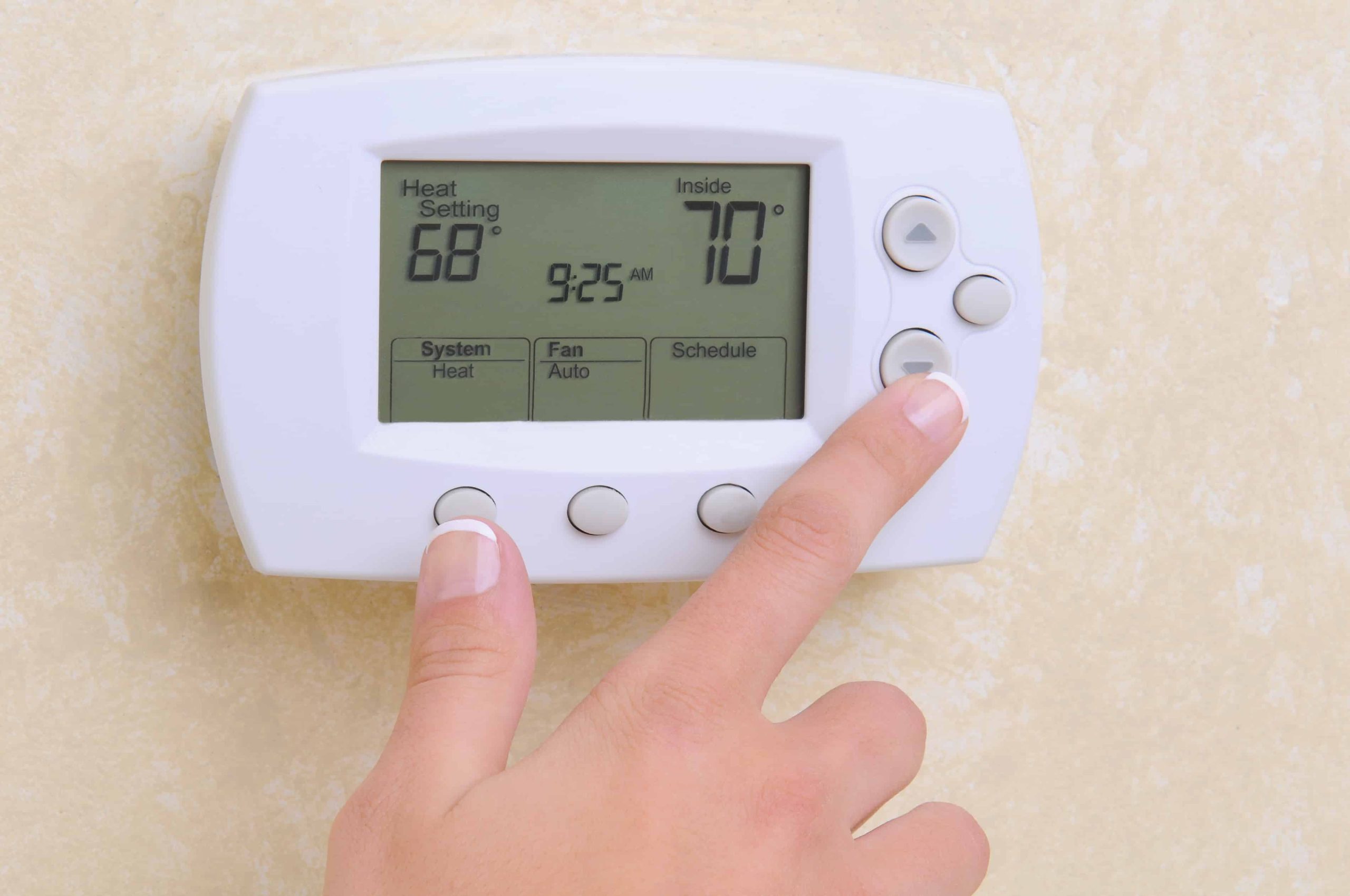
For families in Queens, NY dealing with unpredictable work schedules or Nassau County, NY homeowners who travel regularly, remote access eliminates guesswork. You monitor real-time temperature and humidity levels, adjust settings for different rooms if you have zoning, and receive alerts if something’s off with your system. All from an app that takes about five minutes to learn.
The interface is straightforward. Most smart thermostats show you exactly what’s happening: current conditions, energy usage trends, and simple controls to make adjustments. No complicated menus or technical jargon. Just direct control over your home’s climate from wherever you happen to be.
Integration with voice assistants like Alexa or Google Assistant removes even that small friction. A simple voice command adjusts the temperature, which is useful when your hands are full or you’re settling in for the night. The technology fades into the background while the benefits stay front and center.
How IoT HVAC systems learn your schedule automatically
The intelligence in smart AC installation comes from how these IoT HVAC systems process information over time. Unlike traditional thermostats that follow whatever schedule you manually program—and then forget to update when life changes—smart systems observe patterns and adapt automatically.
During the first few weeks after installation, your system learns your household’s rhythm. It tracks when people are typically home, which rooms get used most, and how quickly your house heats up or cools down under different conditions. This data becomes the foundation for decisions that save energy without requiring any ongoing input from you.
If you usually leave for work at 7:30 AM on weekdays, the system starts reducing cooling shortly after. If you typically return around 6 PM, it begins cooling the house 20 to 30 minutes before you arrive. You walk into a comfortable space without having run the AC all day. These adjustments happen in the background—you don’t program them or remember to make changes when your routine shifts.
The system also responds to external factors. On particularly hot days in Nassau County, NY, it might start cooling earlier to avoid overworking the compressor during peak afternoon heat. On milder days, it delays cooling or uses less aggressive settings because your house naturally stays comfortable longer. You’re not fighting the system or second-guessing whether you should manually override it.
This adaptive behavior extends to seasonal changes too. As summer transitions to fall, the system recognizes that cooling demands are dropping and adjusts accordingly. You’re not paying to overcool your home because the thermostat is still set to August mode in October.
Integration with other smart home devices amplifies this. If you have smart blinds, the system can coordinate with them to block direct sunlight during the hottest part of the day, reducing cooling load. If you have occupancy sensors in different rooms, it focuses cooling where people actually are rather than treating the entire house uniformly. These connections create a system that’s genuinely responsive to real conditions instead of following fixed rules.
The learning process is ongoing. As your routines change—maybe you start working from home more often, or your kids’ school schedule shifts—the system picks up on these patterns and adapts. You’re not stuck with a schedule that made sense six months ago but doesn’t fit your life anymore. The system evolves with you.
Smart Thermostat Integration With Home Automation Systems
Smart AC installation isn’t just about the cooling system itself—it’s about how that system connects with everything else in your home. When your thermostat communicates with your lighting, security system, and other smart devices, you unlock coordination that traditional systems can’t match.
Consider what happens when you leave for vacation. With connected systems, arming your security setup can automatically trigger your thermostat to switch to away mode, reducing cooling to save energy. When you disarm the system upon returning, cooling ramps back up so your home is comfortable by the time you walk through the door. One action cascades through multiple systems without you managing each one separately.
This integration eliminates the need to manually adjust multiple systems every time your situation changes. Everything works together based on simple conditions you set once, then forget about. The technology handles the coordination while you focus on everything else in your life.
What 2026 home automation looks like in Nassau County, NY
Home automation in 2026 isn’t about flashy gadgets or complicated setups—it’s about practical systems that make daily life smoother. For homeowners in Nassau County, NY and Queens, NY, this means technology that addresses real local concerns: humid summers that strain equipment, variable weather that makes fixed schedules inefficient, and the need to manage energy costs without sacrificing comfort.
Modern smart AC systems integrate with platforms you’re likely already using. Apple HomeKit, Google Home, Amazon Alexa, and Samsung SmartThings all support HVAC control, which means you manage everything from a single interface you’re already comfortable with. No need to learn a completely new system or juggle multiple apps.
Geofencing is particularly useful for Long Island households with multiple family members coming and going. Your system uses smartphones’ locations to detect when you’re getting close to home. As you drive back from work or errands, it automatically starts cooling so the house is comfortable when you arrive. No need to remember to adjust settings manually or deal with that initial blast of warm air when you first walk in.
The same technology works in reverse. When everyone leaves the house, the system recognizes that no phones are present and shifts to energy-saving mode automatically. You’re not relying on anyone to remember to adjust the thermostat on the way out the door—a particular relief for households with teenagers or busy mornings.
Zoning takes this further for larger homes or multi-story houses common in Nassau County, NY. Instead of treating your entire house as one temperature zone, smart systems manage different areas independently. Bedrooms stay cooler at night while living spaces run warmer. Upstairs zones receive more cooling during hot afternoons when heat naturally rises. You’re not overcooling spaces that don’t need it or leaving some rooms uncomfortable while others are fine.
The data these systems collect gives you visibility into how your home actually uses energy. Monthly reports show patterns you might not have noticed—maybe your second floor is using significantly more cooling than it should, pointing to insulation issues or ductwork problems you weren’t aware of. This insight helps you make informed decisions about where to invest in improvements that will actually make a difference.
Installation of these integrated systems has become more straightforward too. We handle the technical setup, ensuring everything communicates properly and walking you through the controls. Most homeowners are up and running within a day, with the system already starting to learn their preferences and make initial adjustments.
Predictive maintenance alerts before breakdowns happen
One of the most valuable aspects of smart AC installation that doesn’t get enough attention is predictive maintenance. Traditional systems wait until something breaks before you know there’s a problem—usually on the hottest day of summer. Smart systems monitor performance constantly and identify issues weeks before they cause a breakdown.
Your system tracks dozens of data points: how long the compressor runs during each cycle, whether airflow stays consistent, if the system takes longer than usual to reach set temperature, and whether energy consumption is creeping up unexpectedly. When patterns deviate from normal operation, the system flags it and sends you an alert with specific information about what’s changing.
You might receive a notification that your air filter needs changing—not based on a generic three-month timeline, but because actual airflow measurements show restriction building up. Or you might get an alert that your system is cycling on and off more frequently than it should, which could indicate a refrigerant issue or failing capacitor. These warnings give you the opportunity to address problems proactively, during business hours, when you can schedule service at your convenience rather than paying emergency rates.
This is particularly valuable in Queens, NY and Nassau County, NY, where summer breakdowns often happen during heat waves when HVAC companies are slammed with emergency calls. By catching issues early, you avoid finding yourself on a waiting list during the hottest week of the year, dealing with uncomfortable conditions and potentially paying premium rates that can run $400 to $500 just for a technician to show up—before any actual repairs.
The monitoring extends to efficiency tracking as well. If your system’s performance starts declining—maybe it’s using 15% more energy than it did last summer to achieve the same cooling—you’ll know about it before your energy bill becomes a problem. This gives you the information you need to decide whether a repair makes sense or if you’re approaching the point where replacement is more economical.
We can also access this data remotely when you schedule service. We arrive at your home already knowing what the system has been reporting, which speeds up diagnosis significantly. We’re more likely to bring the right parts on the first visit, which means less time troubleshooting, faster repairs, and fewer return trips. For busy homeowners, that efficiency matters.
For people who aren’t particularly technical, this doesn’t add complexity—it actually simplifies your life. Instead of wondering whether that noise is normal or if your system is working as efficiently as it should, you have clear information. The system tells you when something needs attention and what specifically is wrong, in plain language that doesn’t require an HVAC degree to understand.
Getting Started With Smart AC Installation in Your Area
Smart-integrated AC installation represents a practical upgrade for Long Island homeowners dealing with hot summers and rising energy costs. The combination of automated scheduling, remote climate control, home automation integration, and predictive maintenance addresses real problems while delivering measurable savings—typically 10% to 15% on cooling costs, which adds up quickly over a system’s 12 to 17 year lifespan.
If you’re considering AC installation this year in Nassau County, NY or Queens, NY, the technology has matured to the point where smart systems are reliable, user-friendly, and cost-effective. You’re not paying a huge premium for features you’ll never use—you’re investing in a system that actively works to reduce your energy bills while keeping your home comfortable through Long Island’s demanding summer conditions.
We bring over 30 years of local experience to every installation. Our team understands Nassau County and Queens climate demands and can help you choose a system that fits your home’s layout, your household’s patterns, and your budget—without overselling features you don’t need.