Summary:
If you’re weighing a mini split against central air, you’re probably not doing it for fun. Either something broke, your energy bills are out of control, or you’re finally done with window units that rattle all night and barely cool one room. Whatever brought you here, the honest answer is that neither system wins across the board — the right choice depends almost entirely on your home. Queens County has some of the most varied housing stock in the country, and what works in a Fresh Meadows split-level might be completely wrong for a pre-war attached house in Flushing. Here’s what you actually need to know.
Mini Split vs Central Air: A Complete Side-by-Side Comparison
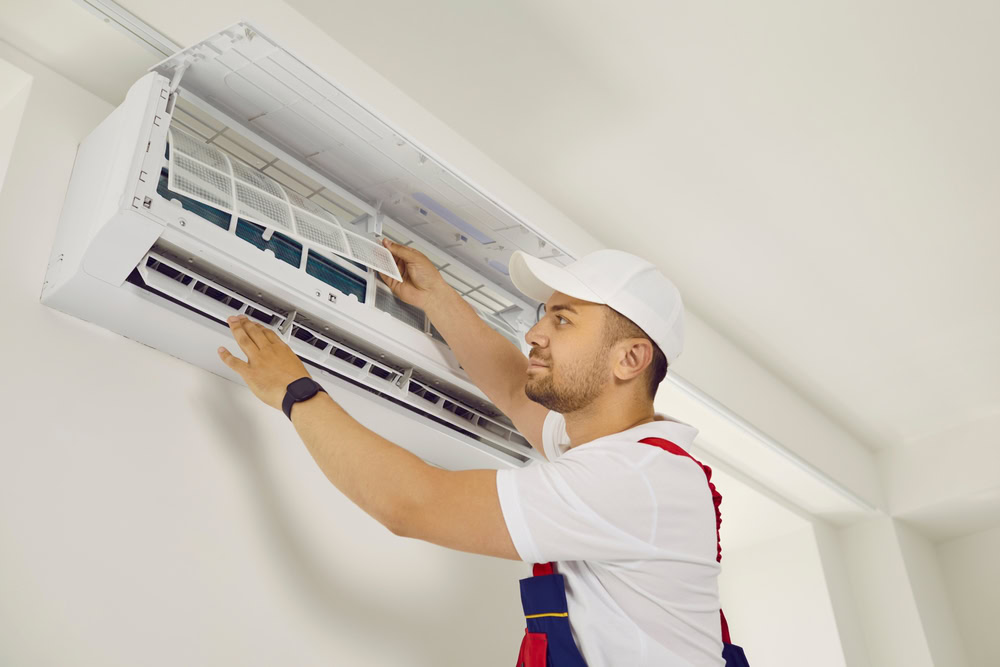
At their core, both systems do the same job — they cool your home and, in the case of mini splits with heat pump function, heat it too. The difference is in how they move that conditioned air around. Central air uses a network of ducts to push cooled air through vents in each room, all controlled by a single thermostat. A mini split skips the ducts entirely, using a small outdoor condenser connected by refrigerant lines to one or more indoor air handlers mounted on the wall or ceiling.
That distinction matters more in Queens County than almost anywhere else. A home built in the 1950s in Whitestone with existing ductwork is a very different situation from a pre-war attached house in Jackson Heights heated by a steam boiler with no ductwork at all. The system that makes sense for one may be completely impractical — or significantly more expensive — for the other.

Central Air vs Ductless: What Your Home's Ductwork Actually Tells You
The single most important factor in this decision is whether your home already has ductwork — and if it does, what condition it’s in. If you have well-sealed, properly sized ducts from a relatively recent installation, replacing your central air system with a new one is usually the most straightforward and cost-effective path. You’re working with infrastructure that’s already there, and a good contractor can have a new system running without any major construction.
But a lot of Queens County homes tell a different story. Pre-war attached housing in neighborhoods like Astoria, Forest Hills, Elmhurst, and Jackson Heights was built with steam or hot-water boiler heat — no ductwork, no forced air, nothing. For these homeowners, central air isn’t just a matter of swapping equipment. It means designing and installing an entirely new duct system, which can add anywhere from $10,000 to $18,000 on top of the equipment cost. That math changes the conversation fast.
Then there’s the middle ground: homes that have ductwork, but it’s old, leaky, or undersized. The U.S. Department of Energy estimates that the average central air system loses 20 to 30 percent of its conditioned air through duct leakage. In an older Queens County home where the ducts haven’t been touched in decades, that number can be even higher. You could install a brand-new, high-efficiency central air unit and still be paying to cool your attic because the ducts are bleeding air before it ever reaches your living room. In situations like that, a ductless mini split system eliminates the problem at the source — because there are no ducts to lose air through.
The honest takeaway: if your ductwork is in good shape, central air is probably still your best bet. If it doesn’t exist or it’s in rough condition, a mini split is worth a serious look — and in many cases, it’s the smarter long-term investment.
Ductless AC Pros and Cons Queens County Homeowners Should Know Before Deciding
Mini splits have a lot going for them, but they’re not perfect for every situation. On the plus side, they’re highly efficient — modern systems can achieve SEER2 ratings up to 35, compared to around 26 for top-tier central air units. They allow for zone control, meaning each indoor air handler has its own thermostat, so you’re not overcooling the living room to get the bedroom comfortable. Installation is relatively clean and fast — typically a single day for a one-zone system — requiring only a small penetration through an exterior wall rather than a full ductwork buildout. And they’re quieter than most people expect, with indoor units operating around 20 to 30 decibels.
There are real drawbacks, though, and it’s worth being straight about them. Multi-zone systems — the kind that can cool an entire Queens County home — carry a higher upfront cost than a central air replacement in a home with existing ducts. Indoor wall units aren’t invisible, and while they’re sleeker than they used to be, some homeowners find them visually intrusive. In Queens County attached homes and row houses, finding a compliant location for the outdoor condenser can also be a challenge, especially in tighter yards or where neighbor proximity is a factor.
One concern we hear often is whether a mini split can handle Queens County winters. The short answer is yes — modern heat pump mini splits are rated to operate efficiently at temperatures as low as -13°F, and our winters rarely drop below 10 to 15°F on the coldest nights. For homeowners currently paying to heat with oil or gas on top of running a separate cooling system, a mini split that handles both functions year-round can represent real savings over time. It’s not the right fit for every home, but it’s worth running the numbers before you assume central air is the only option.
Mini Split Installation Cost vs. Central Air: What Queens County Homeowners Are Actually Paying
Cost is where a lot of people start — and where a lot of misleading information circulates. The real answer depends on your home’s specific situation, but here are the numbers that reflect what we’re seeing in Queens County.
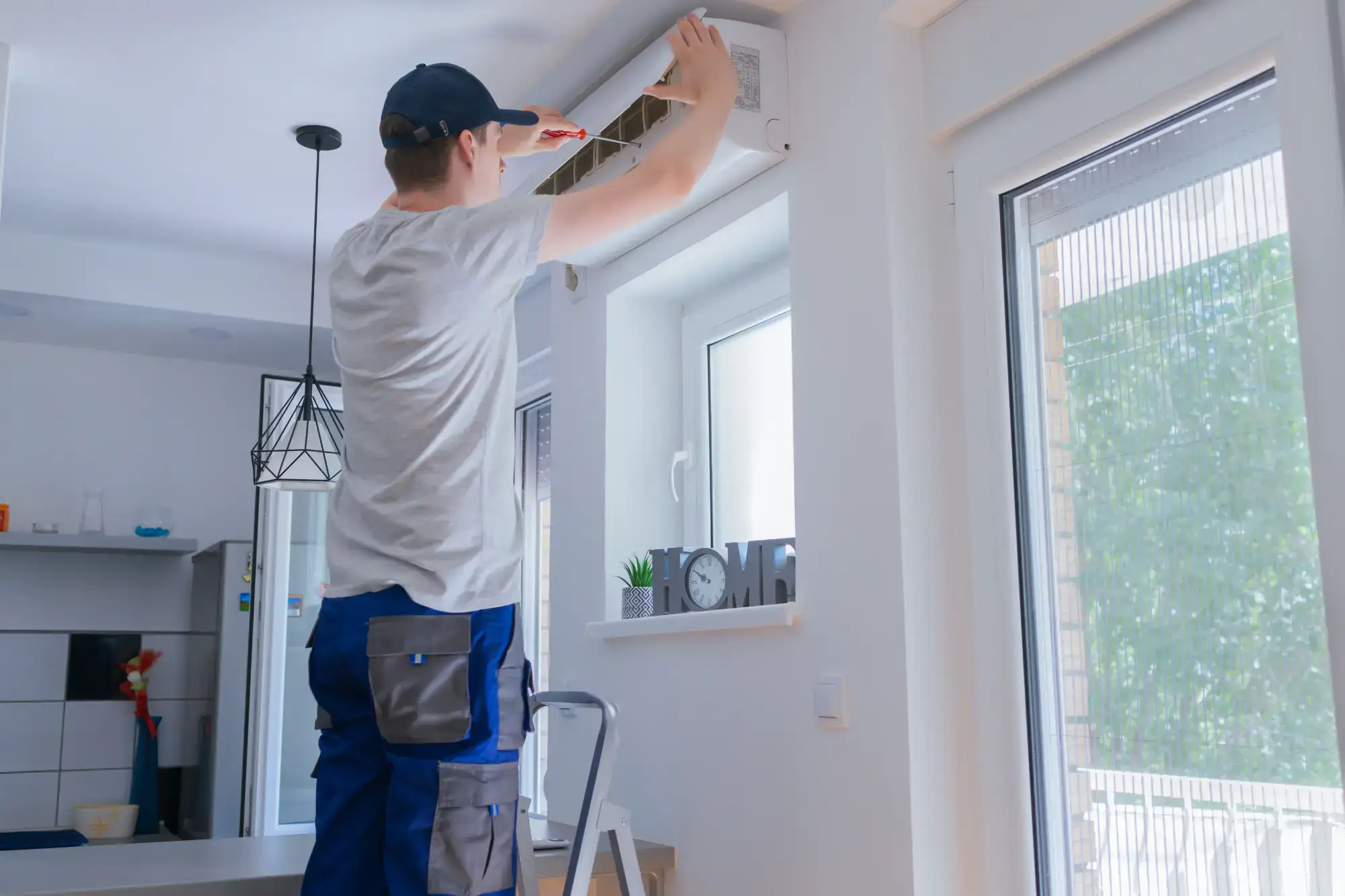
For a mini split, expect to pay somewhere between $3,000 and $5,000 for a single-zone installation. Multi-zone systems — where one outdoor condenser powers multiple indoor units throughout the home — run higher, with the New York State average sitting around $4,600 and the range extending to $16,000 or more for larger whole-home setups. Central air replacement in a home with existing ductwork typically runs less upfront, but that changes dramatically if new ductwork is part of the equation.
How Federal Tax Credits and NY Rebates Affect the Real Cost in Queens County
Upfront cost is only part of the picture. For 2025, qualifying high-efficiency heat pump mini split installations are eligible for a federal tax credit of up to $2,000 through the Inflation Reduction Act. New York State’s Clean Heat program also offers rebates for ductless heat pump installations, which can further reduce what you pay out of pocket. These incentives are available now and subject to change, so if you’ve been sitting on the decision, this year is a reasonable time to move.
Beyond the installation cost, operating costs matter just as much over the life of the system. Queens County residents pay some of the highest electricity rates in the country — typically between $0.20 and $0.30 per kilowatt-hour or more. That makes efficiency gains more financially meaningful here than in lower-cost markets. A mini split that reduces your energy consumption by 25 to 40 percent compared to an older central air system isn’t just a line item on a spec sheet — it translates to real money off your ConEd bill every month.
Payback periods for high-efficiency mini splits generally fall between four and ten years depending on usage, climate, and the efficiency of whatever system you’re replacing. In Queens County, where summers are hot and humid and the urban heat island effect pushes temperatures even higher in dense neighborhoods, systems tend to earn back their cost on the shorter end of that range. Factor in the rebates and tax credits, and the math gets more favorable still.
One thing worth repeating: improper installation can reduce a system’s real-world efficiency by up to 30 percent. A low quote that results in an undersized unit, a poorly routed line set, or skipped permits doesn’t save you money — it costs you more over time. Pulling permits, sizing the system correctly with a proper load calculation, and using quality equipment from brands like Trane, Carrier, or Fujitsu are what separate a good installation from one you’ll be calling someone to fix in two years.
Which System Fits Your Queens County Home Type? A Practical Guide
Queens County is one of the most housing-diverse counties in the country, and that diversity matters when you’re making an HVAC decision. There’s no single right answer, but there are patterns worth knowing.
If you’re in a post-war single-family home in Bayside, Whitestone, Queens Village, or Hollis — the kind built between the 1940s and 1970s with existing ductwork — central air replacement is often the most practical and cost-effective choice, assuming the ducts are in decent condition. These homes were designed with forced-air systems in mind, and a quality central air replacement can be done cleanly and efficiently without major renovation.
If you’re in a pre-war attached house or row home in Flushing, Elmhurst, or Jackson Heights, you almost certainly have a boiler for heat and no ductwork at all. For you, mini splits aren’t just an option — they’re often the only realistic way to add whole-home cooling without tearing into walls and ceilings to run new ducts. A multi-zone mini split system can condition every room in the house from a single outdoor unit, with each indoor handler controlled independently.
Forest Hills is its own case. The Tudor-style homes in Forest Hills Gardens are architecturally significant, and running ductwork through them would be disruptive and expensive. Mini splits are increasingly the preferred solution here — they require only a small wall penetration and preserve the home’s interior. Astoria and Long Island City, with their mix of pre-war walk-ups and newer condos, lean heavily toward ductless systems for the same reason.
For homeowners in Douglaston, Little Neck, or Jamaica Estates — typically larger detached homes with more square footage — a whole-home multi-zone mini split system or a central air system with well-maintained ductwork both deserve serious consideration. The deciding factor usually comes down to ductwork condition and how many rooms need independent temperature control. If you’re running a home office, a finished basement, or a room addition that never gets comfortable with the existing system, a mini split added to supplement central air is also a practical middle-ground option that more Queens County homeowners are choosing.
Ready to Find Out Which System Makes Sense for Your Queens County Home?
The mini split vs central air question doesn’t have a universal answer — it has a right answer for your specific home, your existing infrastructure, and what you’re trying to accomplish. For most Queens County homeowners, the decision comes down to one thing: what you’re starting with. Good ductwork points toward central air. No ductwork, or aging ducts that are bleeding efficiency, points toward ductless.
What makes the difference in getting this right isn’t the research you do online — it’s the assessment you get in person. A contractor who actually looks at your home, checks your ductwork, sizes the system correctly, and gives you a straight answer without steering you toward whatever’s most convenient for them is worth finding.
That’s what we’ve been doing throughout Queens County for well over a decade. If you’re ready to stop guessing and get a real answer for your home, give us a call at 718-428-6987. We’ll tell you what makes sense — and what doesn’t.