Summary:
Most Queens County homeowners don’t think about their heating system until the first cold night hits — usually sometime in late October — and suddenly the house isn’t warming up the way it should. By then, every HVAC company in the borough is slammed, wait times stretch into weeks, and what could have been a $150 tune-up turns into something far more expensive and stressful.
Fall maintenance isn’t a luxury. It’s the thing that keeps a manageable situation from becoming an urgent one. Here’s what you actually need to know before winter arrives.
Heating System Maintenance: What Fall Service Actually Covers
A lot of homeowners assume a “tune-up” means someone comes out, takes a quick look, and hands you a bill. That’s not what a proper heating system maintenance visit looks like. Done right, it’s a thorough inspection and service of every component that keeps your system running safely and efficiently through a Queens County winter.
Our licensed technicians check and clean the heat exchanger, test combustion efficiency, inspect the flue system, verify electrical connections, lubricate moving parts, and calibrate the thermostat. We also test for carbon monoxide — something we include as standard on every residential heating call, because a cracked heat exchanger is invisible to the naked eye but detectable with the right equipment.
The goal isn’t just to confirm the system turns on. It’s to catch what’s quietly developing before it becomes a breakdown.
Winter HVAC Preparation: What Queens County Homeowners Should Do Before October
Queens County has a housing stock unlike most of the country. A significant portion of homes — particularly in Flushing, Astoria, Jackson Heights, and older parts of Forest Hills — run on steam or hot water boiler systems rather than the forced-air furnaces you see in newer construction. That matters because boiler maintenance is a different process than furnace maintenance, and a lot of generic seasonal checklists don’t account for it.
For homes with a gas furnace, fall preparation means replacing the air filter (if you haven’t done it in the last one to three months), clearing any debris from around the outdoor unit, making sure all vents and registers are open and unobstructed, and scheduling a professional inspection before the heating season starts. The filter is the one thing you can and should handle yourself. Everything else — combustion testing, heat exchanger inspection, refrigerant levels, electrical connections — requires tools and training that go beyond a weekend project.
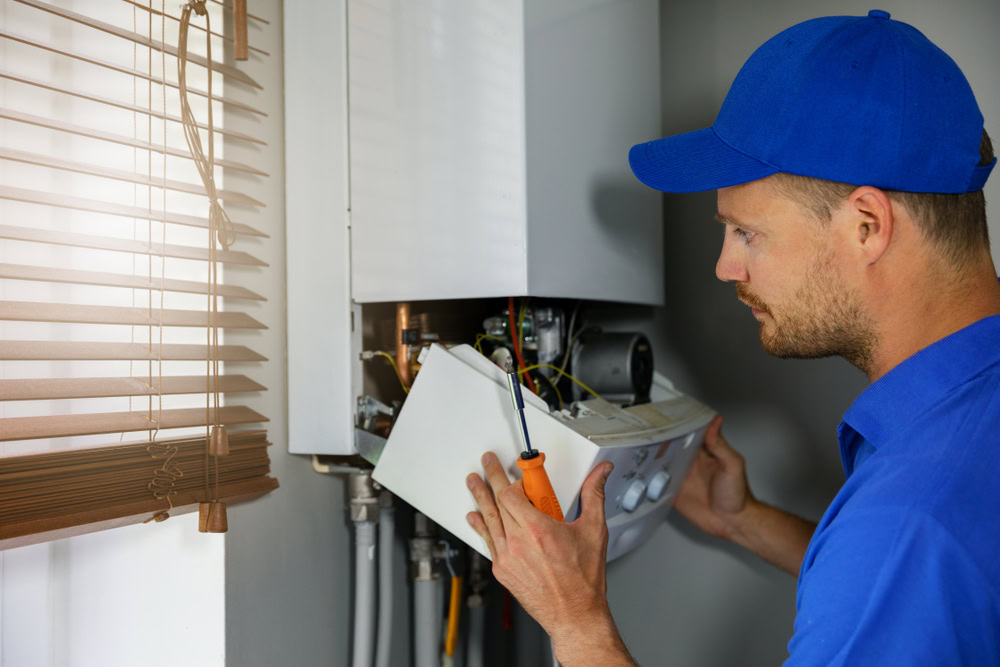
For homes with a boiler, the checklist shifts. Annual service should include a pressure check, water level inspection, burner cleaning, and a full safety assessment. Older boilers are more likely to have sediment buildup, worn seals, and pressure irregularities — and they’re more likely to have gone years without a proper look. If your boiler has been running for 20 or 30 years without a documented service visit, that’s not a sign it doesn’t need one. It’s the opposite.
One thing that applies to every system in every Queens County home: check your carbon monoxide detectors. Replace the batteries. If your detectors are more than five to seven years old, replace the units entirely. A professional inspection catches what detectors can’t, but working detectors are the last line of defense if something goes wrong between service visits.
The timing matters too. September and early October are the window. Once the first real cold snap hits — and in Queens County, that can happen fast — HVAC companies are fielding emergency calls around the clock. Scheduling fall maintenance before that surge means shorter wait times, more flexibility, and the peace of mind of knowing your system has been properly checked before you actually need it.
Furnace Maintenance Checklist: What a Pro Checks That You Can't
There’s a version of this conversation where someone tells you that changing your filter twice a year is basically all you need to do. That’s not accurate, and it’s worth being direct about why.
The filter is the most accessible part of your system, and keeping it clean genuinely matters — a clogged filter forces your system to work harder, drives up your Con Edison bill, and accelerates wear on the blower motor. But the filter is also the only component a homeowner can realistically service without specialized equipment. Everything else on a proper furnace maintenance checklist requires tools, training, and in many cases, licensing.
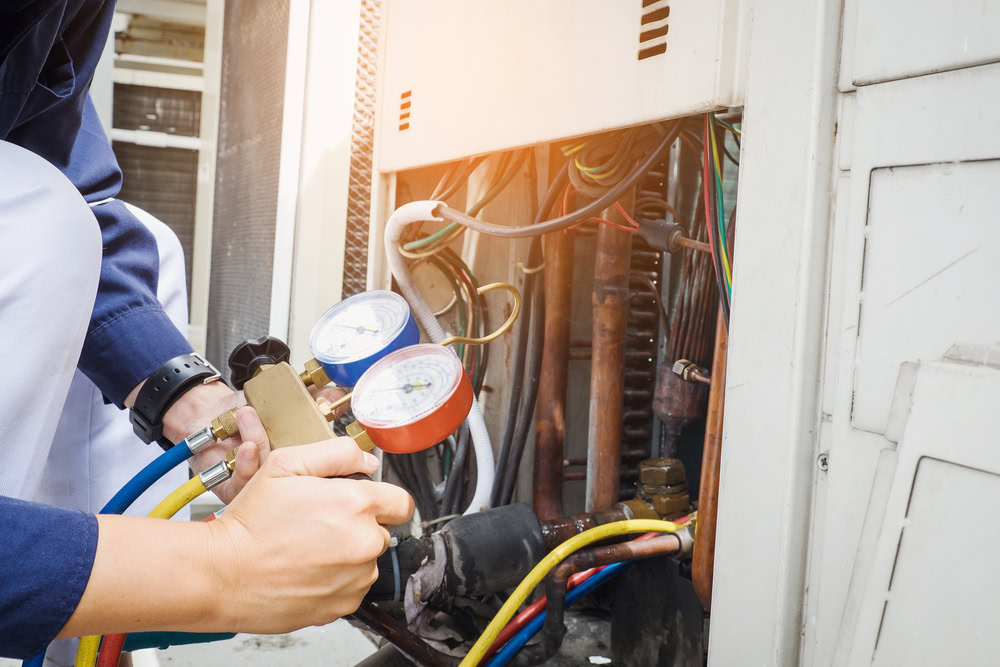
Heat exchanger inspection is a good example. A cracked heat exchanger can allow carbon monoxide to leak into your living space. It produces no visible signs, no smell, and no warning from the system itself. The only way to identify it is with a combustion analyzer and a trained eye — something we bring on every visit. This is exactly why we include CO and combustion testing as standard on every heating service call, not as an add-on.
Electrical connections are another area that often gets overlooked in DIY maintenance guides. Loose or corroded connections cause unsafe operation and quietly reduce the lifespan of major components. Tightening and testing those connections takes about ten minutes for a technician with the right tools, and it’s the kind of thing that prevents a compressor or blower motor from failing mid-January.
Refrigerant levels, ignition system testing, condensate drain cleaning, blower component adjustment — these aren’t complicated concepts, but they do require someone who works on systems daily and knows what normal looks like versus what’s quietly heading toward a problem. The value of a professional maintenance visit isn’t just the tasks themselves. It’s the trained judgment behind them.
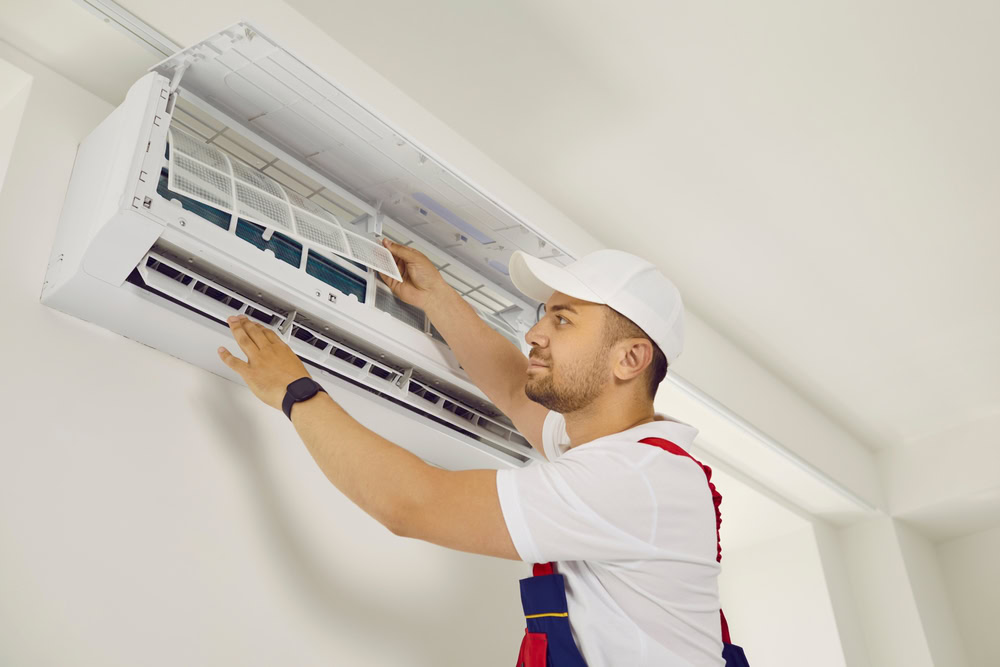
For Queens County homeowners with Fujitsu or Mitsubishi ductless mini-split systems, fall maintenance has its own specific requirements: filter cleaning, coil inspection, drain line checks, and refrigerant verification. These systems are efficient and reliable when properly maintained, but they’re not maintenance-free, and the service process is different enough from a standard furnace that it matters who you call.
Furnace Maintenance Checklist: Pre-Winter Service in Queens County, NY
If you want a simple framework for fall HVAC system maintenance, here’s how to think about it. There are tasks you should handle yourself on a regular basis, tasks that belong on a professional’s checklist before winter, and warning signs that mean you shouldn’t wait for a scheduled appointment at all.
The DIY side is straightforward: replace your air filter every one to three months, keep the area around your outdoor unit clear of leaves and debris, make sure your vents aren’t blocked by furniture or rugs, and test your thermostat to confirm it’s switching correctly from cooling to heating mode. These are things any homeowner can do without tools or training.
The professional side is where the real protection happens — and where skipping service creates the kind of problems that show up on the coldest night of the year.

How to Transition Your HVAC System From Cooling to Heating Mode
Queens County summers are legitimately brutal. The humidity alone puts serious stress on cooling systems, and by the time September rolls around, your air conditioner has been running hard for four or five months. That’s worth keeping in mind when you’re thinking about fall preparation — the transition from cooling to heating mode isn’t just about flipping a switch.
Before you shift your system over to heat, it’s worth doing a basic visual check of your outdoor unit. Clear away any leaves, grass clippings, or debris that accumulated over the summer. If you’re near the water — Bayside along the Long Island Sound, Howard Beach near Jamaica Bay — salt air accelerates corrosion on condenser fins and coils, and a quick inspection can catch early rust before it becomes a real problem.
Inside, switch your thermostat to heating mode and run the system for a short cycle before cold weather actually arrives. Listen for anything unusual: rattling, banging, or a burning smell during the first few minutes of operation. A brief burning smell at startup can be normal if the system has been sitting idle — dust burning off the heat exchanger — but it should clear quickly. If it doesn’t, or if you hear mechanical noises that weren’t there before, that’s a signal to have it looked at before you’re relying on it for warmth.
If your home has central air and a gas furnace sharing the same ductwork, fall is also a good time to think about duct condition. Older homes in neighborhoods like Woodside, Maspeth, and Ridgewood sometimes have ductwork that hasn’t been inspected in decades. Leaky or dirty ducts don’t just reduce efficiency — they affect indoor air quality and make your system work significantly harder than it needs to.
The transition from summer to winter is also the best time to schedule a professional inspection if you haven’t already. Our technicians can assess both your cooling system’s condition after a hard summer and your heating system’s readiness for winter in a single visit — which is more efficient and often more cost-effective than two separate appointments.
Is HVAC Maintenance Worth It? The Real Cost of Skipping It in Queens County
This is the question a lot of homeowners actually want answered, and it deserves a straight answer.
The Department of Energy estimates that proper HVAC maintenance can reduce energy consumption by five to twenty percent annually. For a Queens County homeowner paying Con Edison bills through a long heating season, that’s a real number. A system running at reduced efficiency because of dirty coils, a clogged filter, or poor combustion calibration is spending your money every month without you realizing it.
Beyond the energy savings, there’s the equipment lifespan argument. A well-maintained furnace should last fifteen to twenty years. Systems that go without regular service typically fail years earlier. A professional tune-up costs somewhere between $100 and $200. Replacing a furnace costs several thousand dollars. The math isn’t complicated.
There’s also the warranty issue, which most homeowners don’t find out about until it’s too late. Many HVAC manufacturers — including Trane and Carrier, the brands we install and service — require documented professional maintenance as a condition of honoring their warranties. If your system fails and you can’t show a service record, you may be looking at a full out-of-pocket repair or replacement on a system that should have been covered.
And then there’s the emergency cost. An HVAC breakdown during a Queens County winter — especially during a nor’easter or a sustained cold snap — means emergency service rates, longer wait times, and the very real possibility that the part you need isn’t immediately available. A $150 fall tune-up that catches a failing igniter or a worn blower belt before winter is always cheaper than a 2 AM emergency call in January.
We’ve been doing this work in Queens County and Long Island for over thirty years, operating out of Bayside. We’ve seen what deferred maintenance looks like when it finally catches up with a homeowner. It’s almost always more disruptive and more expensive than the service call that would have prevented it.
Schedule HVAC Maintenance Before Queens County Winter Arrives
The window for fall maintenance is real, and it closes faster than most people expect. By mid-October, the first cold nights are already arriving in Queens County, and HVAC companies are fielding calls from homeowners who waited too long. Getting your system checked in September means you’re ahead of that curve — not scrambling in the middle of it.
The short version of everything above: change your filter regularly, clear your outdoor unit, test your thermostat before you need it, and schedule a professional inspection before the heating season starts. If you have an older boiler, a ductless mini-split, or a system that hasn’t been serviced in a few years, don’t put it off.
If you’re in Queens County and you want a straight answer about what your system actually needs — no pressure, no unnecessary upsells — reach out to us. You can call Excellent Air Conditioning and Heating Service directly at 718-428-6987. We’re available around the clock for emergencies, but we’d much rather help you avoid one.