Summary:
Queens County summers are no joke. The heat index pushes past 100°F, the humidity off Jamaica Bay makes everything feel heavier, and when your AC goes down — whether it’s 2 PM or 2 AM — you need answers fast. Not a voicemail. Not a three-day wait. Real help, the same day.
This guide covers what most AC problems actually are, what they cost to fix, and how to know when a repair makes sense versus when it’s time to move on. We’ve been doing this work in Queens County and Long Island for over 30 years, and we’ve seen every scenario. Here’s what we’d tell you if you called us right now.
HVAC Repair: What's Actually Wrong With Your System
Most AC problems aren’t as catastrophic as they feel in the moment. A system blowing warm air, short-cycling, or making a grinding noise is alarming — but it doesn’t automatically mean you need a new unit. The majority of calls we get in Queens County come down to a handful of common issues: a failed capacitor, a refrigerant leak, a dirty coil, or an electrical fault that a licensed technician can diagnose and fix in a single visit.
The trouble is that without knowing what you’re looking at, it’s easy to assume the worst — or to trust a technician who tells you the worst without showing you the evidence. That’s why a thorough diagnostic matters as much as the repair itself. You should always know what was found, why it failed, and what fixing it will cost before anyone touches your system.
AC Unit Repair: The Most Common Problems We See in Queens County Homes
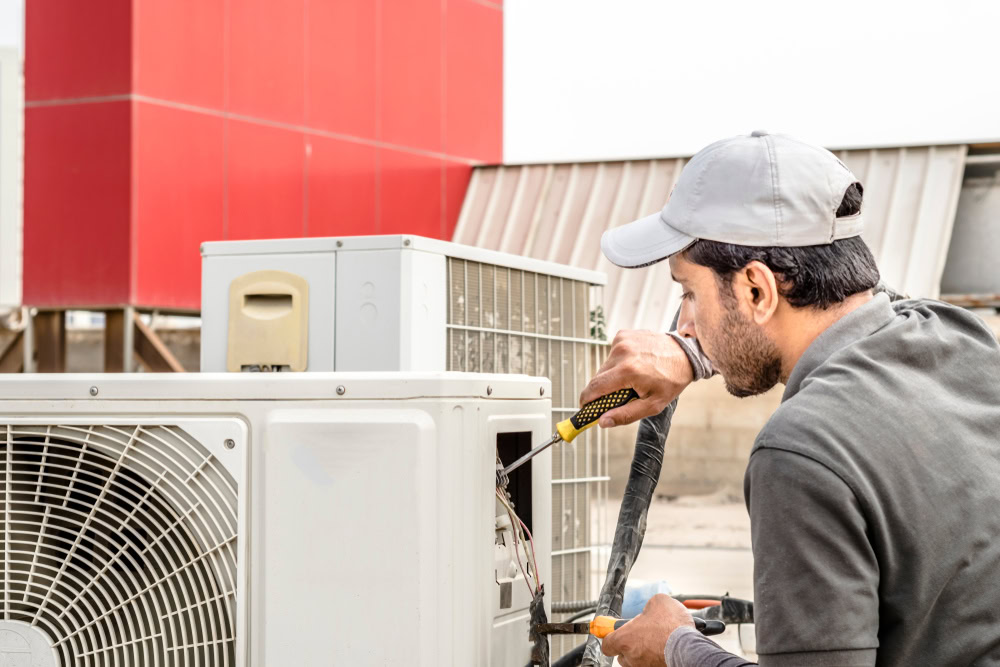
Capacitor failure is one of the most frequent repairs we handle — and one of the most misunderstood. The capacitor is a small electrical component that gives your compressor and fan motors the jolt they need to start up. When it fails, the system either won’t turn on at all or will struggle to start and then shut back off. It’s a straightforward fix, typically running between $120 and $400, and it takes less than an hour. The problem is that a failed capacitor can look identical to a failed compressor from the outside — and a compressor replacement costs anywhere from $800 to $2,800. That gap is exactly why misdiagnosis is such a costly issue in this industry. Studies suggest up to 30% of diagnosed compressor failures are actually electrical problems or clogged lines. A second opinion on any major repair is always worth it.
Refrigerant issues are another story. If your system is low on refrigerant, it means there’s a leak — refrigerant doesn’t get used up like gasoline. Recharging without finding and fixing the leak is just delaying the problem. A proper repair involves locating the leak, sealing it, and then recharging the system. For modern R-410A systems, a recharge typically runs $100 to $350. If your home has an older system still running on R-22 — which was phased out federally in 2020 — that cost can jump to $600 or more, and the supply is only getting tighter. Queens County has a significant stock of homes built in the 1950s through 1970s, and many of those systems are still running on R-22. If that’s your situation, it’s worth having an honest conversation about whether continued repair makes financial sense.
Frozen evaporator coils, clogged condensate drains, and faulty thermostats round out the list of common issues. Many of these are maintenance-related — they develop over time when a system isn’t serviced annually. Queens County’s humidity puts extra strain on condensate drainage systems in particular. When moisture can’t drain properly, it backs up, triggers safety shutoffs, and can cause water damage if left unaddressed.
How to Know When to Call a Pro vs. Handle It Yourself
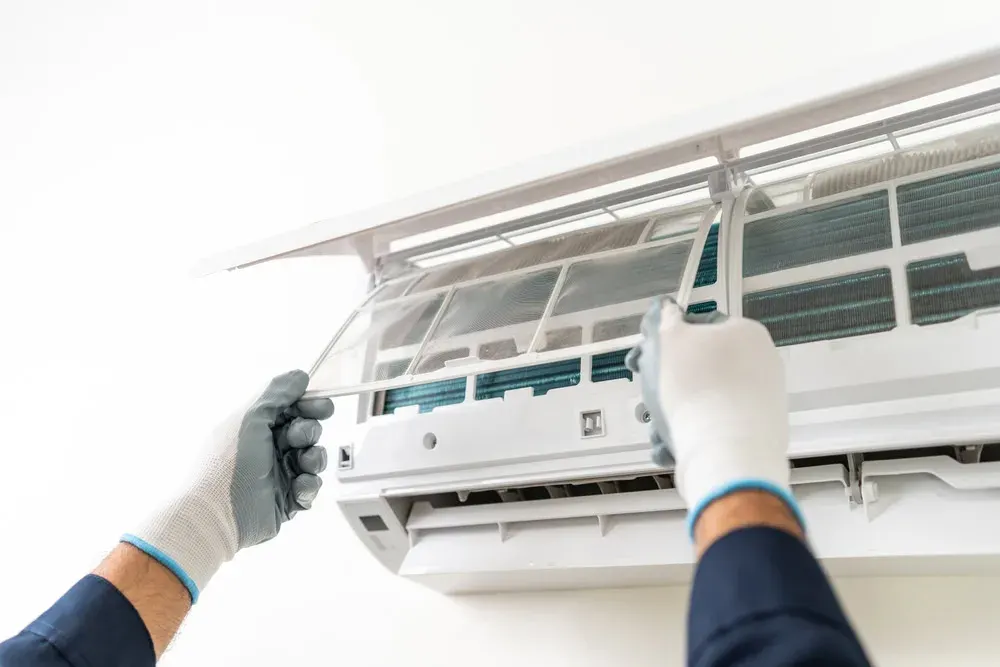
There are a few things you can safely check before picking up the phone. Start with the obvious: make sure the thermostat is set to cool and the temperature is set below the current room temperature. Check your air filter — a clogged filter restricts airflow so severely that it can cause the entire system to shut down or freeze up. If the filter looks gray and matted, replace it and give the system 30 minutes to recover. Check that the circuit breaker for the AC hasn’t tripped, and make sure the outdoor unit’s disconnect switch (usually a small box near the unit) is in the on position.
That’s about where the safe DIY list ends. Anything involving refrigerant is federally regulated — handling it without EPA Section 608 certification is illegal, and it’s also genuinely dangerous if you don’t know what you’re doing. Electrical components inside the air handler and condenser carry enough voltage to be lethal. And diagnosing a compressor, coil, or control board issue without the right tools leads to expensive guesswork.
If you’ve checked the basics and the system still isn’t working, the right move is a professional diagnostic. A good technician will tell you exactly what they found, explain why it happened, and give you a written quote before any work begins. If they can’t do that, find someone who can. We give every customer a full breakdown of what’s wrong and what it costs to fix before we start — that’s not a policy we invented, it’s just how honest work gets done.
AC Capacitor Replacement Cost — and Why This Repair Comes Up So Often
Capacitor replacement is probably the most common single repair in residential HVAC, and it’s worth understanding because it’s also one of the most frequently upsold. A capacitor costs between $10 and $50 in parts. The total repair cost — parts and labor — typically lands between $120 and $400 depending on the system and the time of day you call. That’s it. It’s a one-hour job for an experienced technician.
The reason it matters is that capacitor failure mimics the symptoms of much more expensive problems. A system that won’t start, hums but doesn’t run, or kicks on and immediately shuts off could be a capacitor — or it could be a compressor, a contactor, or a refrigerant issue. A thorough diagnostic tells you which one it actually is.
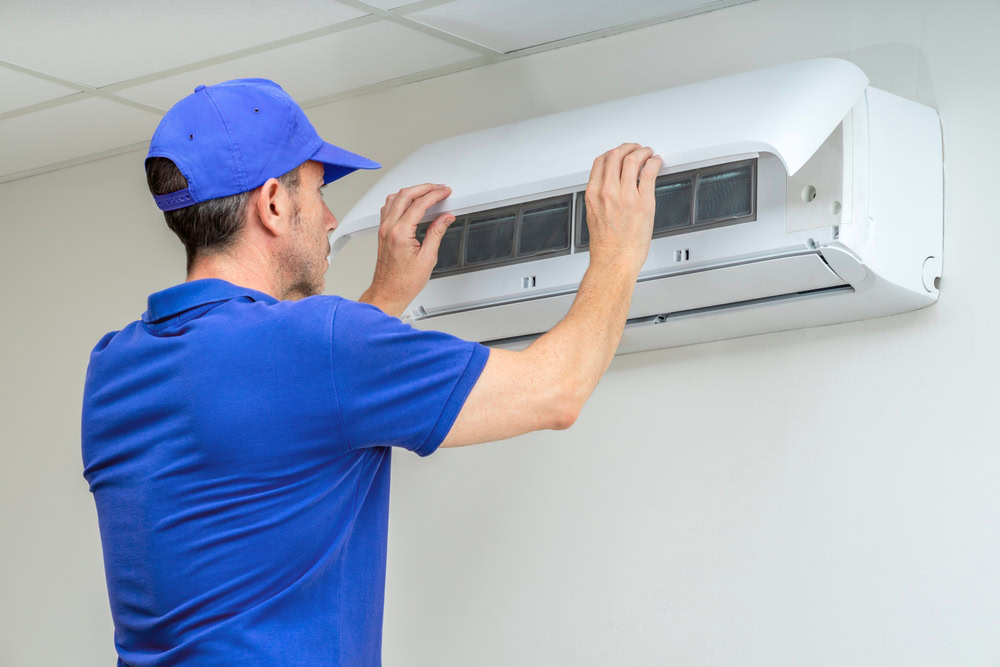
HVAC Capacitor Replacement Cost: What You Should Expect to Pay
The honest range for a capacitor replacement in Queens County is $120 to $400 for most residential systems. Where you land in that range depends on whether it’s a run capacitor or a dual-run capacitor (which handles both the compressor and the fan motor), the specific system make and model, and whether you’re calling during regular hours or at 10 PM on a Saturday in July.
Emergency or after-hours service does carry a premium — typically 150 to 200% above standard daytime rates during peak season. That’s real, and we won’t pretend otherwise. But a $300 emergency capacitor replacement is still a fraction of what a new system costs, and it gets your AC running the same night. For a lot of Queens County families — especially those with young kids, elderly relatives, or anyone with a health condition aggravated by heat — that math is simple.
One thing worth knowing: if your capacitor has failed and your system is more than 12 to 15 years old, it’s worth asking your technician to evaluate the overall condition of the unit while they’re there. A capacitor failure in an aging system is sometimes the first in a series of component failures. It doesn’t mean you automatically need a new system, but it’s useful information to have before you invest in repairs. We always give customers that context — not to push a replacement, but because you deserve to make an informed decision about your own equipment.
If your system is newer, a capacitor replacement is almost always the right call. Modern systems are built to last 15 years or more with proper maintenance, and replacing a $200 capacitor on a five-year-old unit is straightforward and sensible.
There’s a practical rule that’s been around the HVAC industry for years: multiply the cost of the repair by the age of the unit in years. If that number exceeds $5,000, replacement is usually the smarter financial move. So if you’re looking at a $600 repair on a 10-year-old system, that’s $6,000 — and at that point, putting that money toward a new system starts to make more sense than extending the life of aging equipment.
The average cost of air conditioner replacement for a central system in the Queens County area runs between $4,350 and $12,095 depending on the size of the home, the system brand, efficiency rating, and whether any ductwork needs to be updated. A standard 3-ton central AC unit — which covers roughly 1,500 to 2,000 square feet, the most common size range for Queens County single-family homes — typically runs around $5,750 installed nationally. In New York, where labor costs and permit requirements add to the total, budget toward the upper end of that range.
Air conditioning unit replacement cost also depends heavily on efficiency. A minimum-code 14 SEER system will cost less upfront but more to run each month. Given that New York has some of the highest electricity rates in the country, a high-efficiency 18 to 20 SEER system often pays for the premium within a few years of operation. We walk through that calculation with every customer considering a replacement — because the sticker price and the total cost of ownership are two different numbers, and you should know both before you decide.
For Queens County homeowners in older homes — particularly the attached and semi-detached houses common in neighborhoods like Bayside, Fresh Meadows, and Forest Hills — replacement sometimes involves ductwork updates as well. If the existing ductwork is undersized, leaking, or was never designed for modern high-efficiency equipment, that adds to the project cost but also affects how well the new system performs. We assess ductwork as part of every replacement estimate so there are no surprises after installation.
AC Repair in Queens County, NY: What to Do When Your System Goes Down
Queens County summers are long, humid, and unforgiving on AC equipment. Southeast Queens in particular sits in one of the hottest urban heat zones in the city, and with the borough having fewer public cooling centers per resident than any other part of NYC, your home system isn’t a luxury — it’s a necessity.
Most repairs are more manageable than they feel in the moment. A capacitor, a refrigerant leak, a clogged drain — these are fixable problems with predictable costs. The key is working with someone who will tell you the truth about what’s wrong, give you a written price before starting, and show up when they say they will. That’s what 30 years of doing this work in Queens County and Long Island has taught us: people don’t need to be sold. They need straight answers and a technician who actually shows up.
If your AC is struggling or has already stopped working, we’re available 24 hours a day — same-day service for most calls before 3 PM, emergency response around the clock for everything else. Call our Queens County line at 718-428-6987 and we’ll tell you exactly what’s going on.
—
**Frequently Asked Questions**
**What do HVAC repair costs typically run for common problems?** For most standard repairs in Queens County — capacitors, refrigerant recharges, electrical components — you’re looking at $125 to $600. More involved repairs like fan motor replacement or evaporator coil work can run $400 to $1,000. Compressor replacement is the most expensive single repair, ranging from $800 to $2,800 depending on the system and whether it’s still under warranty. We provide written quotes before any work begins, so there are no surprises.
**What does it cost to replace a central air unit in Queens County, NY?** A full central air replacement in Queens County typically runs between $4,350 and $12,095, depending on system size, efficiency rating, brand, and whether ductwork needs updating. Queens County homes — particularly the older housing stock in neighborhoods like Bayside, Jamaica, and Forest Hills — sometimes require ductwork evaluation as part of a replacement. Many of these properties were built decades ago with systems that weren’t designed for modern high-efficiency equipment. We walk through all of that upfront so you know the full picture before committing.
**What are typical HVAC repair prices for after-hours or emergency calls?** Emergency and after-hours service generally runs 150 to 200% of standard daytime rates during peak season. That premium is real, but so is the alternative — going without AC during a Queens County heat wave isn’t just uncomfortable, it can be dangerous. We’re available 24/7 at 718-428-6987, and we’ll always tell you the cost before we start.
**What’s the installed price for a 3-ton AC unit?** A 3-ton central AC unit — the most common size for Queens County single-family homes in the 1,500 to 2,000 square foot range — runs approximately $5,750 installed on a national average. In the New York metro area, expect to be toward the upper end of that range given local labor rates and permit requirements. High-efficiency models will cost more upfront but meaningfully less to operate month to month, which matters in a market with electricity rates as high as New York’s.