Summary:
Your furnace is running, but the air coming out of the vents feels cold. Or it kicks on, quits after a few minutes, and starts again, and you’re wondering whether that’s normal. Either way, you want to know two things: can you fix this in five minutes, and if not, how bad is it?
We’re based in Bayside, Queens, and we work on both sides of the Queens–Nassau line. We’d rather you spend ten minutes on a few free checks than pay for a service call you didn’t need. This post covers nine common furnace problems, which ones you can safely look at yourself, and where to stop and pick up the phone.
Nine Common Furnace Problems in Nassau County and Queens Homes
Most furnace trouble falls into nine buckets: a clogged filter, thermostat settings, ignition or flame sensor failure, a tripped high-limit switch, a weak blower motor or capacitor, short cycling, strange noises, a cracked heat exchanger, and plain old age. The first two are yours to handle. The rest, not so much.
Age matters here more than people expect. A lot of homes in Nassau County and Queens are postwar Cape Cods, ranches, and split-levels, and many have heating equipment tucked into a basement or utility closet that has been running for years. According to one Long Island heating-oil supplier, about 59% of Long Island homes heat with oil, compared with under 9% nationally, so a guide written for gas furnaces doesn’t always fit your house. Our work centers on gas furnaces and boilers, and if you’re not sure what you have, that’s an easy thing to ask us when you call.
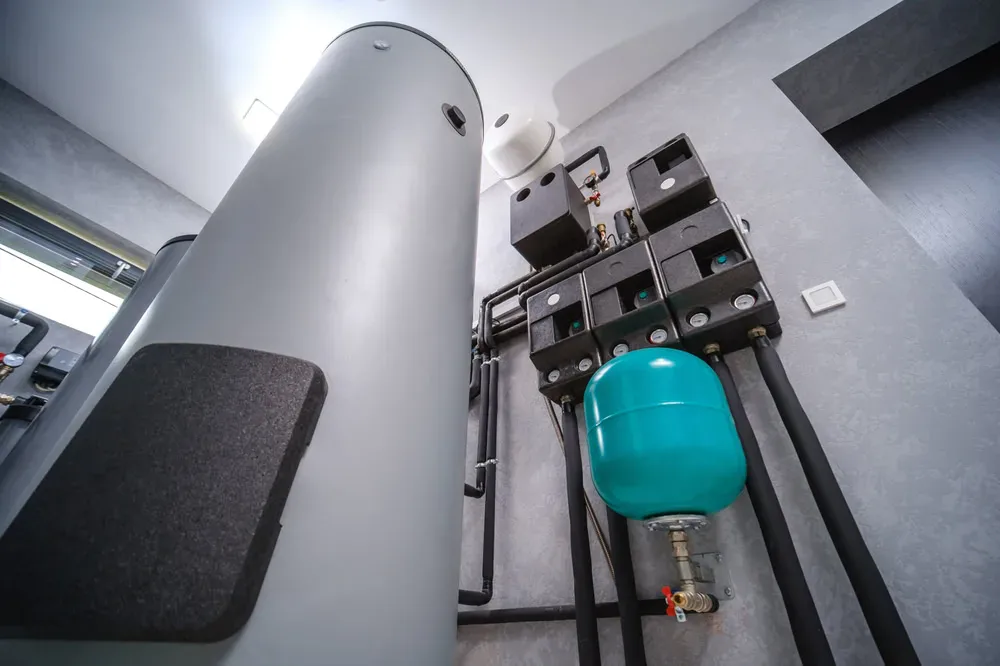
Why Is My Furnace Not Blowing Hot Air?
Start with the least dramatic explanation, because it’s the most common one. Look at your thermostat. If the fan is set to On instead of Auto, the blower runs constantly and pushes out air even when the burners are off, and that air feels cold. Flip it to Auto, set the temperature a few degrees above the room, and give it several minutes.
Next, check the filter. A clogged filter chokes airflow, and a furnace that can’t move air can overheat and shut itself down, or just deliver weak, lukewarm heat. If you can’t remember the last time you changed it, change it now. That one fix clears up more cold-air complaints than most people would guess, and it costs you a trip to the hardware store.
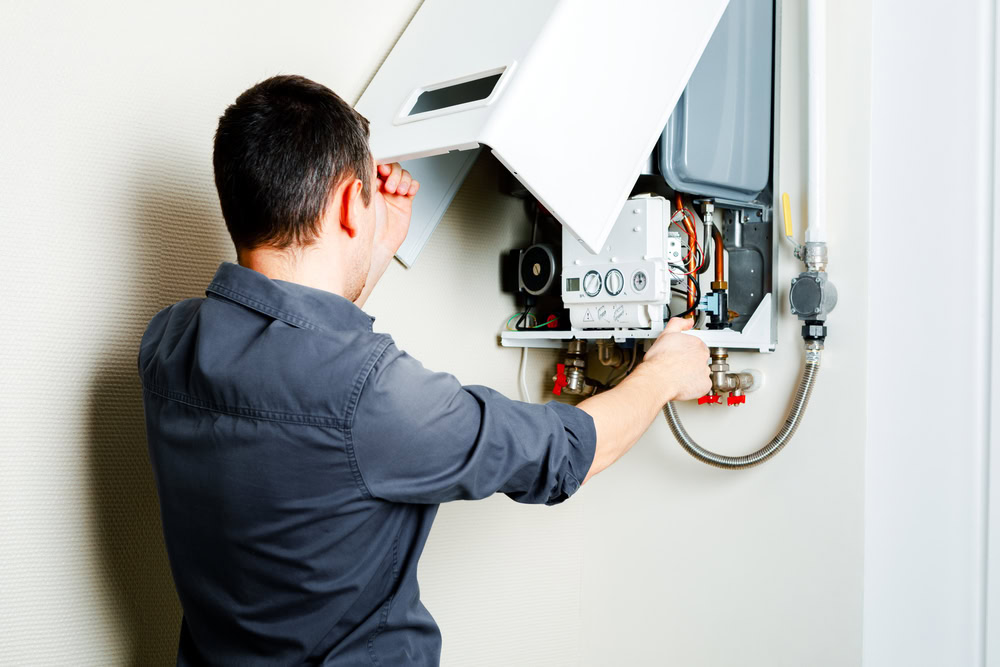
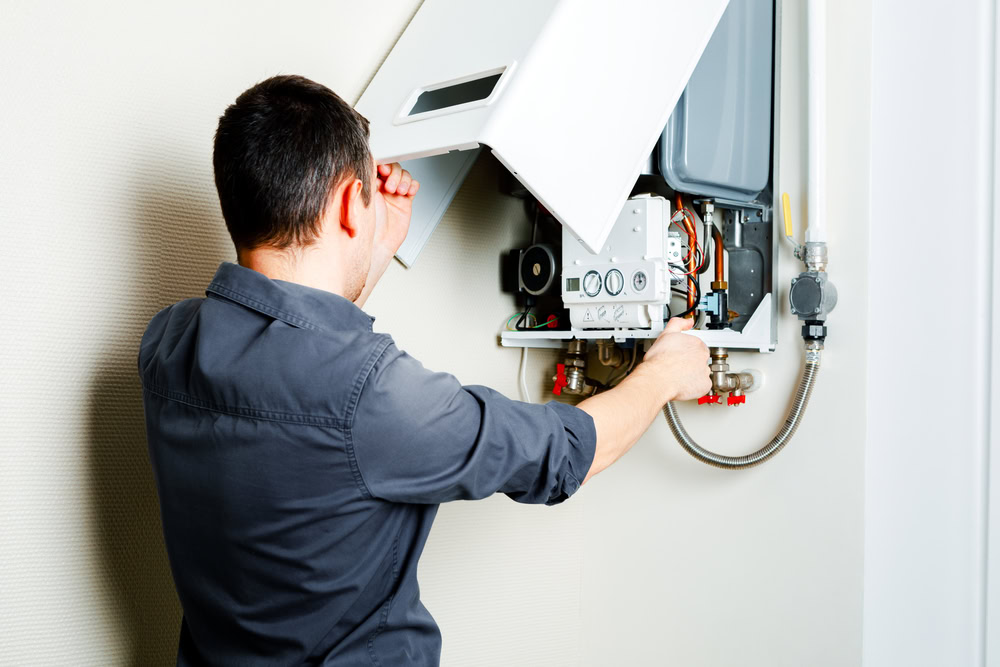
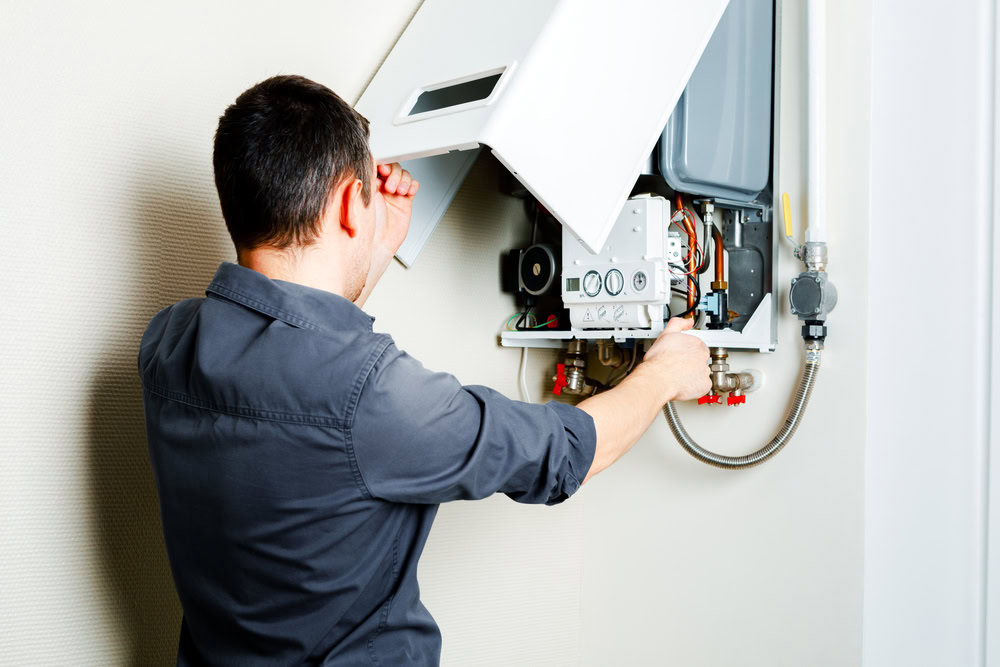
If the thermostat and filter check out, the cause is probably inside the furnace, and that’s where we’d ask you to stop. A blower that runs with no flame usually points to an ignition, pilot, or flame sensor problem. You hear the fan, but you never feel heat. Another possibility is the high-limit switch, a safety control that cuts the burners when the furnace gets too hot. A filter or airflow problem can set it off. Resetting these parts doesn’t fix anything, because if one keeps tripping, something is making it trip, and finding that out takes testing equipment and training.
So check the thermostat, change the filter, and make sure furniture or rugs aren’t blocking vents and returns. Don’t pull panels off the furnace to poke around. If the air is still cold after that, it’s time to call us.
Why Does My Furnace Keep Turning On and Off?
That on-off pattern is called short cycling. The furnace fires up, runs a few minutes, shuts down before the house is warm, then starts again. It wears out parts faster, pushes up your bill, and never quite heats the place.
The cause is often the same airflow problem we just covered. A dirty filter or blocked vents let the furnace overheat, the high-limit switch shuts it down, and the cycle repeats. So check the filter first. It’s the one thing you can do safely, and if it’s filthy, replacing it may settle things down.
If the filter is clean and the cycling continues, you’re likely looking at a failing blower motor or capacitor, a flame sensor that isn’t reading properly, or a thermostat in a bad spot. One community repair write-up ties blower failure to a filter left clogged for too long, which is a good argument for changing it on a schedule. None of these is a DIY repair, and a struggling blower can quit completely just when you need heat most.
Noise belongs in this conversation too. A furnace has normal sounds, like a click at startup and a hum while the blower runs. A loud bang when it lights, a squeal, or a grinding sound isn’t normal, and it usually means something is worn, loose, or igniting late. Write down what you hear and when, because a good description helps us a lot over the phone. If you smell gas or burning, or a carbon monoxide alarm goes off, don’t troubleshoot. Get everyone out of the house and call your gas utility or 911 from outside.
When to Call for Heating Repair in Nassau County, NY
Here’s the dividing line we’d give a neighbor. Anything you can do without opening the furnace, like thermostat settings, the filter, and open vents, is fair game. Anything involving flame, gas, wiring, or a part that keeps tripping is a call. So is a furnace that’s well into its teens.
The two problems that deserve the most respect are a cracked heat exchanger and age-related decline. A cracked heat exchanger can let carbon monoxide into your home, and carbon monoxide has no smell, so you can’t count on your nose. That’s why we include carbon monoxide testing with every residential heating service call in Queens and Long Island, and why a working CO detector in your home matters more than any repair. If something feels off with your furnace, we’re based in Bayside and offer 24-hour service throughout Nassau County and Queens.
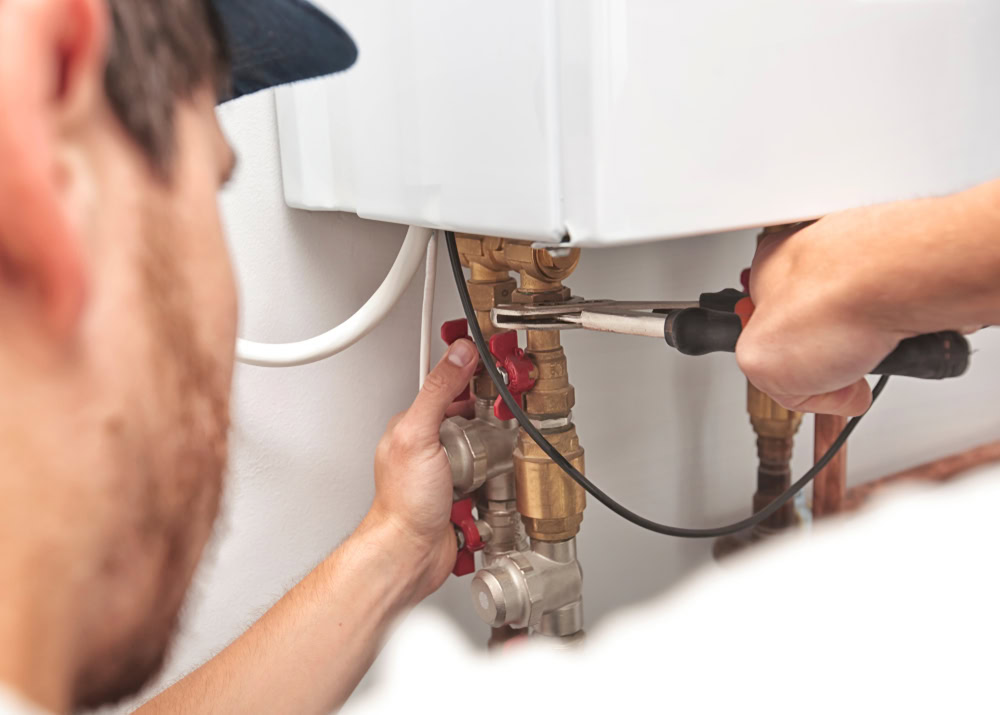
How Much Does Furnace Repair Cost in Nassau County?
Nobody can price a repair without seeing the furnace, but ranges help you tell a fair number from a stretch. HomeAdvisor puts the national average furnace repair at $318, with most homeowners paying between $133 and $505. Angi’s New York City figure runs higher, at an average of $368 and a typical range of $167 to $569. A couple of Long Island contractors list $150 to $500 for common repairs. Those are third-party and contractor figures, not our prices, but they give you a baseline.
Then comes the bigger question: fix it or replace it? A common rule of thumb says to consider replacing when the repair quote passes half the cost of a new furnace and the unit is around 10 years old or more. HomeAdvisor’s average for a new installed furnace is about $4,813, so you’d weigh that against the quote in your hand. Gas furnaces typically last 15 to 20 years, according to Four Seasons, citing ASHRAE and DOE data. A 14-year-old furnace with a small fix is a very different conversation than a 19-year-old furnace with a failing heat exchanger.
An annual inspection averages $80 to $100, per Angi, and that’s where small problems get caught while they’re still cheap. The honest answer to “is it worth repairing?” depends on age, the failed part, and how often you’ve been calling someone lately. Ask for the diagnosis and the number before any work starts, and ask what the warranty covers. We stand behind our work, and we’d rather tell you a repair makes sense than push a new unit you don’t need.
How Do I Choose a Furnace Repair Company in Nassau County?
Start with the license, and know that the answer depends on which side of the line you live on. According to local contractor guides, New York State doesn’t issue a statewide HVAC contractor license. In Nassau County, home improvement work generally goes through a Home Improvement Contractor license from the county’s consumer affairs office. In Queens, it’s a home improvement contractor license from the NYC Department of Consumer and Worker Protection. Those same guides say you can look licenses up online for free. Verify the details yourself before you sign anything, and ask anyone you’re considering, us included, to show you theirs.
Next, ask about insurance and workers’ compensation, and ask who will actually show up at your door. If a repair turns into an installation, ask who pulls the permit. Nassau County has several building departments, including Hempstead, North Hempstead, Oyster Bay, Long Beach, and Glen Cove, and permit processes differ by town. A contractor who works across the county should be able to tell you what yours requires.
Then read reviews for patterns rather than star counts. The things customers tend to mention about us are showing up on time, sometimes early, cleaning up afterward, and taking the time to explain what’s wrong. Those are the habits worth looking for in anyone you hire.
Finally, pay attention to the phone call. Do you get straight answers, or a pitch for a new furnace before anyone has seen yours? A company that explains the cause, shows you the failed part, and gives you the diagnosis before the price is one you can trust, whether it’s us or someone else.
Furnace Trouble in Nassau County or Queens? Here's Where to Start
If you remember one thing, make it this: check the thermostat fan setting and the filter first, because those two fixes cover a surprising number of cold-air and on-off complaints. If the problem continues, stop there. Don’t go chasing a flame, a gas smell, or a noise you can’t explain.
Furnaces in older Nassau County and Queens homes can go either way, and the smartest move is an honest read on age, cost, and safety before you decide anything. That’s the conversation we like having. If your furnace is acting up anywhere in Nassau County or Queens, call Excellent Air Conditioning and Heating Services Inc, tell us what you’re seeing and hearing, and we’ll help you work out whether it’s a quick fix or something bigger.