Summary:
You search “NYC heat law,” find a tidy explanation of 68 degrees and 62 degrees, and then wonder whether any of it applies to your building. If you’re in Bayside, Flushing, or anywhere else in Queens, it does. If you’re across the line in Nassau County—in Floral Park, Elmont, or similar areas—you’re under a different set of rules, and most of what’s online never mentions that distinction.
We’re based in Bayside and work on both sides of that line, so we know where the confusion starts. Below, we lay out both rulebooks, what happens when a heat complaint comes in, and what a boiler needs before heat season opens on October 1. First, which law actually applies to your address.
NYC Heat Law vs. Nassau County: Which Rules Apply to Your Address?
Queens is a borough of New York City, so the NYC heat law covers rental housing there. Nassau County is a separate jurisdiction with its own Public Health Ordinance. Both run heat season from October 1 through May 31, which is why people assume the rules match. They don’t.
The overnight minimum is the biggest gap, and who’s covered differs too. Nassau’s Health Department doesn’t regulate owner-occupied homes, and some Nassau villages and cities enforce their own heating rules on top of the county’s. An article written for Manhattan tenants can easily point a Nassau landlord in the wrong direction. The next two sections take each rulebook in turn.

What Temperature Does NYC Heat Season Require in Queens?
Start with the city. During NYC heating season, a rental apartment has to reach at least 68°F between 6 a.m. and 10 p.m. whenever it’s below 55°F outside. From 10 p.m. to 6 a.m., the minimum is 62°F, and the outdoor temperature doesn’t change that. Hot water has to stay at 120°F year-round. The rules cover essentially every residential rental in Queens, whether it’s rent-stabilized, rent-controlled, or market-rate.
Three details trip people up. The law sets minimums, so it doesn’t cap how warm a building can be. NYC doesn’t require landlords to provide air conditioning. And the number that counts is the temperature inside each apartment, not whether the boiler is firing in the basement.
The penalties get attention. Under Local Law 71, which took effect in December 2023, fines are reported at $350 to $1,250 per day for a first heat or hot water violation and $500 to $1,500 per day for repeat violations, according to a landlord compliance guide. Check current figures with HPD before you budget around them. Heat violations are also Class C, which the city labels immediately hazardous.
If you own a rental in Bayside or Flushing, a cold apartment can turn into a 311 call and an HPD matter quickly. Cold snaps don’t wait for October 1 either, so you may be fielding calls before the season formally starts. It’s worth knowing the rules before October, not after the first complaint.
Does Nassau County Have the Same Heat Law as NYC?
No. Nassau County’s Public Health Ordinance requires heat from October 1 through May 31 whenever it’s below 55°F outside, with a 68°F minimum during the day and 65°F overnight. That’s three degrees warmer at night than the city’s 62°F, which matters if you’ve been sizing up a Nassau County property with an article written for Queens.
Who’s responsible depends on the building. In a multi-unit property, the owner or landlord is generally responsible unless the lease says otherwise. In a rented single-family house, heat is generally the occupant’s job. The Nassau County Health Department also doesn’t regulate owner-occupied single-family homes, condos, or co-ops, so if you live in the house you own, the ordinance isn’t what’s looking over your shoulder.
Then there’s the local layer. Some Nassau County villages and cities enforce their own heating rules, and outside NYC the state code has required heat since September 15. If you own a rental in Floral Park, Elmont, or anywhere else in Nassau County, check whether your village or city has its own requirements. Questions about the county rule can go to the Health Department’s Community Sanitation Program at 516-227-9715.
What about Queens homeowners who live in the house they own? The city’s rules are aimed at rental housing, so the heat law usually isn’t your main worry, though your system still has to get you through winter. For how the rules treat your specific property, HPD or 311 can give you a straight answer.
Heat Complaint NYC: What Happens After a Queens Tenant Calls 311
When a Queens tenant has no heat, the usual path is to tell the landlord, document the temperature, and call 311. HPD can inspect, and if the apartment is below the legal minimum, a violation follows. That’s often the point where owners start looking for a boiler company.
The sentence we hear most is some version of “but the boiler is running.” It can be, and the apartment can still be cold. The law measures the temperature inside each unit, and a boiler that fires but can’t push heat to the top floor will still produce a violation. If you’re a tenant reading this, call 311 and keep a log of the temperatures you record. That’s the route that gets HPD involved.

Boiler Repair in Queens: Why Is There No Heat When the Boiler Is On?
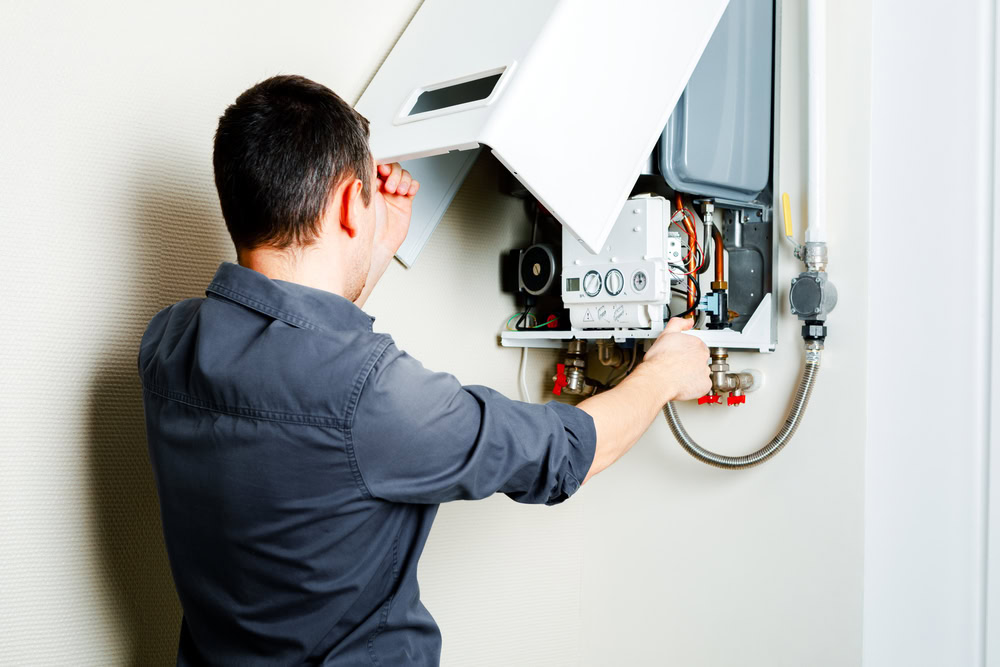
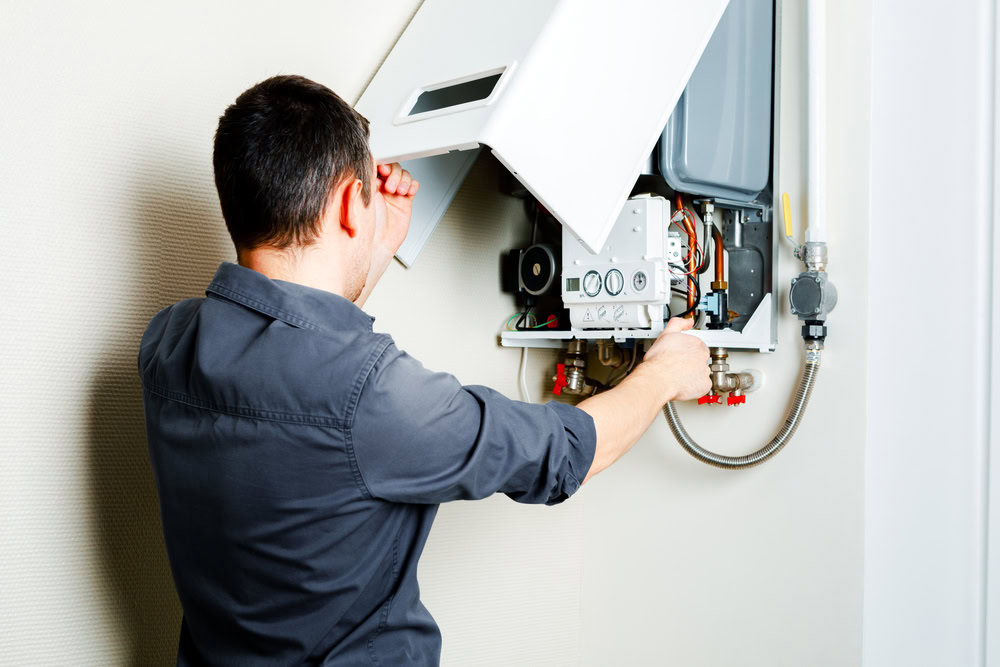
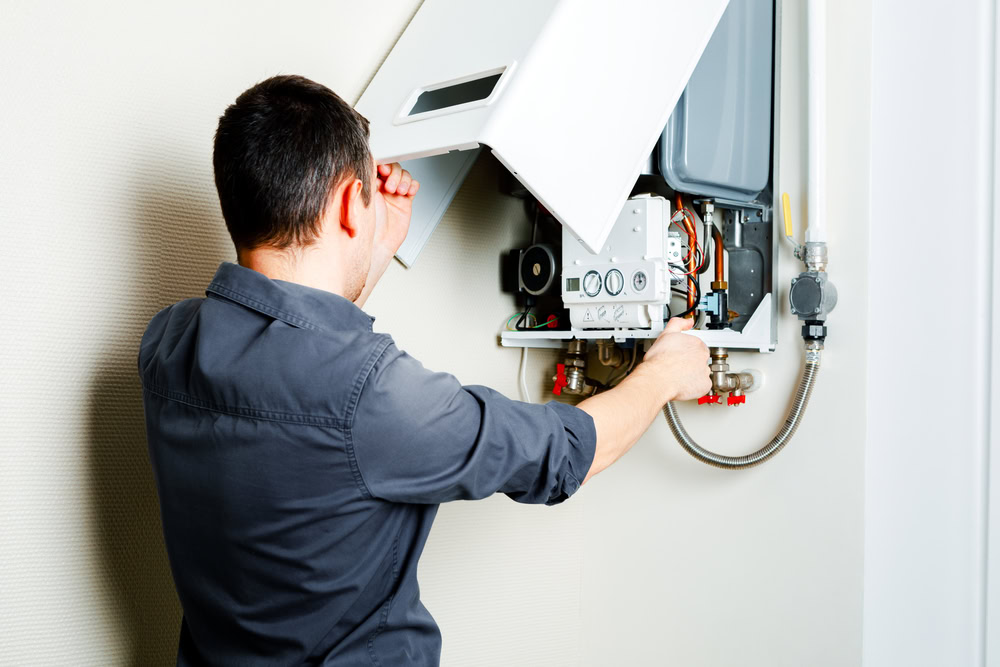
Most no-heat calls trace back to something specific. A failed igniter, a stuck valve, a leak, lost pressure, or a worn pump can each do it, and each looks different from the tenant’s side. You might see no heat at all, banging pipes, water leaking, or a pilot that won’t stay lit. When you call us, describe what you’re seeing, because it helps us show up ready for the likely cause.
When we say repair, we mean finding out why the system stopped making heat or hot water and fixing that cause, not resetting it and leaving. We explain what we found in plain terms and go over your options, something customers mention in our reviews. Carbon monoxide testing is included with every residential heating service call in Queens and Nassau County, so that’s one less thing to wonder about.
Licensing matters here more than people expect. In NYC, boiler work has to be done under a permit or by a licensed master plumber or licensed oil burner installer, and boilers are inspected annually by one of those licensees. The exception is low-pressure boilers in residential buildings with five or fewer dwellings. Whoever you hire, ask for their license numbers before anyone touches the boiler.
We’ve worked out of Bayside since 2006, and our line is answered 24 hours a day. On a cold night, we’ll work out the soonest time a technician can get to you.
How Do You Avoid Becoming a Repeat Heat Violation Building?
The NYC Comptroller looked at this closely. Across 2017 to 2021, 1,077 buildings logged more than five heat complaints per season. They made up 1.5% of buildings with heat problems and generated 30% of 311 heat complaints. Almost 80% of complaints came from buildings with five or fewer in a season. Most owners have one bad stretch. The ones who stay in the system are the ones whose boilers keep failing for the same reason.
Repeats cost more, with reported fines of $500 to $1,500 per day against $350 to $1,250 for a first violation. HPD’s Heat Sensors Program also picks 50 buildings a year that repeatedly fail to provide adequate heat and requires them to install sensors that report temperatures to the city. The Comptroller found that a violation issued to a building correlated with a 47% average drop in complaints the next season, which points to owners getting the problem fixed.
That’s where fixing the cause once beats answering complaint after complaint. Our pre-winter service checks for pressure loss and dripping valves before they turn into a no-heat call. September is the quiet window before technicians fill up, and complaints peak in December and January, so booking early gives you room to fix things on your schedule.
We can’t promise you’ll never get a complaint, and nobody honest can. What we can do is find the failing part before January, tell you what the repair covers, and say whether replacement is worth discussing or whether a repair will do.
Getting Ready for Heat Season in Queens and Nassau County
Queens follows the NYC heat law, with 68°F by day and 62°F overnight. Nassau County follows its own ordinance at 68°F and 65°F, and some villages add rules of their own. Both seasons run October 1 through May 31, and both care about what’s happening inside the home, not whether the boiler is on.
The 2026–27 heat season starts October 1, 2026. If your system hasn’t been looked at, or one patch-up didn’t hold, Excellent Air Conditioning and Heating Services Inc can check it and explain what we find. We serve Queens and Nassau County from Bayside, and our 4.8-star rating across more than 70 reviews comes from customers who mention that we show up on time and clean up after ourselves. Reach out whenever you’re ready.