Summary:
It’s a cold October night in Bayside or Flushing, you turn the heat on for the first time since March, and nothing happens. No click, no hum, no warm air — just a cold house and a sinking feeling. Before you assume the worst, take a breath. Most furnace startup failures have straightforward explanations, and a good number of them don’t require a service call at all. This guide covers the most common reasons a furnace won’t start, what you can safely check on your own, and when the problem has moved past the DIY stage and into licensed-technician territory.
Gas Furnace Won't Turn On? Start Here Before Anything Else
The first thing to understand is that your furnace is designed to fail safely. When something’s off — a dirty sensor, a pressure issue, a tripped safety switch — the system shuts itself down rather than risk a bigger problem. That’s actually good news, because it means “won’t start” usually points to a specific, identifiable cause rather than a catastrophic failure.
Start with the basics before you go any further. Check that the thermostat is set to “heat” and that the target temperature is actually above the current room temperature. It sounds obvious, but a thermostat accidentally switched to “cool” or “fan only” is one of the most common reasons a furnace won’t respond. While you’re there, swap out the batteries — a low-battery thermostat can send weak or inconsistent signals that the furnace simply ignores.
Next, check the furnace’s power switch (it looks like a regular light switch, usually mounted on the wall near the unit) and the circuit breaker. Furnaces trip breakers more often than people realize, especially at the start of the heating season when the system is working hard after months of sitting idle.
Furnace Thermostat Not Working: How to Tell If That's the Real Problem
A lot of furnace startup calls turn out to be thermostat calls in disguise. The furnace itself is fine — it’s just not receiving a proper signal to fire. Understanding how to rule this out can save you a service call and a lot of frustration.
Beyond the obvious settings check, look at the fan switch on your thermostat. If it’s set to “on” instead of “auto,” the blower will run continuously regardless of whether the furnace is actually heating. That can make it feel like the furnace is running when it isn’t producing any heat at all. Set it to “auto” and see if the behavior changes.
Wiring is another factor that gets overlooked. Thermostats have multiple low-voltage wires connecting them to the furnace’s control board, and any one of them can loosen over time — especially in older Queens County homes where the wiring may be decades old. If you’re comfortable removing the thermostat cover and you see a wire that’s visibly loose or disconnected, that’s worth noting. But unless you have experience with HVAC wiring, this is where most homeowners should stop and call a technician rather than start reconnecting wires on a live system.
Smart thermostats add another layer of complexity. If you recently upgraded to a Nest, Ecobee, or similar device and your furnace stopped working shortly after, compatibility is the first thing to check. Some older furnaces — particularly those still common in pre-1980 Queens County homes — require a common wire (C-wire) that newer smart thermostats need to function. Without it, the thermostat may power on and display normally but fail to communicate reliably with the furnace.
One more thing worth checking: if your thermostat display is completely blank, the issue might not be the thermostat at all. A tripped furnace limit switch or a blown fuse on the furnace’s control board can cut power to the thermostat entirely, making it look like the thermostat died when the real problem is downstream. A licensed technician can trace this in minutes — it’s genuinely not worth guessing your way through the control board on your own.
Why Queens County Homes See More Furnace Ignition Problems Than You'd Expect
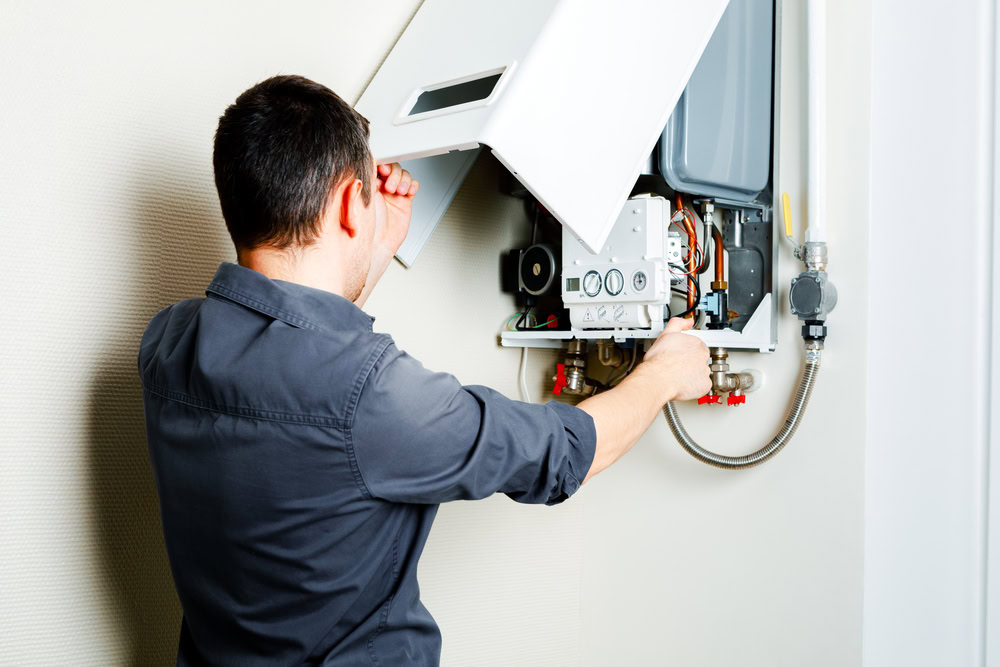
If the thermostat checks out and the power is on, the next place to look is the ignition system. Most gas furnaces built after the mid-1990s use an electronic ignition rather than a standing pilot light, which means there’s no flame burning continuously. Instead, a component called a hot surface ignitor heats up to around 2,500°F to light the gas when the thermostat calls for heat.
These ignitors crack and wear out over time — typically after three to five years of regular use. When one fails, you’ll often hear the furnace click on and then nothing. No ignition, no heat. The furnace tries a couple of times, then shuts itself down. It’s one of the most common repairs on gas furnaces, and it’s not something you can address without accessing the furnace’s interior — which means it’s a job for a licensed technician.
Closely related is the flame sensor, a small metal rod that sits in the burner flame and confirms to the furnace’s control board that combustion is actually happening. Over time, this sensor develops a thin layer of carbon or oxidation that prevents it from reading the flame accurately. When that happens, the furnace will light briefly — sometimes for just a second or two — and then shut off as a safety precaution. It’s a frustrating symptom because the furnace appears to be trying, but it keeps stopping itself.
In Queens County specifically, this problem shows up more frequently than in drier climates. Basements in this part of the borough — particularly in the older attached row houses and two-family homes common in neighborhoods like Woodside, Jamaica, and Middle Village — tend to run damp. That moisture accelerates the buildup on flame sensors and speeds up corrosion on ignition components in general. If your furnace is in a basement that gets humid in summer, and you haven’t had it serviced recently, a dirty flame sensor is a very likely culprit.
The fix itself — cleaning or replacing the sensor — is straightforward for an experienced technician. But because it requires accessing the burner assembly and working in close proximity to the gas supply, it’s not a DIY repair. NYC building code is clear that gas appliance work requires a licensed contractor, and that’s a rule worth taking seriously.
When a Furnace That Won't Start Becomes a Safety Issue
Most furnace startup problems are mechanical inconveniences, not emergencies. But there are specific situations where the right move is to stop troubleshooting, get everyone out of the house, and call for help immediately.
If you smell gas near the furnace or anywhere in your home, don’t touch any switches, don’t try to reset the furnace, and don’t use your phone inside the house. Get outside, then call Con Edison at 1-800-752-6633 and your HVAC technician. A gas smell is not a furnace problem — it’s a gas problem, and it needs to be treated that way.
Carbon monoxide is the other concern. Unlike a gas leak, CO has no smell. A furnace with a cracked heat exchanger can leak CO into your living space with no warning at all. If your CO detector goes off, leave immediately and call 911. If you don’t have a CO detector and your furnace is producing symptoms like headaches, dizziness, or nausea when it runs, take that seriously. NYC Local Law 7 requires CO detectors in all homes with gas appliances — if yours isn’t installed or the battery is dead, fix that today.
What "Short Cycling" Tells You About Your Furnace's Condition
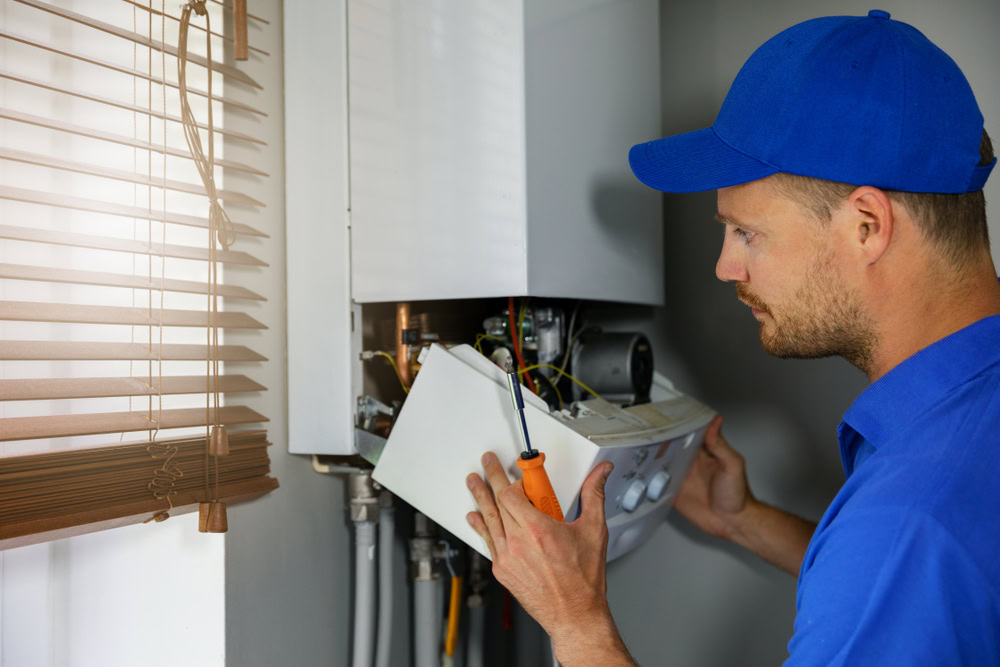
Short cycling is when a furnace fires up, runs for a minute or two, shuts off, and then tries to start again — over and over, without ever reaching the target temperature. It’s one of the more confusing symptoms for homeowners because the furnace technically is starting. It’s just not staying on.
The most common cause is a clogged air filter. When airflow is restricted, heat builds up inside the furnace faster than it can be distributed. The furnace’s limit switch — a safety component designed to prevent overheating — trips and shuts the system down. The furnace cools off, tries again, overheats again, and shuts down again. A $15 filter replacement can stop this cycle entirely. Check your filter first. If it’s grey, packed with dust, or visibly clogged, replace it before you do anything else.
If the filter is clean and the short cycling continues, the limit switch itself may have failed, or the furnace may have a more significant airflow problem — blocked vents, a failing blower motor, or ductwork issues. In older Queens County homes with original ductwork from the 1950s and 60s, deteriorated or undersized duct runs are surprisingly common and can cause exactly this kind of symptom. A technician can measure static pressure in the duct system to determine whether airflow is the underlying issue.
High-efficiency condensing furnaces — the kind with PVC exhaust pipes instead of metal flue pipes — have an additional failure point worth knowing about: the condensate drain. These furnaces produce water vapor as a byproduct of combustion, and that water drains out through a small PVC line. If that line gets clogged with algae or debris, the furnace will shut itself down as a safety measure. It’s a quick fix, but it requires knowing where the drain line is and how to clear it — something a technician can handle in a few minutes during a service call.
Repair or Replace? How Queens County Homeowners Should Think Through the Decision
If a technician comes out and tells you the repair is going to cost several hundred dollars, the natural question is whether it’s worth fixing or whether you should put that money toward a new system. It’s a fair question, and the honest answer depends on a few specific factors.
Age is the biggest one. The average gas furnace lasts between 15 and 20 years with regular maintenance. If your furnace is under 15 years old and the repair is a common component — ignitor, flame sensor, pressure switch, even a control board — repairing it almost always makes financial sense. These are known failure points with known repair costs, and a well-maintained furnace in that age range has plenty of useful life left.
If the furnace is over 15 years old, the math shifts. A useful rule of thumb is the 50% rule: if the cost of the repair exceeds 50% of what a replacement would cost, replacement is usually the smarter long-term investment. You’re not just paying for the repair — you’re paying to extend the life of an aging system that’s likely to need more repairs in the near future, while also running less efficiently than a modern unit.
There’s also the heat exchanger question. A cracked heat exchanger is a CO risk and, in most cases, a reason to replace the furnace rather than repair it. Heat exchanger replacements are expensive — often approaching the cost of a new furnace — and a crack in that component typically signals that the system has reached the end of its useful life. If a technician identifies a cracked heat exchanger, ask them to walk you through the replacement cost comparison before making any decisions.
One thing worth noting for Queens County homeowners specifically: if your home still has an older oil furnace, this conversation also involves considering a conversion to natural gas. Queens County is fully served by Con Edison’s gas network, and the long-term operating cost difference between oil and gas is significant. We can give you a realistic picture of what a conversion would involve for your specific home and heating setup.
Still No Heat in Your Queens County Home? Here's What to Do Next
If you’ve worked through the basics — thermostat settings, filter, breaker, power switch — and your furnace still won’t start, you’re past the DIY stage. That’s not a failure; that’s just where the line is. Gas ignition systems, flame sensors, heat exchangers, and control boards require licensed hands, and in New York City, that’s not just good advice — it’s the law.
The good news is that most furnace startup problems are fixable on the same day a technician arrives. They’re not usually the catastrophic failures homeowners fear in the moment.
If you’re in Queens County — whether you’re in Bayside, Flushing, Forest Hills, Jamaica, or anywhere in between — we’re available around the clock, including nights and weekends. Every heating service includes carbon monoxide testing at no extra charge, pricing is upfront before any work begins, and the technicians who show up are licensed and local. Call us at 718-428-6987 any time you need heat and can’t wait.