Summary:
Most heating systems don’t fail in February because of bad luck. They fail because nobody looked at them in September. By the time the first real cold snap rolls through Queens County — and it always arrives faster than expected — HVAC companies are flooded, wait times stretch into days, and you’re left in a cold house wondering why you didn’t just schedule the tune-up when things were calm.
This guide covers what fall heating maintenance actually involves, what it costs in Queens County and the NYC metro, and what’s worth doing yourself versus what genuinely requires a licensed technician. If you’ve been putting this off, now’s the right time to stop.
Fall Heating System Maintenance Checklist for Queens County Homeowners
Fall maintenance isn’t one task — it’s a sequence of checks that, together, tell you whether your system is ready to carry the load of a Queens County winter. The goal isn’t just to confirm the heat turns on. It’s to make sure it runs cleanly, safely, and efficiently for the next seven months.
A thorough professional visit should cover the heat exchanger for cracks or corrosion, the burners, the blower motor and cavity, the flame sensor, gas pressure, the flue and exhaust system, all electrical connections, the condensate drain, and a full combustion analysis. Every one of those steps matters. A cracked heat exchanger, for example, has no obvious symptoms — but it can release carbon monoxide into your home. That’s not a hypothetical risk in a borough full of older buildings; it’s a real one.
We include carbon monoxide and combustion testing with every residential heating service. Not as an add-on. As a standard part of the visit.

What Heating Maintenance Looks Like for Queens County's Older Housing Stock
Queens County has some of the most varied housing in the country, and that variety matters when it comes to heating. A pre-war apartment building in Astoria runs on a steam boiler. A mid-century colonial in Jamaica Estates likely has an oil furnace. A newer condo in Long Island City might have a high-efficiency gas system or a ductless mini-split. Each one has different maintenance requirements, different failure points, and different seasonal prep needs.
Steam boilers are common across the older neighborhoods — Flushing, Jackson Heights, Forest Hills, Howard Beach — and they require a specific kind of attention that not every HVAC company is equipped to provide. A proper boiler service includes checking the pressure relief valve, inspecting the expansion tank, testing the low-water cutoff, bleeding radiators if needed, and inspecting the circulator pump and all valves for leaks. These aren’t optional steps. They’re the difference between a system that runs through January and one that leaves tenants calling 311 in December.
Oil furnaces, which are more common in the northeastern parts of Queens County and in neighborhoods bordering Nassau County, need annual cleaning as a necessity — not just a recommendation. Heating oil is a dirtier fuel, and the nozzle, heat exchanger, and combustion chamber accumulate soot and particulate buildup every single season. Skipping a year isn’t just inefficient; it accelerates wear and increases the risk of a mid-season failure.
We’ve been servicing these systems in Queens County and across Long Island for over 30 years. That matters because legacy systems — older boilers, oil furnaces, equipment that newer companies have never worked on — aren’t something you learn from a training manual. You learn them by showing up to hundreds of homes in Bayside, Queens Village, Fresh Meadows, and Hollis and actually doing the work.
DIY vs. Professional Heating Maintenance: Where the Line Actually Is
There’s a reasonable amount you can do yourself before calling anyone. Changing your air filter every 30 to 90 days is the single highest-impact thing a homeowner can do to keep a heating system running efficiently — and it costs almost nothing. Clearing the area around your furnace or boiler, checking that all vents and registers are unobstructed, and testing your thermostat before the season starts are all sensible, low-risk tasks.
But there’s a clear line between homeowner maintenance and work that requires a licensed technician, and it’s worth knowing where that line is. Combustion analysis requires specialized equipment. Inspecting a heat exchanger for micro-cracks requires training and experience to do accurately. Testing gas pressure, checking electrical connections, and servicing the flue system all carry real safety risks if done incorrectly. These aren’t tasks where a YouTube tutorial and a Saturday afternoon get you where you need to be.
There’s also the warranty issue, which most homeowners don’t think about until it’s too late. Most furnace and boiler manufacturers require documented annual professional maintenance as a condition of the warranty. If a major component fails and there’s no service record, the manufacturer has grounds to deny the claim — leaving you responsible for a repair that could run $500 to $2,000, or a full replacement that can easily exceed $5,000. The tune-up pays for itself before you even consider the efficiency savings.
If a company is advertising a $29 furnace inspection, that number doesn’t cover their cost to show up. The business model depends on finding problems — real or invented — once they’re inside your home. A legitimate service visit in Queens County and the NYC metro area costs more than that because it actually includes the work.
Furnace Tune Up Cost: What to Budget in the NYC Metro
Cost transparency is something we take seriously, so here’s what the numbers actually look like in Queens County and the surrounding area. A basic furnace inspection runs $80 to $100. A comprehensive tune-up that includes cleaning the burners, servicing the blower, testing combustion efficiency, and running a full safety check typically falls in the $125 to $200 range. We offer annual maintenance agreements that bundle these visits with priority scheduling, which can make sense if you own multiple units or want to lock in availability before the fall rush.
New York City labor costs run higher than national averages, so if you see pricing that seems significantly lower than these ranges, it’s worth asking exactly what’s included before you commit.
Boiler Maintenance Cost in Queens County and NYC
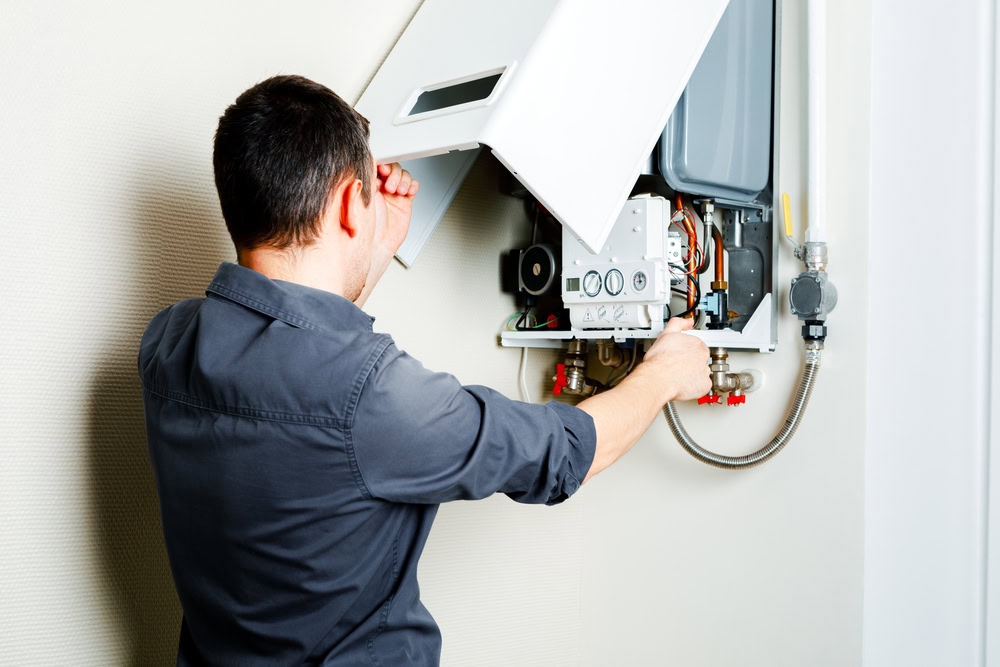
Boiler maintenance costs more than furnace service, and for good reason — there’s more to inspect, more that can go wrong, and more regulatory context specific to New York City. Annual boiler tune-ups in the NYC metro typically run $150 to $300 for a standard service visit. A comprehensive annual servicing that includes efficiency testing, cleaning, and minor adjustments generally falls in the $200 to $500 range depending on system size and condition.
Those numbers look different when you compare them to what a neglected boiler costs to fix. Average boiler repair costs in New York run $494 to $730 for mid-range issues. A full boiler replacement can top $6,000. A $200 annual service visit is a straightforward investment by comparison.
There’s also a compliance dimension that’s specific to New York City. Boilers here require annual inspections by a DOB-licensed inspector, and significant repairs or replacements require permits. This isn’t optional or advisory — it’s a legal requirement. For building owners and landlords in Queens County, the stakes are higher still. NYC’s heat season runs from October 1 through May 31, and during that period, you’re legally required to maintain at least 68°F during daytime hours and 62°F at night when outdoor temperatures drop below certain thresholds. A boiler failure during heat season isn’t just an inconvenience — it’s a liability. Tenants can file complaints through 311, which triggers city enforcement and potential fines.
Getting your boiler serviced before October 1 isn’t just good practice. In Queens County, it’s the responsible thing to do if you own or manage a building with tenants depending on you.
How to Avoid a Winter Heating Emergency in Queens County
The pattern plays out the same way every year. A homeowner puts off the fall tune-up because the system worked fine last winter. The first real cold snap hits — sometimes a nor’easter that drops temperatures 20 degrees in a few hours — and the furnace or boiler that sat idle all summer doesn’t start. By the time they call, every HVAC company in Queens County is already backed up with emergency calls from neighbors in the same situation.
The best way to avoid that scenario is to schedule maintenance before the rush, ideally in late August or early September. Technicians have availability, response times are shorter, and you have time to address anything that comes up before the heat season deadline. Once October arrives and temperatures start dropping, that window closes fast.
Beyond scheduling, there are a few things worth doing on your own as the season changes. Test your thermostat before you need it — switch it to heat mode and confirm the system responds. Check that all supply and return vents are open and unobstructed. If you have a boiler, look for any visible signs of rust, moisture, or leaking around the unit. And if you haven’t replaced your filter recently, do it now, before the system runs hard for the first time.
If something does go wrong — a system that won’t start, a furnace making sounds it wasn’t making before, heat that’s uneven across rooms — don’t wait it out. These are early warning signs that a service visit can address before they become emergency repairs. We offer 24/7 emergency HVAC service across Queens County, Nassau, and Suffolk Counties for exactly those situations, but the goal is always to catch problems before they reach that point. A little attention in September saves a lot of stress in January.
Ready to Schedule Heating Maintenance Before Queens County Winter Hits?
The core message here is simple: fall is the right time, and waiting until something breaks is the most expensive version of this decision. A proper heating maintenance visit catches the problems you can’t see, restores efficiency you’ve been quietly losing, and keeps your system legally compliant if you own property in New York City. The cost of a tune-up is a fraction of what emergency repairs or a full system replacement will run.
If you’re in Bayside, Flushing, Jamaica, Forest Hills, Queens Village, or anywhere across Queens County, the window to get this done before the October 1 heat season is open right now — but it won’t stay that way. We’ve been doing this work in Queens County and across Long Island for over 30 years, with licensed technicians, upfront pricing, and no interest in selling you things you don’t need. Give us a call when you’re ready: Queens County residents can reach us at 718-428-6987, Nassau County at 516-248-2795, and Suffolk County at 631-427-0677.