Summary:
If your furnace has been running fine, it’s easy to push maintenance down the list. But Queens County winters don’t give much warning — and a furnace that seems okay in October can leave you scrambling for emergency service in January. The bigger problem isn’t just breakdowns. It’s that a lot of homeowners who do schedule maintenance end up paying for a service that barely scratches the surface. This guide covers what real furnace maintenance looks like, what it costs here in Queens County, and how to make sure you’re actually getting what you’re paying for.
What a Real Furnace Tune-Up Actually Includes
There’s a wide gap between what a legitimate furnace tune-up covers and what some companies actually do when they show up. A filter swap takes ten minutes. A proper tune-up takes one to two hours and covers the components that actually determine whether your furnace is safe, efficient, and built to last through the season.
When we service a furnace in Queens County, the visit covers far more than the basics, and we’ll walk you through exactly what we found and why it matters before we leave.
What Does a Professional Furnace Service Cover Step by Step?
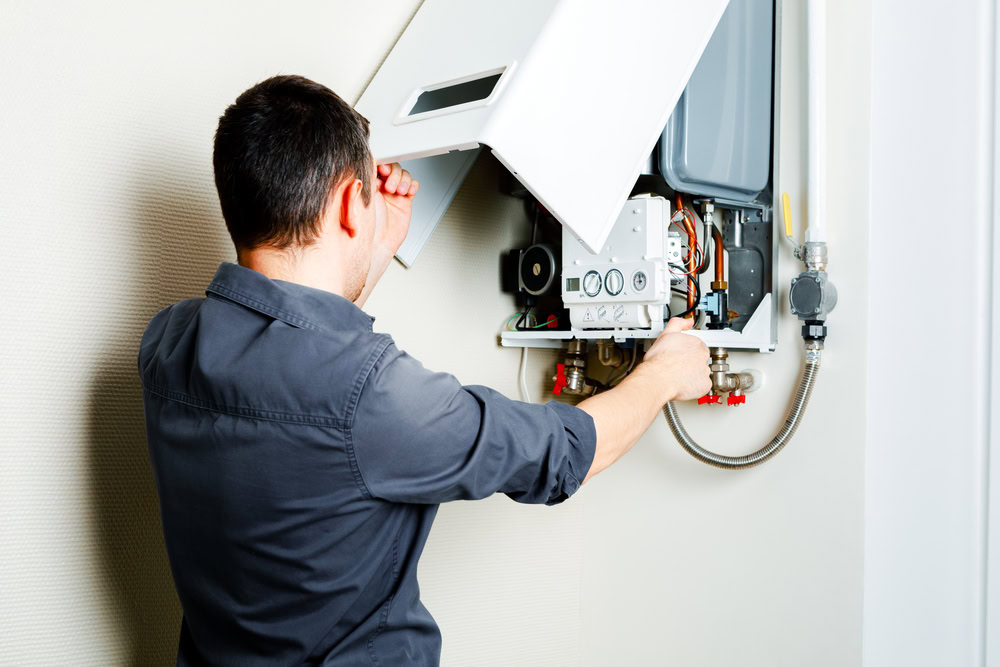
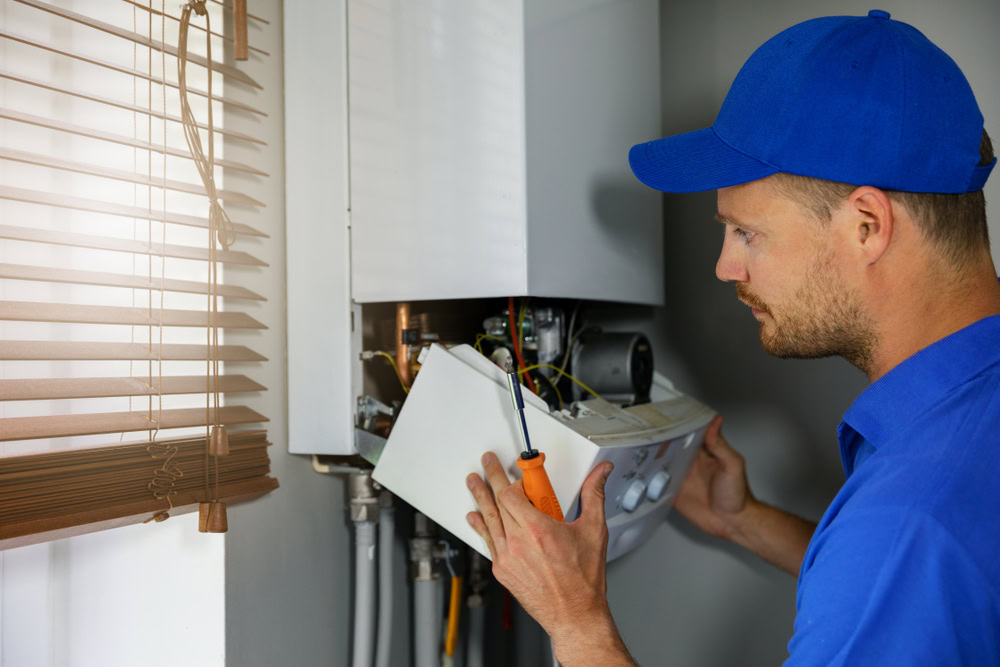
A thorough furnace service starts with the heat exchanger — and that’s not a coincidence. The heat exchanger is the component that separates combustion gases from the air circulating through your home. When it cracks, carbon monoxide can leak into your living space without any visible sign. It’s one of the most serious risks in residential heating, and it’s also one of the most commonly skipped checks in a budget tune-up.
Beyond the heat exchanger, a complete service includes cleaning the burners, lubricating the blower motor bearings, inspecting the flue pipe for cracks or blockages, testing and calibrating the thermostat, checking all safety controls, measuring combustion efficiency, and verifying gas pressure. Each of these steps has a direct impact on how well your furnace runs and how long it lasts.
We also include carbon monoxide testing on every residential heating service call — not as an add-on, but as a standard part of the visit. For homeowners in Bayside, Whitestone, Fresh Meadows, and other parts of Queens County with older housing stock, this matters more than most people realize. Pre-war and mid-century homes often have aging ventilation systems that were never designed to meet today’s safety standards. A CO test takes minutes and can catch a problem that has no smell, no color, and no warning.
At the end of the visit, you get a written report of what was found, what was adjusted, and what — if anything — needs attention. That documentation is also what keeps your manufacturer warranty intact, since many furnace warranties require annual professional service to remain valid.
Signs Your Furnace Needs Professional Maintenance Now
Some signs are obvious. Others are easy to rationalize away until they become expensive. If your energy bills have been creeping up without a clear reason, that’s often a furnace running at reduced efficiency — working harder to produce the same heat. A well-maintained furnace typically lasts 15 to 20 years. One that’s been neglected starts losing efficiency well before that, and the cost shows up on your ConEd bill every month.
Unusual sounds are another signal worth taking seriously. A banging noise when the furnace kicks on can indicate a delayed ignition — a buildup of gas that ignites all at once rather than smoothly. Rattling or squealing often points to a loose component or a blower motor that needs attention. These aren’t sounds to wait on.
Uneven heating throughout your home is also a common indicator. If one room is comfortable and another stays cold regardless of what you set the thermostat to, the problem may be in the furnace itself — a dirty burner, a failing blower, or an airflow issue that a professional inspection would catch. A yellow or flickering burner flame, rather than a steady blue one, is a more urgent sign and warrants an immediate call.
Queens County homeowners with older single-family homes in neighborhoods like Douglaston or Little Neck often deal with furnaces that have been in service for 20-plus years. At that age, annual servicing isn’t optional — it’s what keeps the system running safely and extends its useful life long enough to make a planned replacement a choice, not an emergency.
Furnace Maintenance Costs in Queens County, NY — What's Fair and What's Not
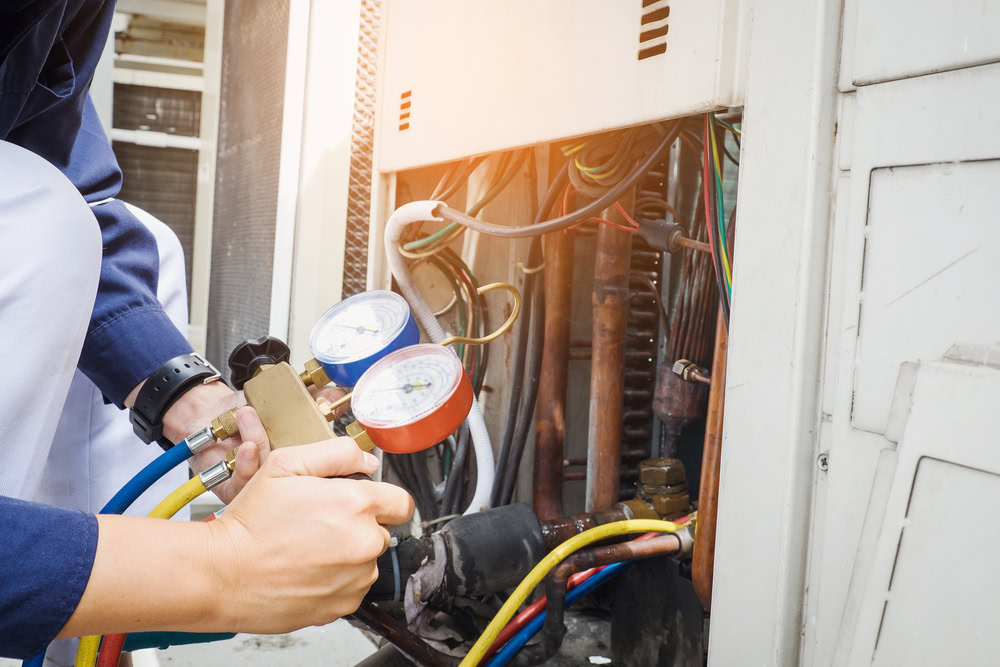
Cost is where a lot of homeowners get frustrated — and understandably so. Pricing in the HVAC industry is inconsistent, and it’s not always obvious what you’re actually paying for. In Queens County, a standard annual furnace inspection typically runs $80 to $100. A more comprehensive visit that includes cleaning and a full tune-up generally falls between $125 and $200. Most homeowners who get furnace cleaning as part of a maintenance visit pay somewhere in the $150 to $270 range.
Those numbers matter most when you put them next to the alternative. The average furnace repair in Queens County runs around $368. A heat exchanger replacement — one of the more serious repairs — can exceed $1,500. A blower motor runs $300 to $900 depending on the system. Annual maintenance at $150 to $200 is not an expense. It’s a hedge against a much larger one.
How to Know If You're Being Overcharged for a Furnace Tune-Up
Overpaying for furnace maintenance usually happens in one of two ways: you pay a fair price for a service that doesn’t get fully performed, or you get pressured into repairs and parts you didn’t need.
The first problem is more common than most people expect. A company charges a reasonable tune-up fee, sends a technician who changes the filter and checks a few boxes, and moves on to the next job. You have no way of knowing what was skipped unless you know what should have been done. That’s why the written diagnostic report matters — it creates accountability. If a provider can’t or won’t give you a written summary of what they checked, that’s worth noting.
The second problem — upselling — is something we’ve built our entire service model around avoiding. We will not tell you that you need a part you don’t need. If something is genuinely worn or failing, we’ll show you the finding in writing and give you honest guidance on whether it’s urgent, something to monitor, or something that can wait. The decision is yours. We’re not here to manufacture urgency.
Before any work begins, you’ll know what it costs. No surprises on the final invoice. For Queens County homeowners who have been burned by vague estimates that ballooned after the fact, that policy isn’t a small thing — it’s the reason many of our customers in Flushing, Jamaica, and Forest Hills came to us in the first place and keep calling us back.
When Should Queens County Homeowners Schedule Furnace Maintenance Each Year?
The short answer is late August through October — before the heating season starts, not after the first cold snap hits. Once temperatures drop in Queens County and everyone’s furnace kicks on for the first time, HVAC schedules fill up fast. Homeowners who wait until November are often looking at longer lead times, and the ones who wait until something breaks are dealing with emergency service rates and whatever’s available.
Scheduling in early fall gives you time to address anything that comes up during the inspection without the pressure of needing heat tonight. It also means your furnace goes into the heavy-use months — November through February, when Queens County regularly sees temperatures in the 20s and 30s — already cleaned, calibrated, and confirmed safe.
There’s a Queens County-specific reason to take this timing seriously that doesn’t apply everywhere else. The borough’s hot, humid summers put real stress on HVAC systems. High humidity accelerates the accumulation of dust, mold spores, and particulates in your filtration system, which means your furnace may be working with a dirtier filter load heading into fall than a homeowner in a drier climate would face. That’s one reason we see more efficiency loss in Queens County systems that go unserviced than the national averages would suggest.
If you own a rental property in Jackson Heights, Astoria, or anywhere else in Queens County, the calculus is even clearer. A furnace that fails mid-winter means tenant complaints, potential code violations, and emergency repair costs — all of which cost far more than an annual service call. Landlords with multiple units often set up maintenance agreements with us specifically to avoid that scenario and get priority scheduling when they need it most.
Furnace Maintenance in Queens County, NY: What to Do Next
The core takeaway here is simple. A real furnace tune-up is not expensive. What’s expensive is skipping it — and then dealing with an emergency repair in the middle of a Queens County winter, or discovering a heat exchanger problem that’s been quietly developing for two seasons.
Know what a complete service includes. Ask for a written report. Make sure CO testing is part of the visit. And schedule before the fall rush, not after the first cold night reminds you that you meant to.
If you’re ready to get it done — or you just want a straight answer on what your system needs — we’re based right here in Bayside and serve homeowners throughout Queens County and beyond. Give us a call at 718-428-6987 and we’ll tell you exactly what’s involved, what it costs, and when we can get there.